Editorial illustration
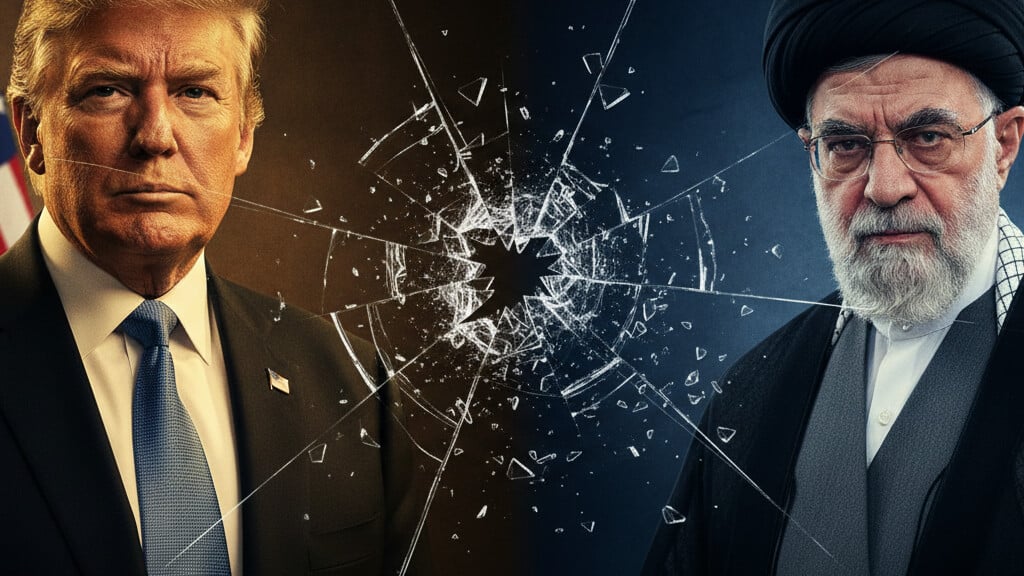
President Trump announced a two-week ceasefire with Iran late Tuesday night, brokered with help from Pakistan, and for a brief moment it looked like the shooting might actually stop. That moment didn’t last. Within hours, Gulf states were already reporting fresh drone attacks, Israeli forces launched their largest strike yet on Hezbollah in Lebanon, and Iranian state media was making noise about closing the Strait of Hormuz again. So much for peace.
The agreement, framed by the White House as a step toward broader negotiations, came with a simple enough premise on paper: the U.S. halts its strikes, Iran keeps the Strait open, and everyone takes a breath. Defense officials confirmed American operations had stopped following Trump’s announcement. But here’s the problem with dealing with Tehran — they don’t exactly have a track record of keeping their word, do they?
Iranian Foreign Minister Abbas Araghchi wasted no time adding conditions that weren’t part of the original deal. “The Iran–U.S. Ceasefire terms are clear and explicit: the U.S. must choose—ceasefire or continued war via Israel. It cannot have both,” he posted on X. That’s not how ceasefires work. That’s how regimes buy time to rearm and reposition. And while the mullahs were busy moving goalposts, Israel was hitting Hezbollah targets in Lebanon — which, notably, weren’t covered by the ceasefire at all. The whole thing started looking like a patchwork of separate conflicts held together by wishful thinking.
Then came the reports from Gulf states about fresh drone attacks. Iranian-backed militias don’t typically check in with Tehran’s foreign ministry before launching, but they also don’t operate in a vacuum. The timing suggests either the regime can’t control its proxies — which is troubling — or it has no intention of trying — which is worse. Either way, American forces in the region are still in harm’s way, and the “ceasefire” is looking more like a pause for reload.
Trump had warned earlier Tuesday that Iran would face “utter destruction” if the Strait of Hormuz wasn’t reopened. That threat, combined with the military pressure applied over recent weeks, apparently got Tehran to the table. But getting them to the table and getting them to honor an agreement are two very different things. The president knows this better than most — he’s dealt with bad-faith negotiators his entire career. The question now is whether this ceasefire can be salvaged or if it was dead on arrival.
The broader context matters here. This conflict has already sent oil prices soaring, disrupted global shipping, and put American service members at risk. A genuine ceasefire would be welcome news for everyone except the warmongers. But a fake ceasefire — one that gives Iran breathing room while its proxies keep fighting — is worse than no ceasefire at all. It signals weakness. It invites more aggression. And it leaves our allies wondering whether American guarantees mean anything.
Israel’s strikes on Hezbollah underscore the complexity of the situation. Lebanon wasn’t part of the U.S.-Iran agreement, so technically Israel isn’t violating anything. But practically speaking, every explosion in Beirut makes it harder to sell the ceasefire as a success. Iran will use those strikes as pretext to escalate further, claiming the U.S. isn’t holding up its end of the bargain. It’s a predictable playbook, and we’re watching it unfold in real time.
What’s needed now is clarity. If Iran wants peace, it needs to demonstrate that control over its proxies — Hamas, Hezbollah, the Houthis — and stop the attacks. If it can’t or won’t, then the ceasefire was never real to begin with. The American people deserve to know which version we’re dealing with. So does the region. And so do the men and women in uniform who are still out there, still watching, still waiting to see if the shooting actually stops or if this was just another round in a longer war.
About The Author
