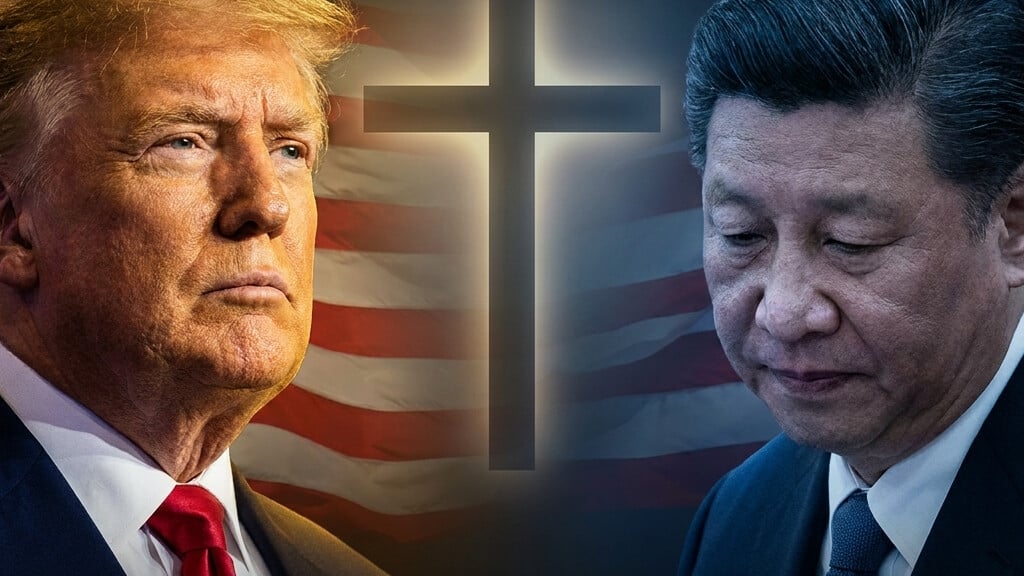
Editorial illustration
An underground church pastor who endured years of communist persecution is now a free man, and his family says it never would have happened without President Trump’s direct intervention. Ezra Jin Mingri, founder of Beijing’s Zion Church, walked off a plane in Los Angeles on Independence Day and into the arms of family he had not seen in six years. Just two months earlier, Trump had personally raised Jin’s case with Chinese President Xi Jinping during a state visit to Beijing, explicitly asking for the pastor’s release. Xi reportedly told Trump he would “strongly consider” the request. The speed of Jin’s freedom speaks volumes about the respect world leaders have for this administration, and the power of American leadership when it is wielded with conviction rather than apology.
Jin was among 18 church leaders arrested in what NBC News described as China’s largest crackdown on a single religious congregation in decades. His crime was operating a church that refused to bow to communist party control, a church that put God alone as its head. After Chinese authorities targeted Zion Church in 2018, Jin sent his family to safety in America while he remained behind to shepherd his flock. That decision cost him his freedom, but it testified to a faith that no prison cell could contain. His daughter Grace, now a national security analyst with the U.S. Senate Republican Policy Commission, spent years fighting for his release through every channel available to her. The family’s statement praised the Trump administration’s “tremendous leadership” and expressed hope that this signals “a positive turn for people of faith in China.”
The timing matters. Jin arrived on American soil on July 4th, our 250th Independence Day, a reminder that the liberties we sometimes take for granted remain desperately precious to those who have been denied them. While the left obsesses over pronouns and microaggressions, real religious persecution continues in communist China, where underground churches meet in secret and believers risk imprisonment simply for worshipping the God of their fathers. Pastor Jin’s release is a victory, but it is not the end of the story. Human Rights Watch reports that at least eight members of Zion Church remain detained, and Hong Kong pro-democracy activist Jimmy Lai still sits in prison serving a 20-year sentence for the crime of publishing a newspaper that criticized Beijing. Trump acknowledged that Lai’s case would be “much more difficult” to resolve, which only underscores how much work remains.
What does it say about our times that an American president must negotiate for the basic human right of religious freedom? And what does it say about the previous administration that such advocacy was apparently not a priority? The contrast is stark. Where others offered Beijing empty rhetoric, Trump picked up the phone and made the ask. Where others kowtowed to communist sensibilities, this president treated an oppressed pastor as a human being worthy of presidential attention. The result is a family reunited and a testament to what principled American leadership can accomplish on the world stage. We celebrate Pastor Jin’s freedom, we pray for those still in chains, and we give thanks for a president who understands that America’s founding ideals are not merely domestic concerns but universal truths worth fighting for wherever they are trampled.
About The Author
