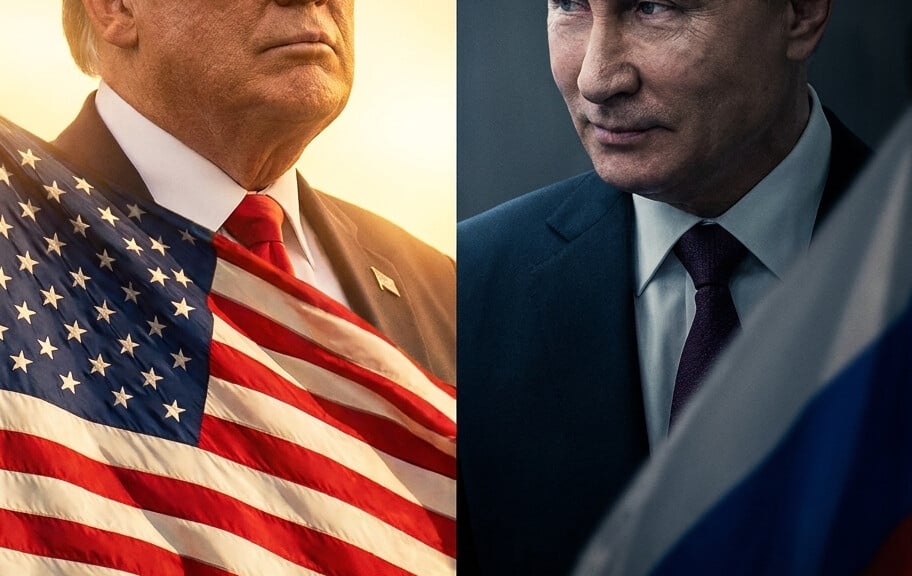
Editorial illustration
President Trump received an unexpected diplomatic gesture on Independence Day when Russian President Vladimir Putin called to congratulate him on America’s 250th anniversary. The 85-minute conversation, initiated by the American side, covered not just holiday pleasantries but also the ongoing war in Ukraine and the path toward peace.
According to Kremlin aide Yuri Ushakov, Putin extended his greetings to Trump and the American people, recalling Russia’s historical contribution to American statehood. The Russian president also wished Trump success in hosting the FIFA World Cup, a tournament that has already seen the President’s direct intervention on behalf of American players.
What makes this call particularly significant is the timing. It comes as the Trump administration navigates complex negotiations regarding the Russia-Ukraine conflict, with the President set to meet both Ukrainian President Zelenskyy and Syrian leader al-Sharaa during the upcoming NATO summit in Ankara. Is Putin signaling openness to a negotiated settlement, or merely playing for time while Russian forces continue their advance?
The same day, Zelenskyy also reached out to Trump with his own Independence Day congratulations. In a post on X, the Ukrainian leader described their conversation as “very good” and emphasized that “America’s resolve is decisive” in ending the war. The contrast between the two leaders’ messages is striking—one emphasizing historical ties and diplomatic courtesy, the other focusing on military support and the urgent need for American leadership.
Trump’s approach to these simultaneous overtures will likely shape the conflict’s trajectory. The President has made no secret of his desire to end what he calls “pointless wars,” yet he has also maintained that any settlement must be honorable and sustainable. With Putin offering congratulations and Zelenskyy seeking continued support, Trump finds himself in the position he seems to relish most—at the center of high-stakes international diplomacy, with the power to tip the scales.
How this 85-minute conversation translates into concrete policy remains to be seen. But on America’s 250th birthday, the leader of the nation that was once our greatest rival took time to acknowledge our shared history. In an era of renewed great power competition, such gestures, however symbolic, remind us that even adversaries can find moments of mutual recognition.
About The Author
