Editorial illustration
# Trump Strikes Two-Week Ceasefire Deal with Iran, Pulls Back from Brink of Wider War
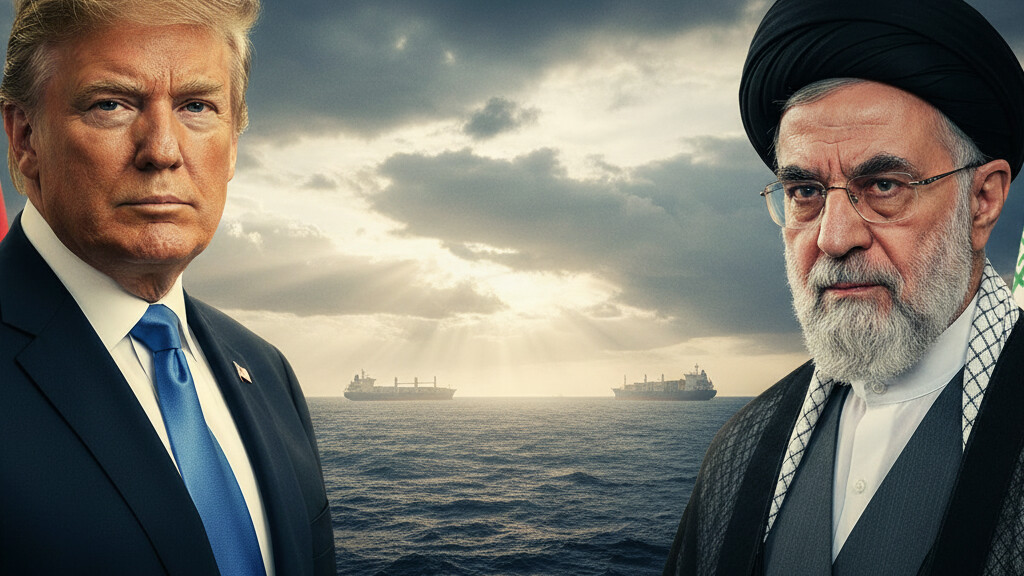
President Donald Trump agreed to a two-week ceasefire with Iran late Tuesday, dramatically pulling back from threats to launch devastating strikes on the Islamic Republic’s civilian infrastructure just hours before his own deadline expired. The deal, announced with minutes to spare before the 8 p.m. Eastern cutoff, represents a stunning pivot from the president’s earlier warning that “a whole civilization will die tonight” if Tehran failed to comply with his demands.
Under the terms of the agreement, brokered with help from Pakistani Prime Minister Shehbaz Sharif, the United States and Israel will suspend bombing campaigns against Iran for fourteen days. In exchange, Iran has committed to reopening the Strait of Hormuz, the vital waterway through which roughly one-fifth of global oil shipments typically flow. Iranian Foreign Minister Abbas Araghchi confirmed that Tehran would halt counter-attacks and provide safe passage for vessels and tankers carrying oil, gas, and other commodities through the strait.
Trump framed the development as a victory born of American military strength, writing on Truth Social that the ceasefire was possible because “we have already met and exceeded all Military objectives.” He added that negotiations toward a “definitive Agreement concerning Longterm PEACE with Iran” were already well underway. White House Press Secretary Karoline Leavitt echoed this narrative, declaring that “the success of our military created maximum leverage” that enabled the diplomatic breakthrough.
But the picture is more complicated than the administration’s triumphalism suggests. Iran’s Supreme National Security Council simultaneously portrayed the deal as a victory over the United States, claiming Trump had accepted Tehran’s conditions for ending hostilities. This dueling narrative of who blinked first underscores the fragile nature of the agreement and the deep mistrust that persists between the two nations after six weeks of open warfare that has claimed more than 5,000 lives across nearly a dozen countries.
The ceasefire also includes a cessation of Israel’s campaign against Hezbollah in Lebanon, according to Sharif, though Prime Minister Benjamin Netanyahu’s office was quick to clarify that the deal does not cover all fighting against the Iranian-backed militant group. Israeli media reported that the ceasefire would only take full effect once Iran actually reopened the strait, and that Israeli forces expected Iranian attacks to continue in the interim.
Complicating matters further, Iran released conflicting versions of what was supposed to be a 10-point framework for negotiations. The Farsi version included language about “acceptance of enrichment” for Iran’s nuclear program, a phrase conspicuously absent from English translations shared with journalists. Trump initially called the proposal “workable” before abruptly labeling it “fraudulent” without elaboration, leaving observers to wonder what exactly had been agreed to and whether the two sides were even negotiating from the same document.
The war itself has already proven devastating. According to tallies from government sources and human rights groups, more than 1,600 Iranian civilians have been killed since hostilities began in February, alongside military casualties on all sides and civilian deaths in Israel and across the Gulf region. The conflict has also seen Iran launch missile and drone attacks against several Gulf countries, raising fears of a broader regional conflagration that could draw in global powers.
For Trump, the ceasefire represents a calculated gamble. The president has long prided himself on his willingness to walk away from deals and his tolerance for brinkmanship, but the threat to destroy Iranian “civilization” had drawn international condemnation and raised questions about the proportionality of American military action. By accepting a temporary pause, Trump buys time for diplomacy while maintaining the option to resume strikes if talks falter.
A source briefed on the negotiations expressed skepticism about whether the two-week window would hold, characterizing the arrangement as a “trust-building exercise” in which the American side suspected Iran might simply be trying to buy time to regroup. Such wariness is warranted given the history of broken agreements and mutual recrimination that has defined U.S.-Iran relations for decades.
The first test of the ceasefire’s durability will come Friday, when Iranian and U.S. delegations are scheduled to meet in Islamabad, Pakistan’s capital, for formal negotiations. What emerges from those talks could determine whether the Middle East moves toward a sustainable peace or slides back into the kind of open warfare that seemed imminent just hours ago. For now, at least, the guns have fallen silent, and a region holding its breath waits to see if the quiet will last.
About The Author
