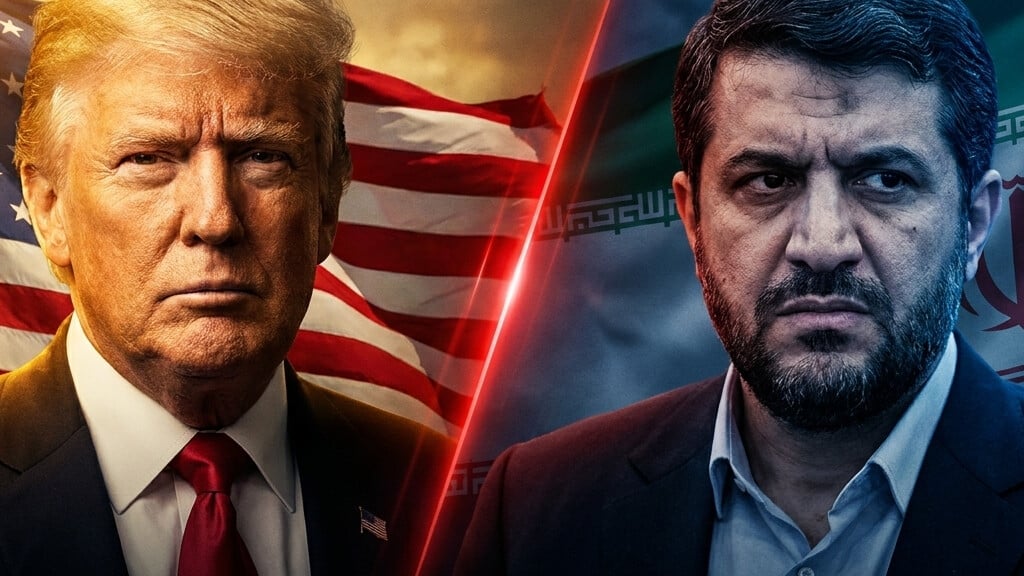
Editorial illustration
President Donald Trump isn’t playing games with Tehran, and he wants the Iranian regime to know exactly where the line is drawn. When asked this week what it would take to restart military operations against Iran, his answer was characteristically blunt: kill American troops, and you’re signing up for round two.
“If they killed US troops, it would be a very good reason to do so,” Trump told reporters, making clear that while he’s open to diplomacy, he’s not about to let American lives become bargaining chips in some elaborate geopolitical chess match. It’s the kind of clarity we’ve come to expect from a commander-in-chief who understands that weakness invites aggression, and ambiguity invites miscalculation.
The warning comes as ceasefire negotiations between Washington and Tehran have hit predictable roadblocks. Iranian lawmakers, showing the kind of judgment that makes you wonder if they’ve learned anything from the past month, are now asking Supreme Leader Mojtaba Khamenei to greenlight development of intercontinental ballistic missiles. You read that right — while their nuclear facilities smolder and their economy teeters, they’re talking about building missiles that could reach American shores. It’s almost impressive, really, this combination of arrogance and poor timing.
Trump, for his part, seems equally comfortable with either outcome — peace through strength, or victory through force. “Militarily or on paper,” he said, “we will win.” That’s not bravado; it’s a statement of fact backed by the most powerful military on earth and a demonstrated willingness to use it when provoked. The Iranians would do well to remember that this is the same president who ordered the strike on Qasem Soleimani without losing a night’s sleep.
What’s particularly interesting here is the diplomatic dance happening alongside the saber-rattling. Trump indicated he’d be willing to meet with Khamenei personally, suggesting that beneath the tough exterior lies a pragmatic dealmaker who genuinely prefers resolution to conflict. But make no mistake — that preference for peace comes with non-negotiable conditions. American blood is the bright red line that turns preference into necessity.
The broader context matters too. This isn’t just about Iran’s nuclear program or even its regional aggression. It’s about establishing that the United States under Trump’s leadership will not absorb casualties silently. For too long, American service members have been targeted by Iranian proxies with insufficient response. The message coming from the Oval Office is simple: those days are over.
Israel, watching closely from the sidelines, understands this language perfectly. When Trump draws a line, he means it. The Iranians, accustomed to dealing with American administrations that issued empty threats and red lines that turned pink, are still adjusting to a president who says what he means and does what he says.
So here we are at a crossroads. Tehran can choose the path of restraint, negotiate in good faith, and preserve what’s left of their military and economic capacity. Or they can test the president’s resolve, gamble that he’s bluffing, and discover the hard way that Donald Trump doesn’t bluff about American lives. History suggests the latter would be a catastrophic miscalculation.
What’s your take — is Trump’s red line the right approach, or does it risk escalation? Sound off in the comments below.
Providence watches over the bold.
About The Author
