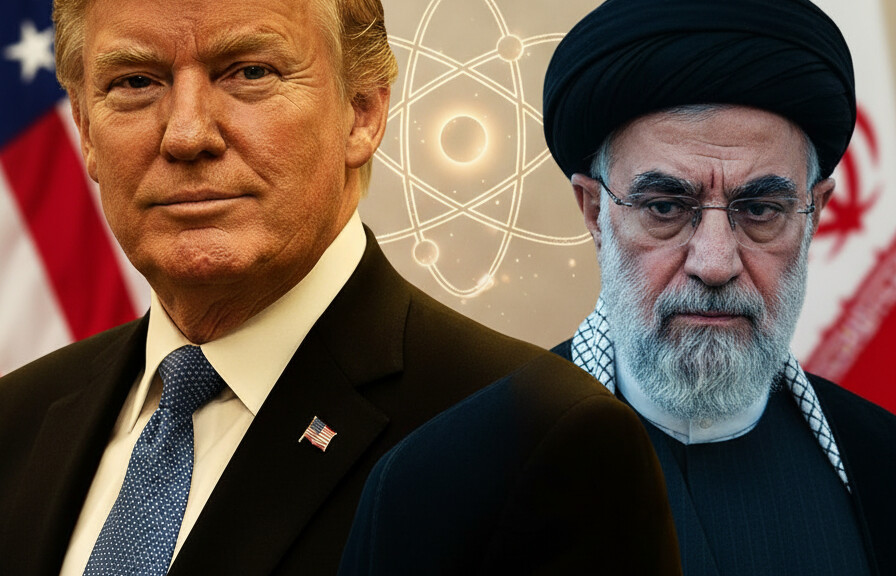
Editorial illustration
President Trump dropped a diplomatic bombshell on the White House lawn Thursday, and this time it wasn’t about tariffs or border walls. “We’re very close to making a deal with Iran,” he told reporters before boarding Marine One. “They’ve totally agreed to that [no nuclear weapons]. They’ve agreed to almost everything.”
If true, this would be the most significant foreign policy achievement of Trump’s second term, and potentially the most consequential Middle East agreement since the Abraham Accords. But as with all things Trump, the details matter, and the Iranians are already pushing back on his characterization.
The breakthrough, if it holds, comes thanks to an unlikely mediator: Pakistan. Prime Minister Shehbaz Sharif and Field Marshal Asim Munir have been shuttling between Washington and Tehran, hosting indirect talks that have apparently yielded more progress than years of direct negotiations ever did. Trump was effusive in his praise, thanking Pakistan’s leadership for their “great bravery and help” in coordinating the contacts.
The president went further, claiming Iran has agreed to hand over its enriched uranium stockpile, including material buried deep underground that was targeted by American B-2 bombers last year. “They’ve agreed to give us back the nuclear dust,” Trump said, suggesting a deal could be signed “over the weekend” and that he might travel to Islamabad himself to seal it.
But here’s where it gets complicated. Iranian Foreign Ministry spokesperson Esmaeil Baghaei confirmed messages are being exchanged through Pakistan, but was unequivocal on the key point: Iran “based on its needs, must be able to continue enrichment.” No Iranian official has confirmed surrendering their uranium stockpile, and Tehran’s public position remains that enrichment is a sovereign right under the Non-Proliferation Treaty.
So who is telling the truth? The gap between Trump’s optimism and Iran’s caution could be negotiating positioning, or it could signal a fundamental misunderstanding about what has actually been agreed. Trump has a history of declaring victory before the deal is done, remember.
Still, the fact that talks are happening at all represents progress. For months, the standoff between Washington and Tehran threatened to spiral into wider war. American strikes on Iranian nuclear facilities, Iranian missile attacks on regional bases, and the constant drumbeat of escalation had many analysts predicting a conflict that would make Iraq look like a skirmish.
If Pakistan can deliver what Qatar and Oman could not, Sharif and Munir will have earned their place in diplomatic history. For a country often portrayed as a problem rather than a solution in American foreign policy, that would be quite a turnaround.
The coming days will tell us whether Trump’s confidence is justified or premature. But for now, the possibility of a negotiated end to Iran’s nuclear ambitions without another Middle East war is worth hoping for, even if the details still need hammering out.
Providence watches over the bold.
About The Author
