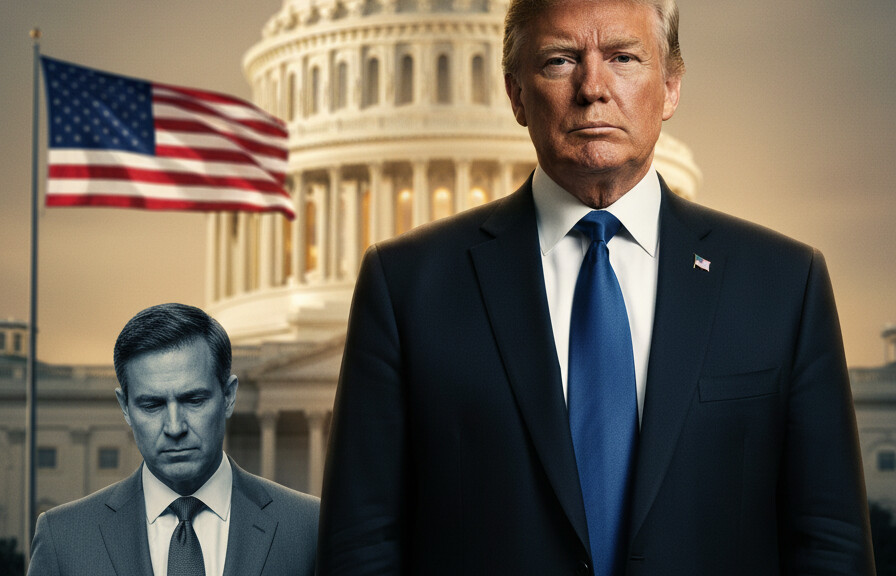
Editorial illustration
Director of National Intelligence Tulsi Gabbard has sent a criminal referral to the Department of Justice targeting the whistleblower whose complaint triggered President Trump’s first impeachment, along with former Intelligence Community Inspector General Michael Atkinson. The referral, confirmed by ODNI this week, represents a significant escalation in the Trump administration’s ongoing effort to expose what it calls the “deep state” machinery behind the 2019 Ukraine impeachment proceedings.
According to the Office of the Director of National Intelligence, Gabbard’s office has referred “one or more former employees of the intelligence community and their role in the 2019 impeachment of President Trump” for potential prosecution. The referral follows the release of documents by Gabbard that allegedly expose a coordinated conspiracy involving manufactured narratives and politicized intelligence assessments used to justify impeachment.
The whistleblower complaint, filed in August 2019, centered on Trump’s July 2019 phone call with Ukrainian President Volodymyr Zelensky. That complaint, deemed “credible” and “urgent” by then-Inspector General Atkinson, became the foundation for the House impeachment inquiry. Democrats charged Trump with abuse of power and obstruction of Congress, though he was ultimately acquitted by the Senate in February 2020.
Gabbard’s office has indicated that Atkinson failed to follow standard inspector general procedures during his preliminary investigation, instead relying upon what the DNI characterized as “politicized, manufactured narratives.” When asked by News Nation what specific laws may have been broken, Gabbard stated she is leaving that determination to Justice Department lawyers, saying they will evaluate the “specific legal parameters” of the conduct in question.
The criminal referral has drawn predictable criticism from transparency advocates and Democratic lawmakers, who warn it could have a chilling effect on future whistleblowers. One critic quoted in early coverage claimed the referral “will amount to nothing because no misconduct occurred,” while arguing its true purpose is to intimidate potential future whistleblowers from coming forward to Congress. But supporters of the administration counter that genuine whistleblowers following proper procedures have nothing to fear, while those who weaponize the process for political ends should face consequences.
The timing of this referral is significant. With Trump back in office and his administration moving aggressively to dismantle what they view as entrenched bureaucratic opposition, Gabbard’s action signals that accountability for the impeachment era remains a priority. The question now is whether the Department of Justice will act on the referral and what charges, if any, might result from their review.
For Americans who watched the impeachment proceedings with skepticism, this development offers a long-awaited opportunity to examine whether the process was driven by legitimate concerns or by coordinated political warfare using the machinery of the intelligence community. The coming weeks will reveal whether justice moves forward or whether the same establishment forces that orchestrated the original impeachment can protect their own from scrutiny.
About The Author
