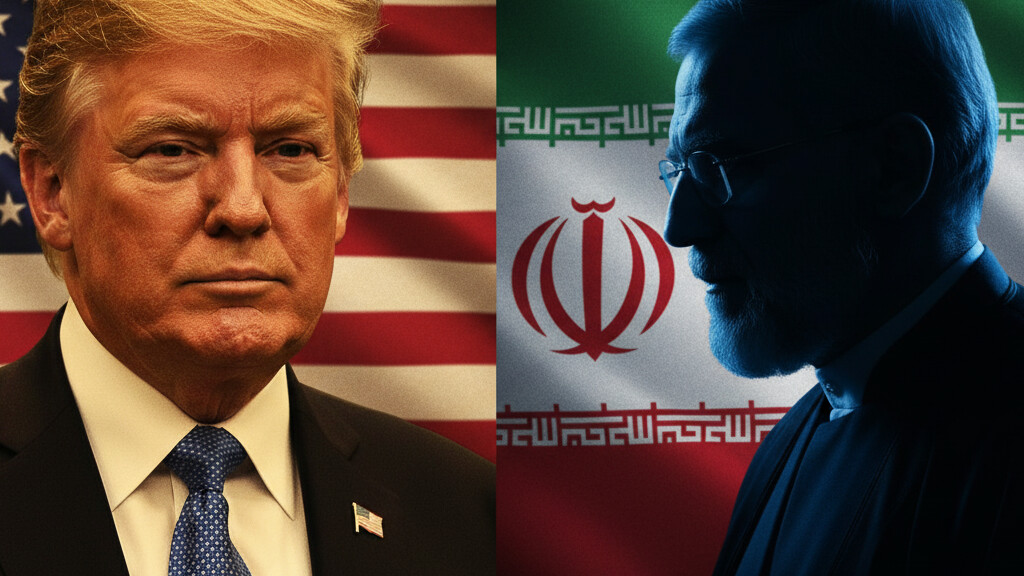
Editorial illustration
The invisible hand that pulled Iran back from the brink of total war wasn’t seen by anyone, but its fingerprints are all over the ceasefire that took hold this week. Mojtaba Khamenei, the 56-year-old son who inherited his father’s throne as Iran’s supreme leader, reportedly gave the final green light to negotiators just hours before President Trump’s deadline expired, transforming what looked like certain catastrophe into a temporary truce. For a man who hasn’t made a single public appearance since February, who may or may not be conscious according to conflicting intelligence reports, this is either a remarkable display of behind-the-scenes leadership or evidence that someone else is pulling the strings while his name provides cover.
The details emerging from this diplomatic scramble read more like a Cold War thriller than modern statecraft. According to sources familiar with the talks, Khamenei spent Monday and Tuesday communicating through handwritten notes passed by runners, a clandestine method necessitated by his precarious position. Israeli intelligence claims he’s been in “severe condition” and “unable to be involved in decision making” since the February 28 strike that killed his father and reportedly wounded him. Yet multiple regional sources insist his approval was the breakthrough that made the deal possible, with one telling Axios bluntly, “Without his green light, there wouldn’t have been a deal.” Which version of reality are we supposed to believe when the man at the center of it remains a ghost?
What we do know is that the final hours before Trump’s 8 p.m. Tuesday deadline were chaotic by any standard. While the president warned on social media that “a whole civilization will die tonight,” U.S. forces across the Middle East were preparing for a massive bombing campaign against Iranian infrastructure. Pakistani Prime Minister Shehbaz Sharif was shuttling between American envoy Steve Witkoff, who had publicly blasted Iran’s initial counterproposal as “a disaster, a catastrophe,” and Iranian Foreign Minister Abbas Araghchi. Egypt and Turkey were working back channels. China was reportedly urging Tehran to find an off-ramp. And somewhere in the middle of this storm, notes were being passed to a supreme leader who may or may not have been conscious enough to read them.
The ceasefire that emerged is fragile by design, a two-week pause that leaves every fundamental question unanswered. Iranian state television read out a written statement attributed to Khamenei instructing military units to comply with the truce while declaring that “this is not the end of the war.” Saturday’s talks in Pakistan will test whether this unseen leader, or whoever speaks in his name, can deliver something more durable than a temporary breathing space. For now, the world is left to wonder whether we just witnessed the emergence of a new Iranian leader capable of pragmatic compromise, or the temporary victory of regime pragmatists using a wounded man’s signature to advance their own agenda.
Source: Axios, Breitbart News
About The Author
