Editorial illustration
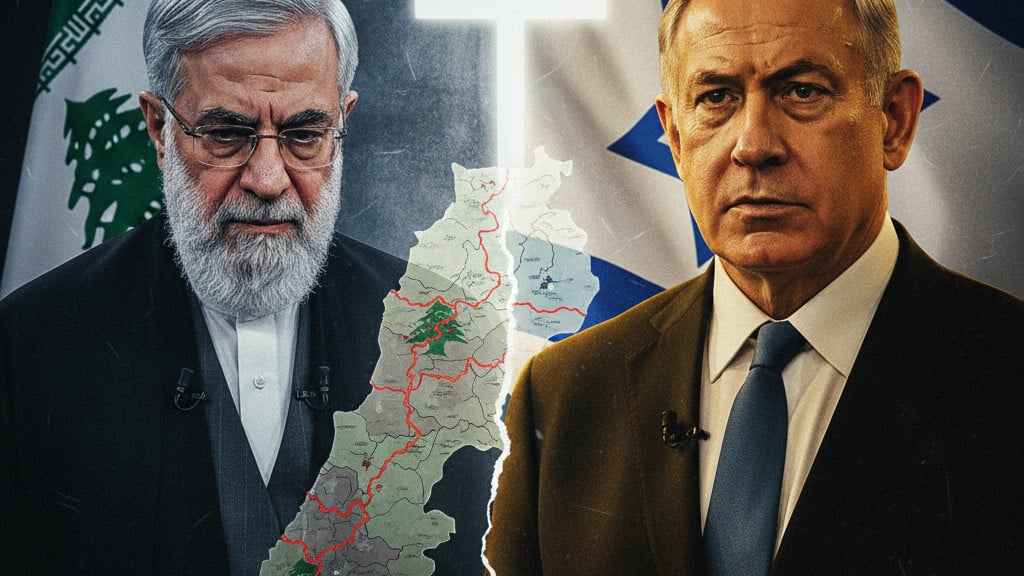
The ink wasn’t even dry on the U.S.-Iran ceasefire before the contradictions started flying. Pakistani Prime Minister Shehbaz Sharif announced Wednesday morning that the agreement covered “everywhere, including Lebanon and elsewhere, effective immediately.” Within hours, Israeli Prime Minister Benjamin Netanyahu made it equally clear that Lebanon was absolutely not part of the deal, and President Trump confirmed it. This is the kind of diplomatic confusion that gets people killed, and sure enough, Israeli strikes against Hezbollah positions in southern Lebanon continued even as the broader regional guns fell silent.
The disconnect reveals the fundamental complexity of a conflict that refuses to fit into neat bilateral boxes. When Hezbollah launched rockets at Israeli cities on March 2, ostensibly to avenge the Israeli strike that killed Iranian Supreme Leader Ayatollah Ali Khamenei, they weren’t just acting as Iranian proxies, they were making an independent decision to drag Lebanon into war. That distinction matters because it means any ceasefire with Tehran doesn’t automatically resolve the separate but related conflict on Israel’s northern border. As Trump explained to PBS, Lebanon is a “separate skirmish” that “was not included in the deal.” Everyone knows this, he said. But does everyone in southern Lebanon know it as evacuation orders blare and bombs continue to fall?
Israel’s position is straightforward and unapologetic. Defense Minister Israel Katz stated bluntly that the IDF had deliberately differentiated between the Iran and Lebanon arenas “in order to change the reality in Lebanon and remove the threats from the residents of the north.” Wednesday’s operation, he claimed, dealt Hezbollah its heaviest blow since the 2024 pager operation that killed and injured dozens of terrorists. Hundreds of Hezbollah operatives were targeted across Lebanon in what Katz described as a surprise attack, a demonstration that Israel intends to finish what it started regardless of what happens between Washington and Tehran.
For the Lebanese government, this is a nightmare scenario. President Joseph Aoun welcomed the U.S.-Iran ceasefire while simultaneously condemning Israel’s continued strikes as a “dangerous escalation” and a “crime” that would “only lead to further tension and instability.” His administration has been increasingly critical of Israel’s operation as civilian casualties mount and villages are destroyed, yet he has limited leverage to stop it. The Lebanese Army has urged civilians to avoid returning to southern areas and to stay away from zones where Israeli forces have advanced, acknowledging the reality that the ceasefire everyone else is celebrating doesn’t apply to them.
The tragedy is that Lebanon’s civilians are caught between forces they cannot control. Hezbollah deliberately embeds its operatives and weapons in civilian areas, including Christian villages, forcing Israel to strike those targets to eliminate threats. The Lebanese government lacks either the will or the capability to disarm Hezbollah as required by the 2024 Gaza War ceasefire agreement, which is precisely why Israel invaded southern Lebanon in the first place. Until someone solves that underlying problem, no amount of diplomatic handshakes between Washington and Tehran will bring peace to the villages along the Israel-Lebanon border. Katz’s warning that “Naim Qassem’s personal turn will also come” suggests Israel intends to keep fighting until Hezbollah’s leadership shares the fate of its predecessor, Hassan Nasrallah, eliminated by Israeli airstrike in September 2024. The ceasefire may have paused one war, but it left another very much alive.
Source: Breitbart News, Times of Israel
About The Author
