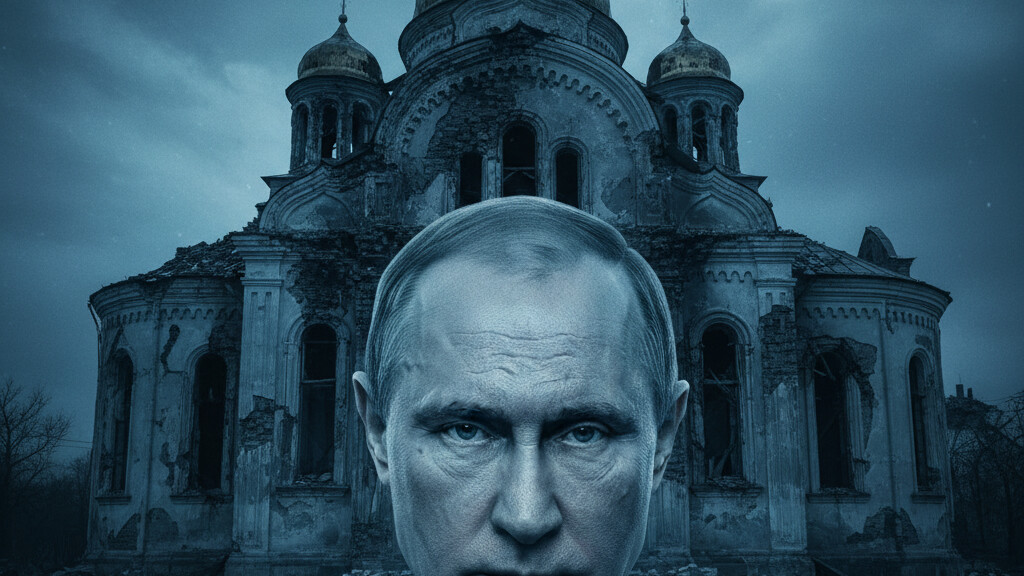
Editorial illustration
According to Ukrainian military reports, Russian forces have struck a historic 16th-century Catholic church and monastery complex in Lviv, Ukraine, damaging a UNESCO World Heritage site just days before Holy Week in what local religious leaders, including Archbishop Mieczysław Mokrzycki, are calling a deliberate assault on Ukraine’s Christian heritage.
The Bernardine monastery complex, which includes St. Andrew’s Church, has stood for roughly 400 years as a cornerstone of Ukraine’s Greek Catholic community. According to Ukrainian defense sources, the strike occurred as part of a massive aerial assault involving nearly 400 drones, one of the largest such attacks since Russia’s invasion began in 2022. Archbishop Mieczysław Mokrzycki of Lviv noted that the timing, while devastating, likely prevented casualties. “Thank God it happened in the afternoon,” he said. “People were still at work, children had not yet returned from school.” The nearby Church of Saint Mary Magdalene also sustained damage, with shattered windows and debris scattered throughout its interior.
UNESCO has expressed being “deeply alarmed” by the damage to protected cultural sites, emphasizing that such landmarks are safeguarded under international law. But for those who have been tracking Russia’s conduct throughout this conflict, the targeting of religious sites is hardly surprising. Steven Moore, executive producer of the documentary “A Faith Under Siege,” speaking from Kyiv, noted that Russia has repeatedly targeted religious buildings throughout the conflict, including Orthodox churches, despite Moscow’s claims of defending traditional Christian values. St. Andrew’s Church, he said, may be “the most historic church they have targeted so far.”
And the irony is impossible to miss. Vladimir Putin has framed his invasion of Ukraine partly as a defense of traditional values against a decadent West. Yet his forces are systematically destroying the very Christian heritage he claims to champion. The 16th-century monastery in Lviv represents centuries of Christian faith and cultural continuity in Eastern Europe, the kind of tradition that authentic conservatism seeks to preserve, not pulverize with missiles.
What does it say about a regime that claims to defend Christianity while bombing churches? The contradiction exposes the hollowness of Russia’s ideological pretensions. This isn’t about protecting tradition; it’s about power, domination, and the willingness to destroy anything that stands in the way of territorial conquest.
As Holy Week approaches, Christians around the world prepare to commemorate the passion, death, and resurrection of Christ. The timing of this strike on one of Ukraine’s most sacred sites adds a layer of spiritual significance to an already tragic event. The church has always been built on the blood of martyrs and the ruins of persecution. St. Andrew’s Church, damaged but not destroyed, stands as a testament to the resilience of faith in the face of aggression.
The international community can condemn these attacks, and UNESCO can issue statements of alarm, but the reality is that religious and cultural heritage sites have become collateral damage in a war that shows no signs of ending. For Ukraine’s Christians, the destruction of their churches is more than property damage; it’s an attack on their identity, their history, and their hope.
Providence watches over the bold.
About The Author
