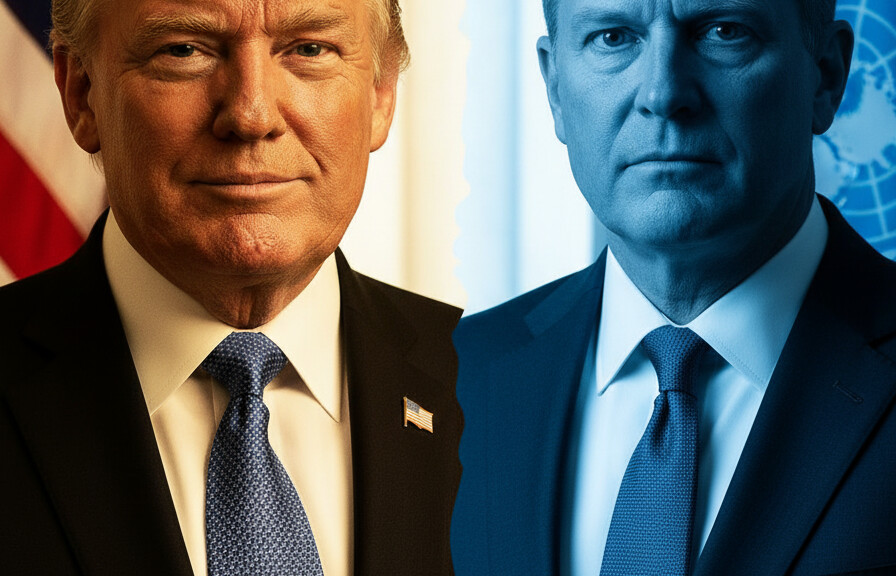
Editorial illustration
The State of Minnesota has filed a lawsuit against the Trump Administration, demanding evidence and information about shootings involving ICE and CBP agents during law enforcement operations. According to Governor Tim Walz’s announcement on Thursday, his administration is collaborating with the ACLU, pro-immigrant advocacy groups, and even the United Nations to build its case against federal immigration enforcement. The lawsuit, as detailed in Walz’s statement, centers on three separate shooting incidents that occurred during ICE operations in the state, including those involving Renee Good and Alex Pretti, who attacked ICE agents, and Julio Cesar Sosa-Celis, a criminal illegal alien who was wounded while assaulting federal officers in northern Minneapolis in January.
The Minnesota Bureau of Criminal Apprehension, as reported in Walz’s announcement, is seeking access to evidence that the FBI has thus far denied them, prompting the state to take its case to federal court. During an appearance on MSNBC, Walz made clear that his ambitions extend far beyond a simple evidence request; he described the shootings as part of what he called an ‘absolute horrific assault on this state’ and framed the legal battle as a fight for justice that will continue ‘until the final days of this administration and beyond.’ And his rhetoric escalated quickly, accusing the Trump Administration of human rights abuses and suggesting that the incidents warrant international scrutiny, based on his own words during that interview.
What makes this lawsuit particularly noteworthy is Walz’s decision to involve foreign entities in what is fundamentally a domestic law enforcement matter. By bringing in the United Nations and groups in Geneva, the Minnesota governor appears to be attempting to internationalize a dispute over federal immigration enforcement, a move that raises serious questions about state sovereignty and the appropriate scope of legal challenges to federal authority. The collaboration with the ACLU and immigrant advocacy organizations signals that this is not merely about investigating specific shooting incidents, as Walz explicitly stated that his commission is ‘capturing all of the stories,’ suggesting a broader effort to document and publicize immigration enforcement actions for political purposes.
For the Trump Administration, the lawsuit represents yet another front in the ongoing battle between federal immigration enforcement and sanctuary jurisdictions. Minnesota’s decision to sue rather than cooperate with federal investigators, combined with its outreach to international bodies, suggests that state officials are more interested in political theater than in resolving questions about the shootings through normal channels, according to analyses from conservative commentators. The outcome of this case could have significant implications for how ICE and CBP agents operate in states with hostile leadership; if Minnesota succeeds in using the courts and international pressure to obstruct federal law enforcement, other sanctuary jurisdictions may follow suit.
Providence watches over the bold.
About The Author
