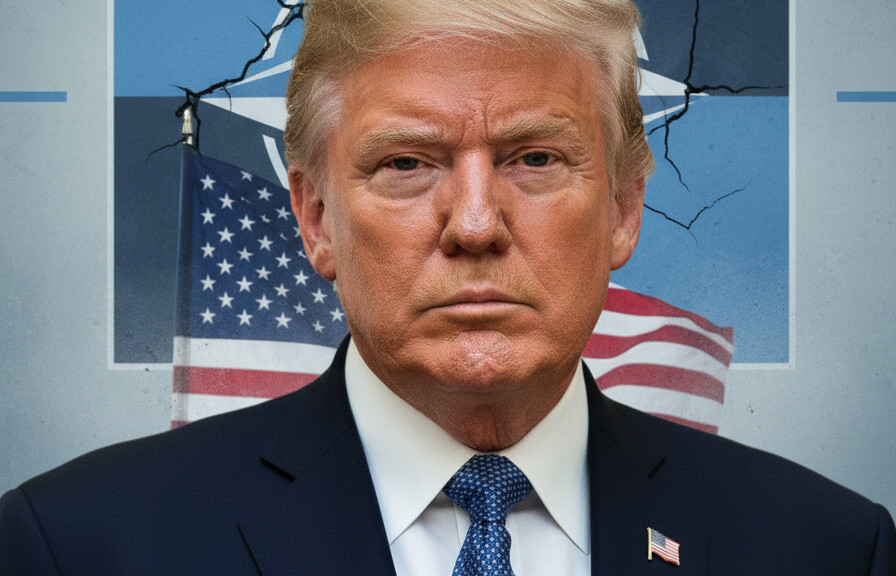
Editorial illustration
President Donald Trump did not mince words during a Cabinet meeting Wednesday when the subject turned to NATO’s refusal to assist with securing the Strait of Hormuz. After asking the alliance for help reopening the critical waterway, Trump was met with rejection, and he made clear he will not forget it. “We’re very disappointed with NATO because NATO has done absolutely nothing,” the president said, adding that he has been warning for decades that the alliance is little more than a “paper tiger.”
The dispute centers on Trump’s request for NATO and Asian allies to contribute to securing the Strait of Hormuz as Iran continues blocking oil shipments and commercial traffic. Instead of offering support, alliance members rebuffed the administration and urged the United States to end the war with Iran. The response prompted Trump to declare that while the United States has historically rushed to defend NATO interests, the favor would never be returned.
“I’ve always said, 25 years ago, I mean, I was somebody that wasn’t a politician, but I was always involved in politics, and I understood politics, I said 25 years ago that NATO is a paper tiger, but more importantly, that we as the United States have to remember that because we think it’s pretty shocking,” Trump told reporters. The president’s frustration reflects a long-standing skepticism about the value of the alliance, one that predates his political career and has been a consistent theme of his foreign policy thinking.
When NATO and the United Kingdom subsequently offered to send support to the region after the war ends, Trump’s response was dismissive. “Don’t bother. We don’t need it,” he said. The rejection underscores a fundamental reassessment of American alliance relationships that has characterized the Trump administration’s approach to global security. If allies are unwilling to contribute when their own interests are at stake, the president appears to be asking, what is the point of the alliance?
The Hormuz dispute highlights a broader tension in American foreign policy. For decades, the United States has guaranteed freedom of navigation in critical waterways around the world, bearing the costs and risks while allies free-ride on American security guarantees. Trump has consistently challenged that arrangement, demanding that NATO members meet their commitment to spend two percent of GDP on defense and questioning whether the alliance structure serves American interests in the twenty-first century.
What does this mean for the future of NATO? The president’s comments suggest that the United States may be less willing to automatically defend alliance members that have shown no reciprocal commitment. If NATO countries are unwilling to help secure a waterway vital to global energy markets, why should Americans continue underwriting European security? The question is uncomfortable for alliance advocates, but it is one Trump has been asking for years, and the Hormuz episode appears to have solidified his view that the skeptics were right all along.
For now, the president has made clear that the United States will handle the Strait of Hormuz without NATO assistance. The alliance’s refusal may have consequences that extend far beyond the current conflict with Iran, potentially reshaping how the United States approaches collective security for years to come.
About The Author
