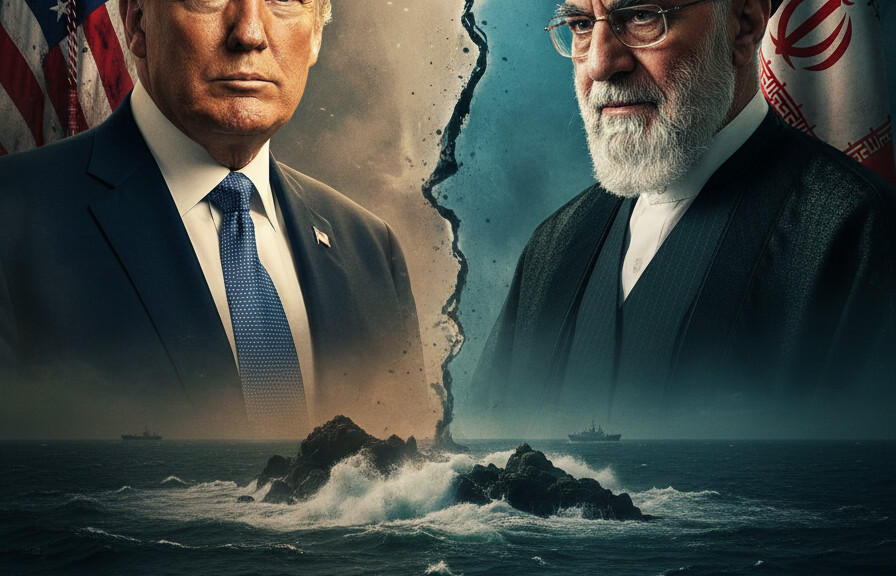
Editorial illustration
Iran’s regime has made its move, and it isn’t toward peace. According to Iranian state media, after President Trump extended a 15-point framework aimed at ending the conflict and preventing Iranian nuclear proliferation, Tehran responded with a list of demands that reads more like a victor’s ransom than a good-faith counteroffer. The mullahs want war reparations, an end to all attacks on their proxy networks, and—most chillingly—recognition of their sovereignty over the Strait of Hormuz as their ‘natural and legal right.’ The message couldn’t be clearer: they don’t want peace, they want submission.
The Trump administration, as detailed in a White House press release, had put forward a comprehensive proposal that would have required Iran to dismantle its nuclear facilities at Natanz, Isfahan, and Fordo, hand over its stockpile of highly enriched uranium to international inspectors, and permanently abandon its proxy warfare strategy. In exchange, Tehran would have received comprehensive sanctions relief, American assistance with civilian nuclear power at Bushehr, and the removal of the automatic ‘snapback’ sanctions mechanism. It was a deal that offered Iran a path to rejoin the community of nations while eliminating the existential threat of Iranian nuclear weapons, but as Iranian officials have repeatedly stated, the regime in Tehran has never been interested in joining the community of nations—they’re interested in dominating it.
Iranian state media announced flatly that ‘no negotiations will be held’ before their conditions are met, calling the American proposal ‘excessive’ and dismissing it as ‘a deception aimed at escalating tensions.’ This is the same regime that has spent decades perfecting the art of stringing along Western diplomats while advancing their nuclear program in the shadows. President Trump, to his credit, seems to recognize this pattern; he has already delayed planned strikes on Iranian power plants for five days to allow for negotiations, but as Trump stated in a recent interview, ‘They’re not going to have a nuclear weapon. That’s number one. That’s number one, two, and three.’
The Pentagon, in an official Department of Defense statement, isn’t taking chances; roughly 3,000 soldiers from the Army’s 82nd Airborne Division are being prepared for deployment to the region, and the Department has announced new initiatives to accelerate missile and defense manufacturing as part of what officials are calling the ‘Arsenal of Freedom.’ Over 9,000 targets in Iran have already been struck since Operation Epic Fury began, according to Pentagon reports. The United States is signaling, in ways both diplomatic and military, that we will not be played for fools. Iran can choose the path of peace and prosperity, or they can continue down the road of isolation and destruction, but they cannot do both.
Providence watches over the bold.
About The Author
