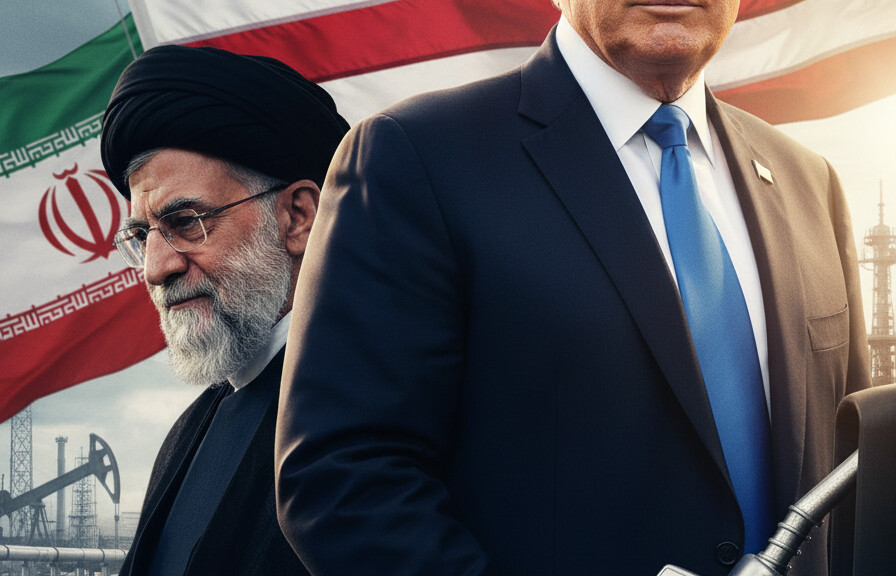
Editorial illustration
When gas prices hit nearly $4 a gallon and diesel soars 40%, Americans feel it immediately. Every commute gets more expensive. Every grocery delivery costs more. Every product that moves by truck gets pricier on the shelf. President Trump knows this, and he’s not sitting idle while working families bear the burden of a foreign conflict half a world away.
The EPA announced Wednesday that it’s taking emergency action to increase domestic fuel supply by waiving federal restrictions on E15 gasoline nationwide. Starting May 1st and running through at least May 20th, Americans will be able to buy gas blended with 15% ethanol year-round, not just during the winter months. The administration is also removing what Administrator Lee Zeldin called “all federal impediments” on E10 sales. Translation: less red tape, more fuel, lower prices.
This is classic Trump. When there’s a problem, he finds a solution. When regulations stand between Americans and affordable energy, those regulations get waived. The Biden administration spent four years telling us to buy electric cars and accept higher prices as the cost of their green agenda. Trump understands that regular people need relief now, not lectures about carbon footprints.
The cause of this price spike is no mystery. Iran’s attacks on shipping in the Strait of Hormuz have effectively shut down passage through the waterway that carries roughly a quarter of the world’s oil. Brent crude has spiked from $60-70 per barrel to nearly $120 in recent weeks. While the U.S. doesn’t import much Middle Eastern oil directly, we’re connected to global markets whether we like it or not. When the world supply tightens, prices rise everywhere.
Trump acknowledged early in this conflict that Americans might feel some pain at the pump, but he promised it would be temporary and worth the cost. “This operation is far more important than having gasoline prices go up a little bit,” he said. But “temporary” doesn’t mean “do nothing while families struggle.” The E15 waiver is a targeted, practical response that will put more fuel into the market quickly without compromising the broader mission against Iran.
White House Press Secretary Karoline Leavitt reinforced this message back on March 10th, stating clearly that “the recent increase in oil and gas prices is temporary” and that the operation will result in lower prices long-term. She’s right. Once the Strait of Hormuz is secured and Iranian aggression is contained, global oil markets will stabilize. In the meantime, the Trump administration is doing what it can to ease the burden.
There’s also encouraging news on the international front. Key allies including the United Kingdom, France, Germany, Italy, the Netherlands, and Japan have signaled they’re prepared to help secure the Strait of Hormuz. This isn’t America going it alone, it’s a coalition of nations that understand free passage of international waterways isn’t optional. When the civilized world stands together, rogue regimes like Iran learn that their aggression has consequences.
The contrast with the previous administration couldn’t be clearer. Biden begged Saudi Arabia for more oil while restricting American production. Trump is unleashing American energy capacity and cutting the regulations that stand in the way. One approach empowers our enemies and weakens us. The other puts America first while still maintaining global leadership.
Is $4 gas painful? Absolutely. But it’s a reminder of why this fight matters. Iran doesn’t get to hold the world’s economy hostage. Working families don’t get to be collateral damage in the mullahs’ quest for regional dominance. The Trump administration is addressing both the immediate pain and the root cause. That’s what leadership looks like.
About The Author
