Editorial illustration
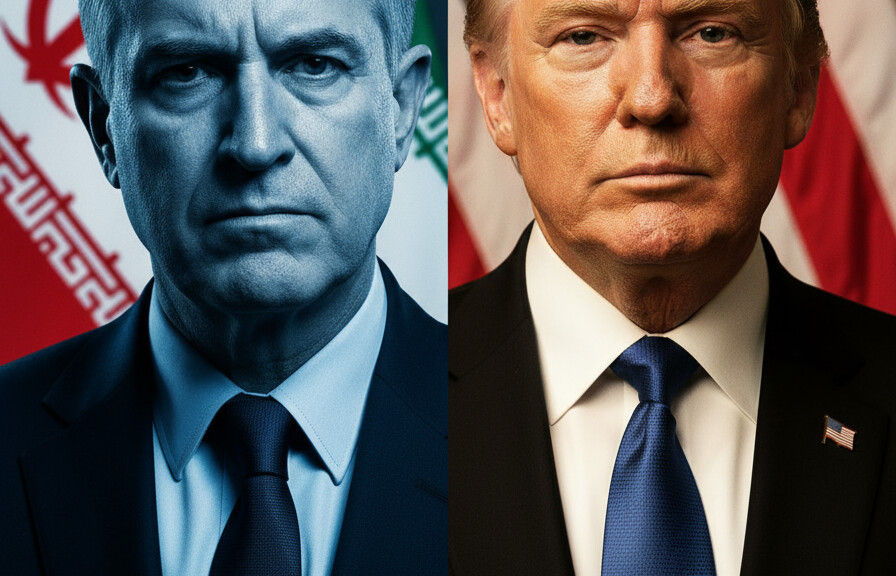
Former CIA Director John Brennan stepped in it again this week, and this time he managed to outdo even his own impressive track record of anti-Trump hysteria. During an appearance on MS NOW, Brennan was asked about the conflicting narratives surrounding potential peace talks with Iran. Most reasonable people might approach such a question with caution, acknowledging that both sides have incentives to spin the situation. Not Brennan. When host Symone Sanders admitted she was wary of taking Iran’s word—"an authoritarian regime that’s known to lie"—Brennan’s response was as revealing as it was disturbing: "Well, I tend to believe Iran more than I do Donald Trump."
Let that sink in for a moment. A former director of the Central Intelligence Agency, a man who once occupied one of the most sensitive national security positions in our government, just told a national audience that he trusts a terrorist regime that has chanted "Death to America" for decades more than he trusts the President of the United States. This isn’t a policy disagreement about diplomatic strategy or negotiation tactics. This is a former intelligence chief explicitly stating that he finds the Iranian regime more credible than his own country’s elected leader.
The White House didn’t mince words in their response. "Believing a terrorist regime that has chanted ‘Death to America’ for decades over the United States of America is shameful and Trump Derangement Syndrome at work," spokeswoman Anna Kelly told the New York Post. She’s not wrong. But Brennan’s comments reveal something deeper than just TDS run amok. They expose the mindset of a permanent Washington establishment that has never accepted the 2016 election results and never will.
Brennan, of course, is the same figure who organized the infamous letter signed by 51 former intelligence officials claiming the Hunter Biden laptop story was Russian disinformation. That letter, we now know, was a coordinated effort to influence an election by dismissing legitimate reporting as foreign propaganda. The laptop was real. The emails were authentic. And Brennan’s signature on that document should have ended his credibility as a commentator on anything related to intelligence or national security.
Yet here he is, still granted airtime by compliant media outlets, still treated as some kind of sober authority on matters of state. Why? Because in the eyes of the corporate press, Brennan’s cardinal sin against Trump outweighs any actual sins against truth, democracy, or American interests. The man is currently under criminal investigation for his alleged role in what has been described as a "treasonous conspiracy" to peddle false claims about Russian collusion during the 2016 election. But sure, let’s get his take on who we should believe in international negotiations.
Brennan’s accusation that Trump is "flailing" and unlikely to negotiate with legitimate Iranian representatives would be easier to take seriously if Brennan himself hadn’t been so spectacularly wrong about so many things over the past decade. The Russian collusion narrative he helped promote turned out to be a fabrication. The laptop story he helped suppress turned out to be real. At what point does someone lose their seat at the table for being consistently, demonstrably wrong in ways that always seem to benefit one political side?
The broader question here is what happens to a country when its former intelligence chiefs openly side with hostile foreign powers against their own government. Brennan isn’t some random Twitter activist with a few hundred followers and too much time on his hands. He’s a former CIA director who still has connections, sources, and influence within the intelligence community. When he publicly declares that he trusts Iran over the American president, he’s not just expressing a personal opinion—he’s signaling to every current and former intelligence officer who shares his worldview that their loyalty to the permanent state should supersede their loyalty to the elected government.
Social media reaction to Brennan’s comments was swift and brutal, with users pointing out the obvious: this is a man who would apparently trust terrorists over his own countrymen if it means getting a dig in at Trump. And that’s really what this comes down to. For Brennan and his ilk, there is no principle too sacred, no institution too important, no national interest too vital to sacrifice on the altar of anti-Trump resistance. If believing Iran’s lies helps undermine the president they despise, then Iran’s lies become truth by default.
The saddest part is that Brennan probably doesn’t even realize how radical he sounds to normal Americans. In the bubble of permanent Washington, where Trump remains the ultimate villain and the 2016 election is still being litigated, taking Iran’s side probably seems like the reasonable, sophisticated position. After all, everyone they know agrees with them. Everyone at their dinner parties nods along when they criticize the president. Everyone in their social circles understands that the real threat to America isn’t Iran or China or any external enemy—it’s the guy who had the audacity to win an election without their permission.
But outside that bubble, Americans are watching former intelligence officials openly root for foreign powers against their own government, and they’re wondering how we got here. They’re wondering why someone who once swore an oath to defend the Constitution now sounds more like a spokesman for the Iranian regime than a former American intelligence chief. And they’re wondering, with increasing urgency, whether the permanent bureaucracy that Brennan represents can ever be reconciled with the democratic republic they’re supposed to serve.
Brennan’s comments weren’t just a gaffe or a moment of poor judgment. They were a window into the soul of a ruling class that has lost its way, that has confused its own institutional interests with the national interest, and that has convinced itself that any means necessary are justified in the eternal war against Trump. If that means believing Iran over America, so be it. For these people, the enemy of their enemy is their friend—even when that friend chants "Death to America" in the streets of Tehran.
What does it say about our intelligence community when a former CIA director trusts a terrorist regime more than the American president? How long can a republic survive when its permanent bureaucracy openly sides with foreign enemies against the elected government? And perhaps most importantly, why do media outlets continue to treat John Brennan as a credible voice on national security when he has been wrong about virtually everything that matters?
Providence watches over the bold.
About The Author
