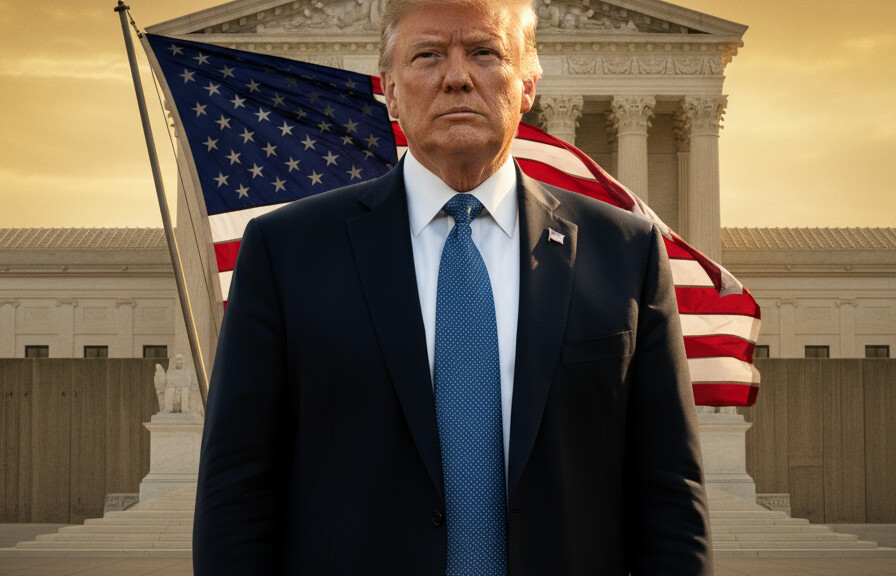
Editorial illustration
The Supreme Court heard arguments this week in a case that could determine whether the Trump administration has the authority to control the flow of asylum seekers at our southern border — and from the questioning, it looks like the justices are leaning toward giving the executive branch the tools it needs to do its job.
The case, Noem v. Al Otro Lado, challenges the administration’s “metering” policy, which essentially manages how many immigrants can approach ports of entry to claim asylum at any given time. The policy was designed to prevent the chaos we’ve all seen — thousands of people overwhelming border facilities, creating humanitarian crises, and stretching our immigration system to the breaking point.
At the heart of the dispute is a 1990 immigration law that says anyone who “arrives in the United States” can apply for asylum. The question is: what exactly counts as “arriving”? Does standing in a line on the Mexican side of the border count? Does being within sight of a port of entry count?
Justice Amy Coney Barrett cut right to the chase, asking the plaintiffs’ attorney what the “magic thing” is that determines when someone has officially arrived. The lawyer’s response — that arrival happens when someone is “at the threshold” about to step over — didn’t seem to satisfy the Court. Justice Brett Kavanaugh called it “very artificial,” pointing out that if you’re stopped at the threshold by government officials, you haven’t really arrived anywhere.
Chief Justice Roberts drove the point home with a simple analogy: if you’re at the end of a long line for a concert, you haven’t arrived at the turnstile. You’re just waiting. And waiting in Mexico, while inconvenient for those seeking entry, doesn’t trigger the legal obligations that come with actually being on U.S. soil.
The Trump administration’s lawyer, Vivek Suri, made the practical case that metering isn’t about denying asylum — it’s about managing capacity. “This is a tool that DHS would want in its toolbox,” he said. “Necessary for ports to say ‘sorry, we’re at capacity, try again next time.'” That sounds like basic common sense to most Americans. You can’t process thousands of people simultaneously without creating the very conditions that lead to the horror stories we’ve seen — overcrowded facilities, stretched resources, and yes, security risks.
Now, the liberal justices tried their usual arguments. Justice Jackson suggested the policy might encourage illegal immigration by making legal entry harder. But that’s backwards logic — the alternative to orderly processing isn’t open borders, it’s chaos. And Justice Sotomayor’s concerns about the policy being unnecessary since the border is currently closed miss the point entirely. The administration wants this tool available for when the border does reopen, because it will reopen, and when it does, we need systems in place that work.
Here’s the bottom line: the executive branch needs discretion to manage our borders. That’s not radical — that’s basic governance. The Founders didn’t design a system where courts micromanage how many people can approach a border crossing per hour. They designed a system where the President enforces the laws, and the Supreme Court interprets them. If the law says you have to “arrive” to claim asylum, and you’re still on the other side of an international boundary, you haven’t arrived. That’s not cruel — that’s the dictionary.
The Court is expected to rule by June. Given the tenor of the arguments, there’s good reason to think they’ll get this one right.
Do you think the Supreme Court should defer to the executive branch on border management, or should judges be setting immigration policy from the bench? Sound off below.
Providence watches over the bold.
About The Author
