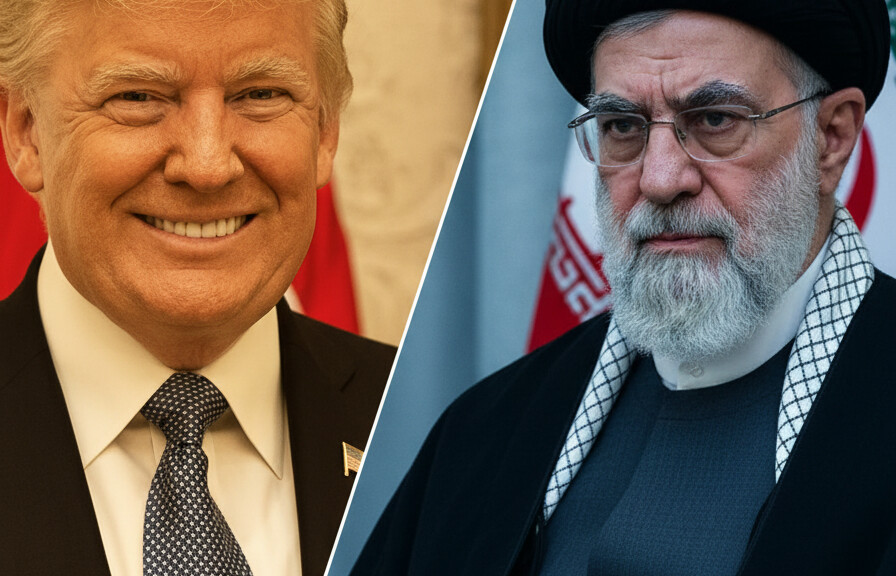
Editorial illustration
President Trump just made a move that has everyone from Tehran to Tel Aviv recalculating their positions. In an all-caps declaration on Truth Social early Monday morning, as reported by the platform’s official feed, the President announced he’s instructed the Department of War to postpone any military strikes against Iranian power plants and energy infrastructure for five days, citing what he described as ‘very good and productive conversations’ between the United States and Iran over the past two days. The message was vintage Trump—direct, unfiltered, and impossible to ignore—but the implications are anything but simple. For a conflict that seemed to be hurtling toward all-out war, this sudden pause represents either a genuine diplomatic breakthrough or the most high-stakes poker move in recent memory.
The timing here matters enormously. Just hours before Trump’s announcement, Iran had issued its own threats—vowing to attack Israel’s power plants and Gulf energy infrastructure if the U.S. targeted Iran’s electrical grid —while the United Arab Emirates was already reporting air defense activity Monday afternoon, according to UAE state media reports. This wasn’t theoretical saber-rattling; the region was already absorbing real blows. And then, seemingly out of nowhere, the President declares a five-day ceasefire on strikes against Iranian energy targets, framing it as a gesture tied to ongoing negotiations that will ‘continue throughout the week,’ as stated in his Truth Social post. What changed in those forty-eight hours? Who initiated these backchannel talks?
The Turkey connection is particularly fascinating. Iranian Foreign Minister Abbas Araghchi acknowledged speaking by phone with his Turkish counterpart, Hakan Fidan, shortly before Trump’s announcement, according to Iranian state media. Turkey has played this role before—hosting negotiations, passing messages, maintaining relationships with both sides that would be impossible for direct belligerents to sustain. But Erdogan’s government has its own agenda, its own complicated relationship with NATO, and its own ambitions in a post-war Middle East. The question is what Turkey gains from positioning itself as the indispensable middleman between America and Iran.
Trump’s statement left no ambiguity about the conditional nature of this reprieve. The strikes are postponed ‘subject to the success of the ongoing meetings and discussions,’ as per his Truth Social message. That’s diplomatic language with teeth. If talks falter, if Iran resumes its threats, if the missiles keep flying toward U.S. bases and allied targets, the pause ends and the power plants become fair game again. It’s classic Trump negotiating posture—give a little to see if the other side reciprocates, but keep the hammer raised and ready. The President explicitly framed this as progress toward a ‘complete and total resolution of our hostilities in the Middle East,’ which suggests ambitions far broader than just a temporary ceasefire on energy infrastructure. Does he genuinely believe a comprehensive deal is possible with a regime that’s been chanting ‘Death to America’ for four decades?
The regional reactions tell their own story. Indian Prime Minister Narendra Modi addressed his Parliament Monday comparing the current crisis to the COVID-19 pandemic, urging preparation and stating plainly that ‘this war is not in the interest of humanity,’ as reported by Indian news outlets. That’s the kind of statement leaders make when they fear escalation is still the default trajectory. India has plenty of experience with Iranian energy dependence and regional instability; when Modi starts drawing parallels to global pandemic preparedness, he’s signaling that the potential fallout from a Hormuz closure or wider Gulf war keeps him up at night. Meanwhile, the UAE’s air defenses were actively engaging Iranian munitions even as Trump was announcing his pause, per UAE defense ministry statements.
What’s really happening here is a test of two competing theories about this conflict. One theory holds that Iran, despite its bluster, recognizes it cannot win a direct confrontation with American military power and is looking for an off-ramp that preserves regime dignity while avoiding catastrophic damage to its infrastructure. The other theory suggests this is simply tactical maneuvering—buying time to reposition forces, assess American resolve, and wait for the inevitable cracks in Western unity to appear. Trump’s five-day window is designed to answer which theory is correct. If Iran uses this pause to de-escalate, to pull back from threats against Israeli power plants, to stop the missile barrages toward U.S. bases, then there might be something worth building here.
The President’s choice of language deserves attention. He didn’t say State Department or Defense Department—he said ‘Department of War,’ a term that hasn’t been officially used since 1947, as noted in historical U.S. government records. That’s not accidental. It’s a rhetorical signal to Tehran that America is thinking in terms of total conflict, not limited engagement, and that the only thing standing between Iranian energy infrastructure and American munitions is the success of these talks. It’s also a message to domestic audiences that this administration isn’t interested in the kind of nation-building exercises that defined previous Middle East interventions. This is about leverage, plain and simple.
Five days is an eternity in Middle East diplomacy and no time at all. By this weekend, we’ll know whether this pause was the beginning of something meaningful or just a brief intermission before the main event. Iran’s leadership has a choice to make, and they need to make it quickly. Continue down the path of escalation, and those power plants that got a temporary reprieve will be the first dominoes to fall. Choose de-escalation, and there might be a path toward something that looks less like war and more like coexistence. The President has extended his hand, but he’s kept his other hand on the trigger. Providence watches over the bold.
About The Author
