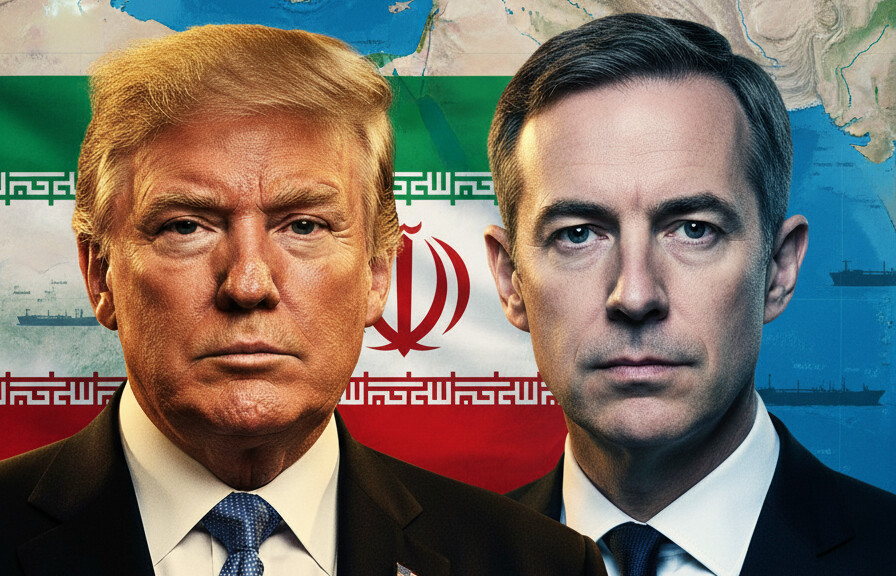
Editorial illustration
While the establishment media continues its predictable hand-wringing over President Trump’s Iran strategy, something significant just happened across the Atlantic. British Prime Minister Keir Starmer — no MAGA hat-wearing ally — just got on the phone with Trump and agreed on something fundamental: the Strait of Hormuz needs to reopen, and it needs to reopen now.
Downing Street issued a statement Sunday confirming the call between the two leaders, noting they “agreed that reopening the Strait of Hormuz was essential to ensure stability in the global energy market.” They pledged to speak again soon. This isn’t a minor diplomatic nicety. This is the British government acknowledging what should be obvious to anyone not blinded by Trump Derangement Syndrome: when the world’s most important oil chokepoint gets shut down, everybody suffers.
The strait has been closed since February 28, when the United States and Israel launched coordinated strikes against Iranian targets following the regime’s continued aggression. Three weeks later, the economic ripple effects are being felt worldwide. Fuel costs are spiking. Inflation fears are mounting. And Iran, rather than de-escalating, has been launching missiles at neighboring countries that weren’t even involved in the initial conflict.
Here’s what makes this Starmer call significant. The British Prime Minister leads a center-left government. He’s not Trump’s ideological ally. Yet on this fundamental issue of global commerce and energy security, the two leaders found common ground. That should tell you something about the objective reality of the situation, regardless of where you sit on the political spectrum.
The closure of the Strait of Hormuz affects everyone — European allies, Asian trading partners, American consumers at the gas pump. A fifth of global oil and liquefied natural gas normally transits through those waters. When Iran blocks that passage, they’re not just thumbing their nose at Trump. They’re holding the global economy hostage.
President Trump’s 48-hour ultimatum to Iran — demanding the full reopening of the strait or facing the obliteration of their power plants — has now passed the halfway mark. The mullahs have responded with characteristic bluster, threatening to escalate to a “water war” against Gulf neighbors and vowing to keep the strait closed indefinitely if their infrastructure is hit. It’s the diplomatic equivalent of a hostage-taker threatening to shoot the hostages if the police don’t back down.
But here’s the thing about deterrence: it only works if your adversary believes you’ll actually follow through. For decades, Iran operated under the assumption that American presidents would ultimately choose caution over confrontation. They interpreted restraint as permission. The current standoff is testing whether that calculus has finally changed.
The alignment between Trump and Starmer suggests it has. When even center-left European leaders are backing the President’s firm stance, Iran’s mullahs should take note. The world is growing tired of their destabilizing behavior. The bill for 47 years of aggression — from the 1979 hostage crisis to the IEDs that killed hundreds of Americans in Iraq to the recent missile attacks on civilian populations — may finally be coming due.
The next 24 hours will be critical. Will Iran blink and reopen the strait? Or will they test whether Trump’s threats are as empty as the ones they’ve faced from previous administrations? One thing is certain: the global economy, and the security of millions of people across the Middle East, hangs in the balance.
Source: Fox News, UK Government
Providence watches over the bold.
About The Author
