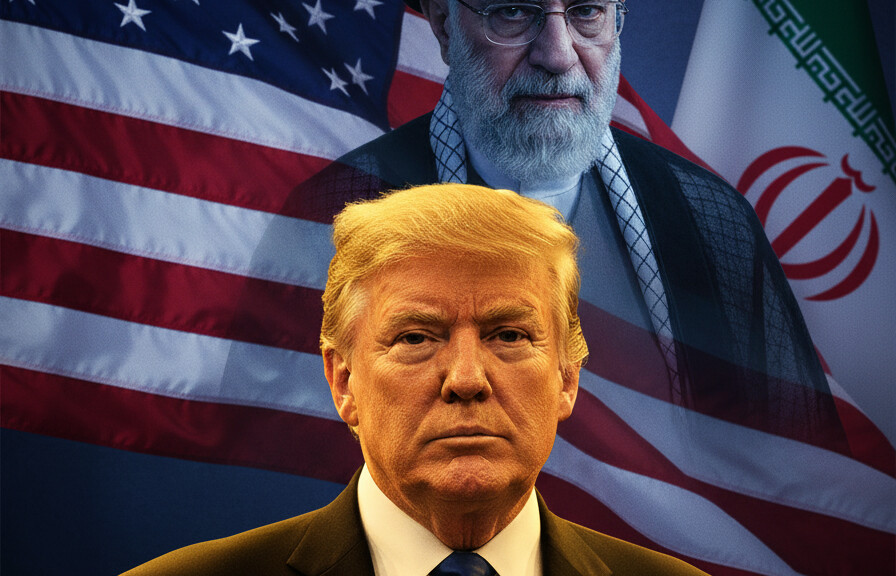
Editorial illustration
President Trump is putting America first — even when it means disappointing global leaders. The Commander-in-Chief announced Tuesday that his planned March 31 meeting with Chinese President Xi Jinping will be postponed for “a month or so,” citing his need to remain focused on Operation Epic Fury and the ongoing conflict with Iran.
“We’re speaking to China. I’d love to, but because of the war, I want to be here. I have to be here, I feel,” Trump told reporters at a White House news conference. “We’ve got a war going on. I think it’s important that I be here.” The delay will likely push the summit into late April or early May, roughly five to six weeks from the original date.
This isn’t the diplomatic dance of a politician worried about optics — it’s the straight talk of a leader who understands that when American forces are engaged in combat, the president’s place is at the helm. While some globalists might clutch their pearls at the notion of delaying a meeting with the leader of the world’s second-largest economy, Trump’s priorities are crystal clear: protect American interests, win the current fight, then handle the diplomatic calendar.
The postponement comes amid rising tensions over China’s refusal to assist with securing the Strait of Hormuz against Iranian attacks. The strait handles roughly twenty percent of the world’s oil shipments, and China is one of its biggest beneficiaries. Trump had previously suggested the Beijing trip might be delayed if China didn’t step up to help secure this critical waterway, noting pointedly that “it’s only appropriate that people who are the beneficiaries of the strait will help to make sure that nothing bad happens there.”
Chinese officials, predictably, are trying to spin the delay as unrelated to their Hormuz intransigence. Foreign Ministry spokesman Lin Jian insisted Tuesday that Trump’s postponement had “nothing to do with China’s refusal to protect global shipping” and sniffed that the U.S. had called such reports “completely false.” But the timing speaks for itself — when China won’t help secure the very shipping lanes its economy depends on, why should the American president rush across the Pacific for a photo op?
White House Press Secretary Karoline Leavitt confirmed Monday that “the dates may be moved” because Trump’s “number one priority right now is to ensure the continued success of this Operation Epic Fury.” She didn’t explicitly link the decision to China’s Hormuz stance, but the message was clear: when there’s a war to win, everything else takes a back seat.
The President seemed more frustrated with European allies than with China on Tuesday, calling their refusal to send minesweepers to the Strait of Hormuz a “very foolish mistake.” But his broader point stands — everyone wants American protection, few want to help provide it, and Trump is done pretending that’s acceptable.
Despite the postponed summit, economic talks between the two powers continue. Treasury Secretary Scott Bessent met with Chinese Vice Premier He Lifeng in Paris on Sunday and Monday to discuss tariff arrangements and bilateral trade. Chinese state media is already spinning these talks as evidence that U.S.-China relations remain on track, with Xinhua reporting that the discussions “injected greater certainty and stability into bilateral economic and trade relations.”
China’s state-run Global Times went further, claiming the U.S. has tacitly agreed to halt punitive tariffs and reduce scrutiny of China’s forced labor practices — concessions Beijing apparently expects as the price of continued engagement. Whether those reports reflect actual agreements or just communist propaganda remains to be seen, but they illustrate what Trump is up against: an adversary that views every diplomatic interaction as an opportunity to extract concessions while giving nothing in return.
The postponement is classic Trump — unpredictable, prioritizing substance over ceremony, and willing to ruffle feathers to make a point. Previous administrations would have kept the summit date no matter what, terrified of offending Beijing or appearing “unpredictable” on the world stage. Trump doesn’t play by those rules. If meeting Xi in March means leaving Operation Epic Fury without his full attention, then Xi can wait.
This is what presidential leadership looks like in a dangerous world. The Iran war is the immediate crisis demanding the Commander-in-Chief’s focus. Everything else — including high-stakes diplomacy with China — comes second until that fight is won.
Providence watches over the bold.
About The Author
