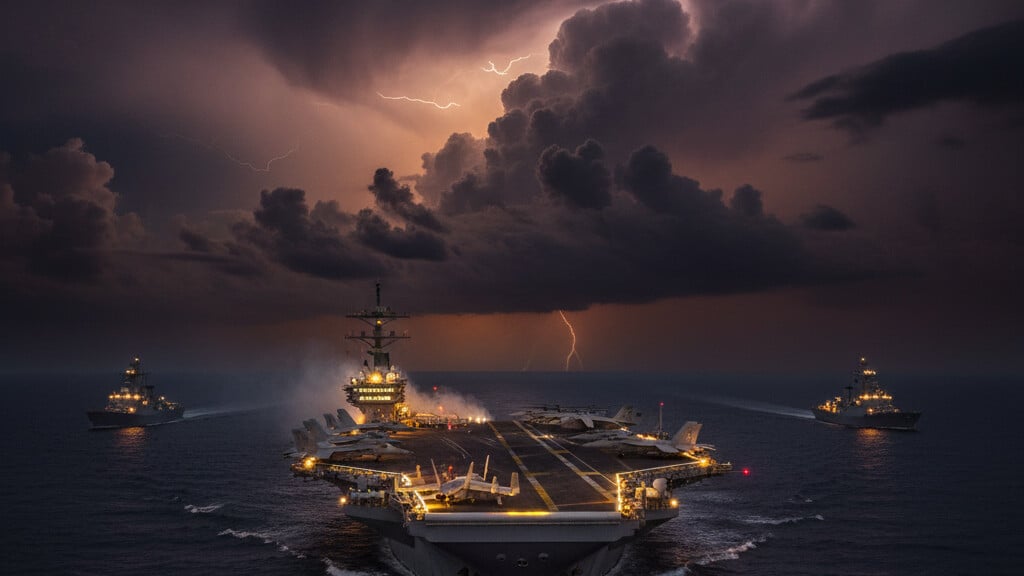
Operation Epic Fury entered its sixth day Friday with no end in sight, as the House narrowly rejected a resolution to limit President Trump’s war powers and Pentagon officials confirmed preparations for a sustained campaign lasting up to 100 days.
The vote, which fell largely along party lines, would have required congressional authorization for continued military action against Iran. Its failure clears the way for the administration to prosecute what Secretary of War Pete Hegseth has described as only the beginning.
“We have only just begun to fight,” Hegseth declared Thursday, as CENTCOM announced plans for extended operations across the Middle East theater.
The scale of the conflict is staggering. Iranian officials claim U.S. and Israeli forces have struck approximately 3,600 civilian sites — a figure that cannot be independently verified but underscores the breadth of the bombardment. American commanders counter that strikes are precisely targeted at military and nuclear facilities, though collateral damage reports continue to filter out of major Iranian cities.
The economic fallout has been immediate and severe. Iranian missile strikes on oil facilities across the region have triggered global energy chaos, with crude prices spiking and supply chains facing disruptions that could take months to resolve. European markets opened sharply lower Friday morning, and American gasoline prices are expected to follow suit.
The human toll is mounting on all sides. In addition to Iranian casualties, Israeli forces have expanded operations into Lebanon, where officials report 123 killed and hundreds of thousands displaced in the past week alone. Mass displacement orders have been issued across southern Lebanon as Israel attempts to clear a buffer zone against Hezbollah rocket attacks.
Meanwhile, the strategic picture grows more complex. Iranian proxies in Yemen, Syria, and Iraq continue harassing American positions, though with limited success. Missile defense systems have intercepted most incoming threats, but the volume of attacks suggests Tehran is willing to absorb significant losses to maintain pressure.
What comes next is the subject of intense debate in Washington. The 100-day planning horizon suggests administration officials expect a protracted campaign — one that could stretch into the summer and fundamentally reshape the Middle East order. Critics warn of mission creep and the risk of wider regional escalation. Supporters argue that decisive action now prevents a nuclear-armed Iran later.
Either way, the Rubicon has been crossed. After years of shadow warfare and proxy conflict, the United States and Iran are engaged in open, sustained combat. The only question now is how it ends — and at what cost.
Providence watches over the bold.
About The Author
