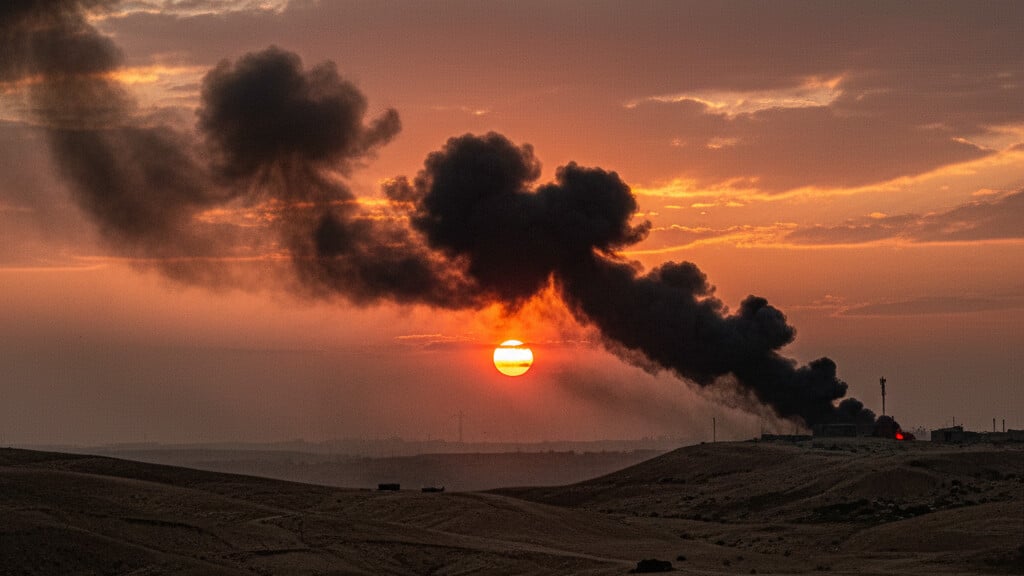
Israel launched a renewed and expanded military assault on Lebanon this week, killing at least 123 people and displacing hundreds of thousands as the conflict triggered by Operation Epic Fury spills across regional borders.
The strikes, which began in earnest Thursday, represent a significant escalation of Israel’s northern front — one that had remained relatively quiet since the 2024 ceasefire. Israeli officials say the operation is necessary to clear Hezbollah rocket positions that threaten civilian population centers, but the scale of the displacement has drawn international concern.
Mass displacement orders have been issued across southern Lebanon, affecting communities that had only recently begun rebuilding after previous conflicts. The orders cover a zone extending several miles north of the Israeli border, effectively emptying dozens of villages and towns.
For the people caught in the middle, the situation is dire. Aid organizations report that displacement camps are filling rapidly, with many families having fled with little more than the clothes on their backs. Medical facilities in the region are becoming overwhelmed, and supply lines remain precarious as roads come under intermittent fire.
The timing is significant. Israel’s northern offensive appears coordinated with the broader U.S.-led campaign against Iran — a pincer movement designed to prevent Hezbollah from opening a second front while American and Israeli forces focus on Iranian targets. Whether that coordination can be maintained as the conflict drags on remains an open question.
Hezbollah, for its part, has responded with rocket barrages targeting northern Israeli cities. Most have been intercepted by missile defense systems, but the volume of fire suggests the group’s arsenal remains substantial despite years of Israeli airstrikes targeting weapons shipments from Iran.
The humanitarian implications are stark. Lebanon was already teetering on the brink of collapse before this latest conflict — its economy in ruins, its government paralyzed, its currency worthless. Now, with hundreds of thousands displaced and infrastructure being destroyed, the prospect of state failure looms larger than ever.
For the Biden administration’s legacy, the expansion of conflict represents a final indictment of a Middle East policy that prioritized diplomatic engagement over deterrence. For the Trump administration, it presents an immediate crisis with no easy solutions — only hard choices about how far to commit American power in a region that has consumed it before.
And for the civilians on both sides of the border, it means more nights of terror, more days of displacement, and more uncertainty about whether peace will ever return.
Providence watches over the bold.
About The Author
