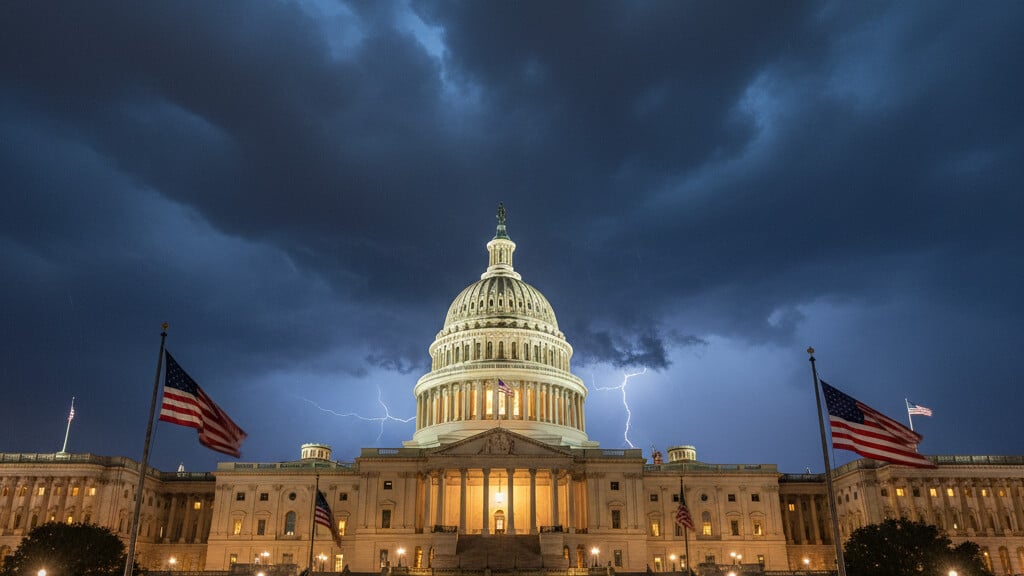
The vote was 212 to 219 — close enough to make headlines, but not close enough to matter. The House rejected a war powers resolution Thursday that would have forced President Trump to halt military operations against Iran, and in doing so, handed the Commander-in-Chief exactly what he needed: a clear political mandate to keep fighting.
It was the second such vote in two days. The Senate killed an identical measure the day before. The antiwar caucus in Congress is real, but it’s also outnumbered — and right now, that’s what counts.
The Fault Lines
The breakdown was almost entirely along party lines, with a few notable exceptions. Two Republicans crossed over to vote for the resolution, while four Democrats broke ranks to vote against it. Those crossovers tell a story: there are members of both parties who feel the gravity of what’s happening but aren’t ready to take political risks over it.
“Donald Trump is not a king,” said Rep. Gregory Meeks, the top Democrat on the House Foreign Affairs Committee. “If he believes the war with Iran is in our national interest, then he must come to Congress and make the case.”
It’s a fair constitutional point. It’s also politically irrelevant when the president’s party controls both chambers and the bombs are already falling.
House Speaker Mike Johnson framed it the way most Republicans see it: limiting the president’s authority during active combat operations would be “dangerous.” He called the operation “limited in scope and duration” and declared the “mission is nearly accomplished.”
.@SpeakerJohnson after House blocked War Powers Resolution: "We're not at war, we have no intention at being at war. The president and the Department of Defense have made it very clear, this is a limited operation." pic.twitter.com/u0MnoLOVxs
— CSPAN (@cspan) March 6, 2026
The Afghanistan Echo
What makes this vote interesting isn’t just the numbers — it’s the mood. Many of the members casting votes this week are post-9/11 veterans who served in Iraq and Afghanistan. They know what an open-ended military commitment looks like, and they know how fast a “limited operation” can become a generational quagmire.
Republican Rep. Brian Mast, chairman of the House Foreign Affairs Committee and a former Army bomb disposal expert who lost both legs in Afghanistan, publicly thanked Trump for taking action. For Mast, this isn’t Iraq 2.0 — it’s the culmination of a threat that should have been addressed decades ago.
Democrat Rep. Jamie Raskin invoked the framers of the Constitution, arguing that the power to declare war belongs exclusively to Congress. “The framers weren’t fooling around,” Raskin said. He’s right about the text. Whether the text still governs how America actually goes to war is a different question — one that every president since Truman has answered with bombs, not briefs.
What It Means
The war powers vote was never going to succeed. Everyone in that chamber knew it. But it served a purpose: it put every member of Congress on the record. When the casualty figures rise, when gas prices climb higher, when the consequences of this conflict come home to American doorsteps, every one of those 219 votes will be remembered.
For now, Trump has what he needs — political cover from his own party and enough Democratic defections to claim bipartisan support. The military campaign continues, Congress has spoken, and the machinery of war grinds forward with the full backing of the people’s representatives.
Whether that backing holds through the spring will depend on one thing: results.
Providence watches over the bold.
About The Author
