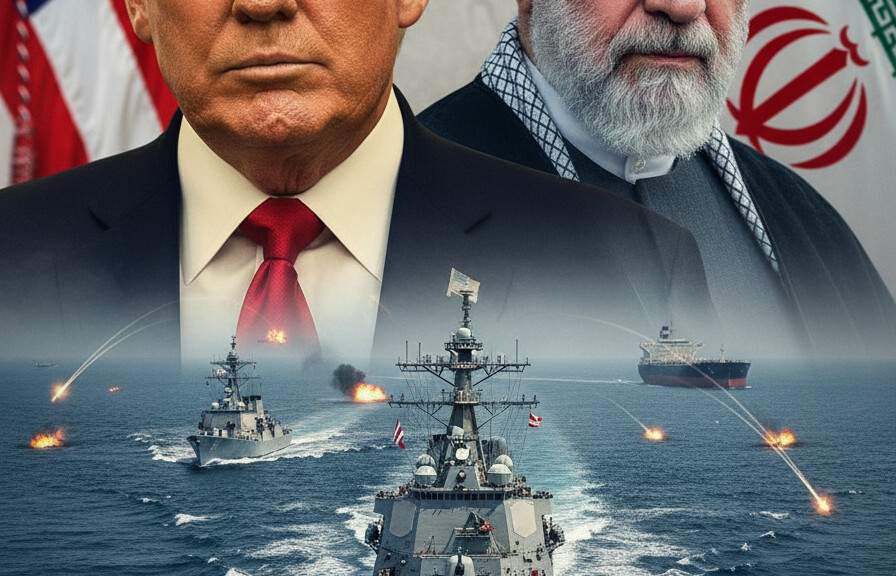
Editorial illustration
The Strait of Hormuz has once again become a flashpoint for global conflict as U.S. and Iranian forces exchanged fire Thursday, testing the fragile ceasefire that has held—barely—between the two nations. According to an official CENTCOM statement, U.S. forces intercepted what they described as “unprovoked Iranian attacks” and responded with self-defense strikes as Navy guided-missile destroyers transited the strait toward the Gulf of Oman.
Iranian forces reportedly fired missiles and drones at three U.S. destroyers: the USS Truxtun, USS Rafael Peralta, and USS Mason. No American assets were struck, and U.S. forces eliminated the inbound threats before targeting the Iranian military facilities responsible for the attack. Missile and drone launch sites, along with command and control locations and intelligence nodes, were hit in the American response.
What makes this incident particularly concerning is the timing. President Trump had just announced a pause in “Project Freedom,” the administration’s broader military operation against Iran, amid ongoing efforts to finalize a diplomatic agreement. The blockade of Iranian oil shipments remains in full force, but the shooting war was supposed to be on hold. Iranian state media immediately claimed the U.S. strikes constituted a ceasefire violation and threatened retaliation, while a U.S. official insisted the exchange did not constitute a resumption of full-scale war.
Is this the beginning of a renewed conflict, or will cooler heads prevail? The answer likely depends on whether Iran’s leadership believes they can extract concessions through escalation—or whether they recognize that President Trump has shown both restraint and resolve. The Strait of Hormuz handles roughly one-fifth of the world’s oil shipments, making any sustained conflict there a threat to global energy markets and American pocketbooks.
The administration faces a difficult balancing act. Show too much restraint, and Iran may calculate that it can harass American forces with impunity. Respond too aggressively, and the ceasefire collapses entirely, potentially drawing the region into a wider war. For now, the president appears to be threading that needle, responding to attacks with precision strikes while keeping the door open for diplomacy. But as this latest exchange demonstrates, the margin for error is razor-thin, and one miscalculation could send us back to open warfare in a region that has already cost America far too much blood and treasure.
About The Author
