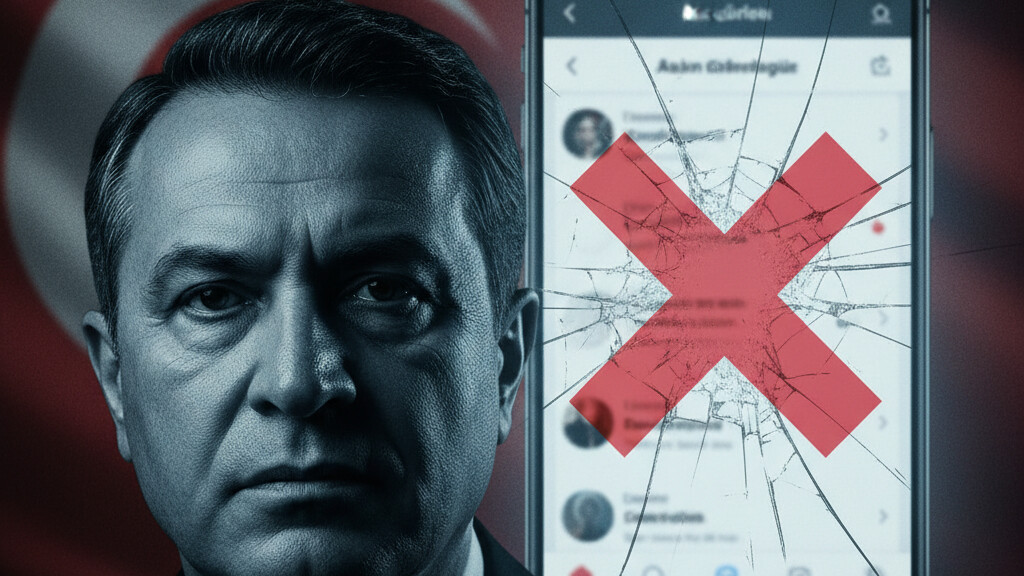
Editorial illustration
Turkey just showed the world what happens when a government decides that speech itself is the enemy. In the wake of two horrific school shootings that left dozens injured and nine dead, Turkish authorities didn’t just hunt for the shooters—they launched a dragnet against anyone who dared comment on the carnage online. Over 160 people have been arrested. Their crime? Praising the attacks, sharing footage, or spreading what the regime calls “misleading information.”
Let that sink in. The Turkish government looked at a national tragedy and saw an opportunity to criminalize dissent.
Justice Minister Akın Gürlek boasted on social media that 95 people were in custody, with 35 more suspects being hunted down. Over 1,100 social media accounts have been blocked. The justification is textbook authoritarianism: these users were “creating fear” and “praising crime.” But who gets to decide what constitutes praise? What separates legitimate criticism of government failures from criminal incitement? In Turkey, that line is drawn by the same regime that has spent years dismantling press freedom and jailing journalists.
The shootings themselves were devastating—a former student opened fire at a high school in Siverek, injuring 16, followed by an even deadlier attack in Kahramanmaraş that killed nine. These are the kind of senseless tragedies that tear at the fabric of any society. The proper response is to investigate, to mourn, to ask hard questions about how such violence could happen. Instead, Turkey’s leaders chose to treat their own citizens as threats.
This is the dark side of “content moderation” when it’s wielded by state power. We’ve seen similar patterns here at home—politicians eager to label inconvenient speech as “misinformation” and demand platforms silence it. The difference is only a matter of degree. Turkey has simply progressed further down the road that starts with “fact-checking” and ends with midnight raids on homes where people typed the wrong words into their phones.
The crackdown has extended beyond mere words. Turkish police have placed armed officers at every school in the country. Drones now circle overhead, monitoring students and parents alike. The message is clear: trust no one, watch everyone, and for God’s sake, don’t talk about it.
Christians understand that evil must be called out, not covered up. The Bible teaches us to speak truth to power, to be light in dark places. What Turkey is doing is the opposite—extinguishing light, silencing voices, and calling it security. It’s not. It’s the foundation of tyranny, poured fresh while the bodies are still being counted.
America should watch closely. The tools Turkey is using—mass surveillance, speech criminalization, emergency powers that never expire—are the same tools being requested by our own would-be censors. The only difference is they haven’t gotten them yet.
About The Author
