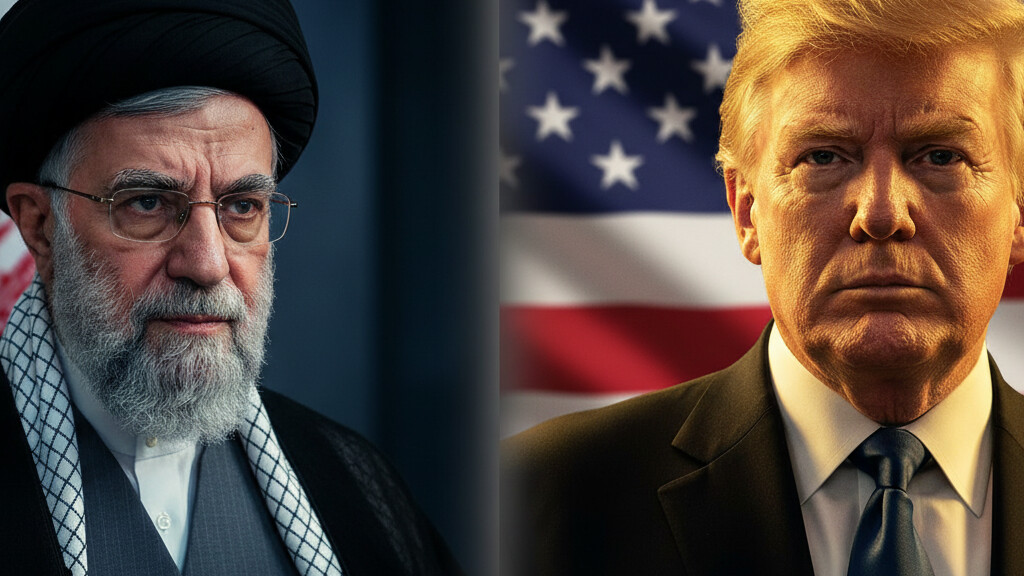
Editorial illustration
In a dramatic reversal that came down to the wire, President Donald Trump announced Tuesday evening that he has agreed to a two-week ceasefire with Iran, just hours after threatening to wipe the Iranian civilization off the map. The deal, brokered with assistance from Pakistani Prime Minister Shehbaz Sharif, represents a significant de-escalation in what had become one of the most volatile international crises of Trump’s second term.
The announcement came via Trump’s Truth Social platform, where the president confirmed he had accepted the Pakistani leader’s urging to pause military operations. Within minutes, Iran’s Foreign Minister issued his own confirmation, signaling that both sides had simultaneously stepped back from the brink. Israel, which had been conducting its own bombing campaign against Iranian targets, also agreed to suspend operations during the negotiation period, according to a senior White House official who spoke with CNN.
This development marks a stunning turn of events. As recently as Tuesday morning, Trump had been warning that Iran faced total destruction if it failed to reopen the Strait of Hormuz by his deadline. The president’s rhetoric had grown increasingly severe in recent days, with references to wiping out entire civilizations that had critics warning about the potential for catastrophic miscalculation. Yet here we are, with bombs silenced and diplomats preparing to talk.
What changed? The full details remain unclear, but the involvement of Pakistan as a mediator suggests that regional powers have been working furiously behind the scenes to prevent a wider war. The two-week window provides breathing room for negotiators to hammer out a more comprehensive agreement, though history teaches us that such temporary truces often prove fragile.
The ceasefire raises important questions about Trump’s approach to foreign policy. Is this the “madman theory” in action — the deliberate cultivation of an unpredictable image to extract concessions? Or did the president genuinely intend to follow through on his threats before being talked down by advisors and allies? The answer likely matters less than the outcome, at least for now. A war that seemed imminent has been postponed, and that’s worth acknowledging regardless of one’s views on the administration.
For the MAGA base that elected him, this moment offers vindication of Trump’s claim that he can achieve what the foreign policy establishment cannot. Where decades of sanctions and diplomatic wrangling failed to produce meaningful movement, Trump’s willingness to escalate — and escalate dramatically — appears to have forced a breakthrough. Whether that breakthrough holds, and what it ultimately produces, remains to be seen. But for today, at least, the guns are silent and the diplomats are talking. In a region that has known far too much war, that’s no small thing.
About The Author
