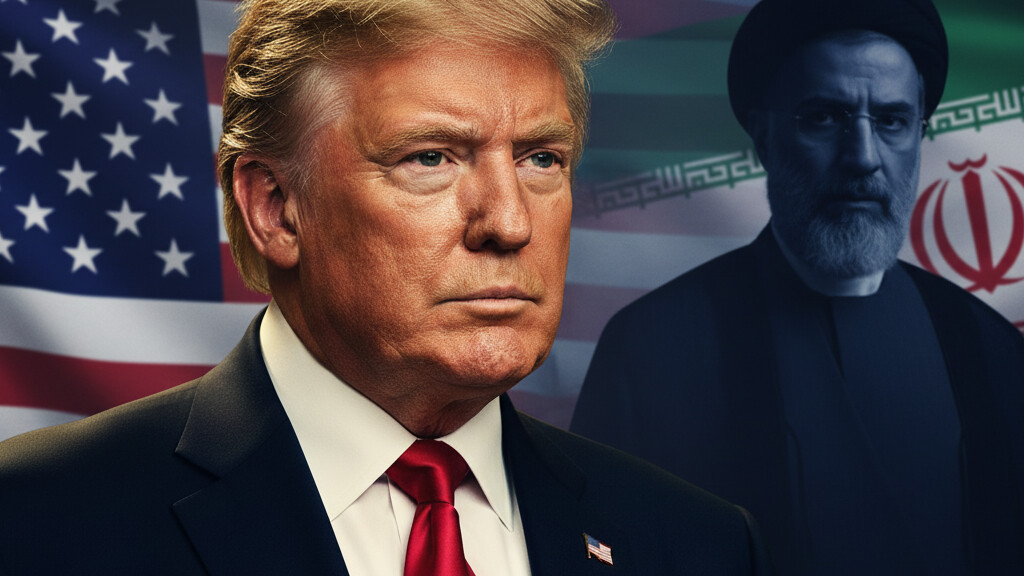
Editorial illustration
The Trump administration made a move on Thursday that will have his critics spinning in circles trying to decide whether to call it weakness or warmongering. Treasury Secretary Scott Bessent announced the temporary lifting of sanctions on Russian oil currently stranded at sea, a decision driven not by any love for Moscow but by the brutal arithmetic of global energy markets now being squeezed by Iran’s escalating aggression in the Persian Gulf. Oil hit $100 a barrel on Thursday. Gas prices have jumped nearly thirty cents in a week to a national average of $3.59 per gallon. The Strait of Hormuz, through which roughly a fifth of the world’s oil passes, remains effectively closed after Iran’s Supreme Leader Mojtaba Khamenei vowed to keep it shut as a “tool to pressure the enemy.” The president looked at the board and made a pragmatic call.
The details matter here, and they cut against the breathless headlines already circulating. This is not a wholesale rollback of Russian sanctions. Bessent described it as a “narrowly tailored, short-term measure” applying only to oil already in transit — an estimated 124 million barrels floating on tankers with nowhere to go, roughly five to six days of global supply. The exemptions expire on April 11. No new Russian oil production is being greenlit. No new revenue streams are being opened for the Kremlin. As Bessent noted, Russia derives the majority of its energy revenue from taxes assessed at the point of extraction, meaning these stranded barrels represent relatively little financial benefit to Moscow even if they find buyers. What they do represent is relief valve pressure for a global market that is starting to panic.
This is the kind of decision that separates actual governance from performative politics. The war with Iran has created a genuine energy crisis — not a theoretical one, not a talking point, but the kind that hits American families at the gas pump every single day. The administration’s posture has been consistent: unleash domestic production to record levels while managing the international disruptions caused by the conflict. Thursday’s sanctions relief is an extension of that logic. You fight the war you need to fight, and you keep the lights on at home while you do it.
The left’s response has been predictably incoherent. The same people who spent years demanding Trump be tougher on Russia are now furious that he’s temporarily releasing Russian oil to keep American gas prices from spiraling further. The same voices that blamed him for high energy costs under every previous scenario are now positioning themselves to blame him for the brief thaw with Moscow. There is no version of events in which these critics would be satisfied, because their objections are not rooted in policy analysis. They are rooted in opposition for its own sake.
Meanwhile, the actual geopolitical picture continues to sharpen. Iran’s attacks on oil tankers in the Persian Gulf are not theoretical provocations — they are acts of economic warfare designed to inflict maximum pain on the global economy and, by extension, on the American voter’s wallet. Iran’s IRGC has claimed damage to the USS Abraham Lincoln. Khamenei is betting that economic pressure will break American resolve the way it broke Jimmy Carter’s presidency. The Trump administration is betting otherwise, and this temporary sanctions relief is part of that bet. Flood the market with every available barrel, keep prices manageable, and deny Tehran the economic leverage it is desperately trying to build.
The deeper lesson here is one that energy hawks have been preaching for years: energy independence is not an abstraction, it is a national security imperative. Every barrel America produces domestically is a barrel that cannot be weaponized by foreign adversaries. Every pipeline built, every permit approved, every regulation stripped away is a brick in the wall between American prosperity and the chaos unfolding in the Middle East. The president understands this. His pro-energy policies have driven U.S. oil and gas production to record levels precisely because moments like this were always foreseeable. Wars disrupt markets. Adversaries target supply chains. The only durable answer is to produce so much energy at home that no ayatollah, no czar, and no cartel can hold America hostage at the pump.
Providence watches over the bold.
About The Author
