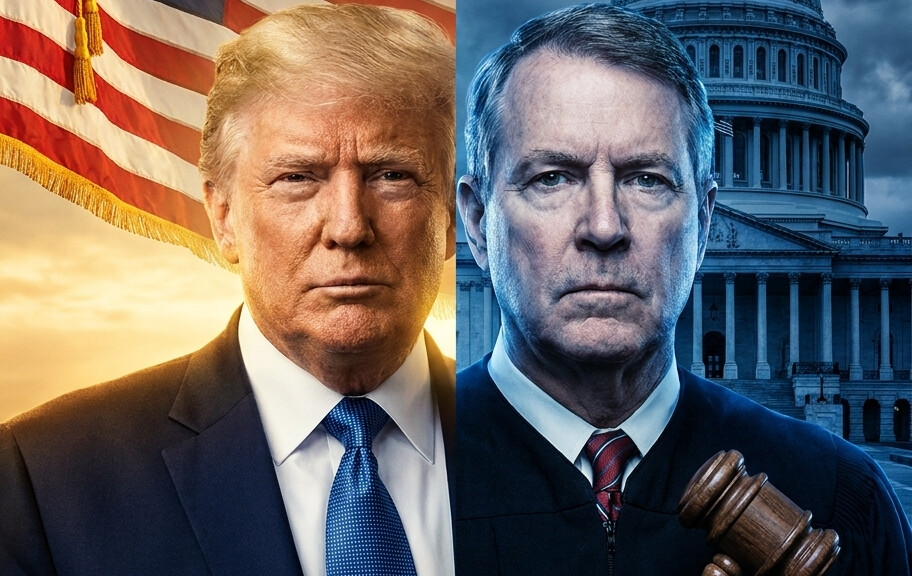
Editorial illustration
An Obama-appointed federal judge in Rhode Island just handed down a 135-page ruling that strips President Trump of the tools his administration was using to protect Americans from foreign threats. Chief Judge John McConnell declared that the administration’s policies halting immigration from 39 high-risk countries are unlawful, ordering the government to resume processing applications that had been frozen for months. The policy was put in place after Rahmanullah Lakanwal, an Afghan national brought to the United States during Biden’s chaotic Afghanistan withdrawal, shot and killed National Guardsman Sarah Beckstrom and seriously injured another servicemember near the White House last November. You would think that after an imported threat murders one of our own in the nation’s capital, we might pump the brakes on who we’re letting through the door. Not according to this judge. McConnell, who has a history of liberal activism and ruling against the Trump administration, wrote that the immigration freezes “threw the lives of countless immigrants into indeterminate legal limbo.” He said the affected immigrants had complied with the legal process and were stuck waiting for decisions. What he didn’t emphasize was why those decisions were paused in the first place. The administration had identified nearly 40 countries, including Afghanistan, Iran, Syria, Yemen, and Venezuela, as posing elevated risks. The list wasn’t pulled from thin air. These are places where vetting is difficult, documentation is unreliable, and extremist elements operate with impunity. The ruling now forces USCIS to resume adjudicating green cards, work permits, and asylum claims for applicants from these countries. It also requires the agency to schedule naturalization ceremonies that had been canceled for thousands nearing citizenship. Immigration advocates are celebrating. The rest of us are left wondering how many more Sarah Beckstroms it will take before the judiciary recognizes that a government’s first duty is to protect its own people. The case is Dorcas International Institute of Rhode Island et al v. USCIS, and it represents the latest front in the ongoing war between an administration trying to secure the border and a judicial system that seems determined to keep the gates wide open.
About The Author
