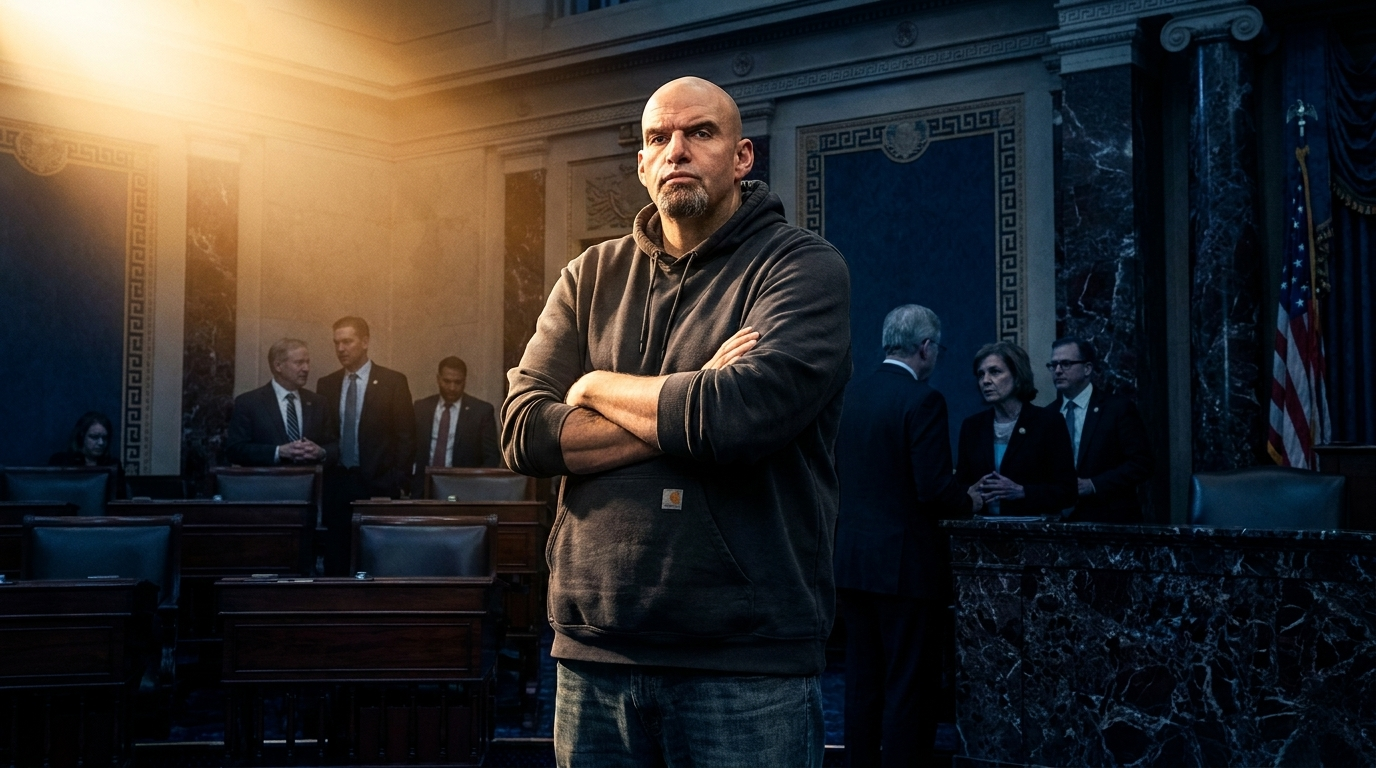
John Fetterman is not backing down, and his own party is furious about it. The Pennsylvania senator has once again broken ranks with Democrats, casting the decisive vote against a war powers resolution that would have limited President Trump’s authority to continue military operations in Iran. When the measure came up for a vote last week, Fetterman was the lone Democrat to oppose it, resulting in a 49-50 defeat that left his colleagues seething and scratching their heads. What makes a progressive senator from a swing state repeatedly side with the Trump administration on one of the most contentious foreign policy issues of our time?
The answer, according to Fetterman himself, is surprisingly straightforward. He believes Iran cannot be allowed to build a nuclear bomb, and he is unwilling to tie the president’s hands while that threat remains unresolved. In his own words, “Why don’t we want to just make sure Iran just can’t build a nuclear bomb? That’s what it’s really about, right? It’s not an extreme view.” For Fetterman, this is not about partisan loyalty or scoring points against the White House. It is about preventing a rogue regime from obtaining the ultimate weapon of mass destruction.
His defiance has not come without consequences. Democrats in both chambers had hoped that unified opposition to Trump’s Iran policy would force at least some Republican defections, creating a legislative check on executive war powers. With Fetterman voting no, that strategy collapsed. The party needed every single Senate Democrat on board to overcome Republican resistance, and Fetterman’s absence from their ranks proved fatal to the resolution’s chances. Some within the party have reportedly accused him of becoming “increasingly anti-American” in his rhetoric, a charge that would have seemed unthinkable just a few years ago when he was celebrated as a progressive champion.
Fetterman’s stance puts him in an unusual position for a Democrat. He has now voted seven times against efforts to restrict Trump’s military authority regarding Iran, consistently arguing that the threat posed by Tehran’s nuclear ambitions outweighs concerns about executive overreach. While his colleagues fret about constitutional principles and the separation of powers, Fetterman worries about mushroom clouds over Tel Aviv or American cities. Is it possible that the senator from Pennsylvania sees something his party leadership refuses to acknowledge?
The Iran war has now dragged on for over two months, with no clear end in sight. Fetterman maintains that the conflict would end tomorrow if Iran simply agreed to relinquish its enriched uranium and abandon its nuclear program. He points to Russia and China as enablers of Tehran’s defiance, asking why America should be blamed for a situation created by Iran’s own aggression and its backers’ geopolitical maneuvering. It is a perspective that aligns more closely with Trump’s foreign policy vision than with the Democratic Party’s current trajectory.
For now, Fetterman seems content to weather the storm of criticism from his own side. He knows they are not happy with him, but he appears unmoved by their frustration. In an era of hyper-partisanship, where party-line votes have become the norm and independent thinking is often punished, Fetterman’s willingness to buck his own team is either refreshingly principled or maddeningly stubborn, depending on your perspective. One thing is certain: the Democratic Party’s efforts to constrain Trump’s Iran policy will remain stalled as long as one senator from Pennsylvania refuses to play along.
About The Author
