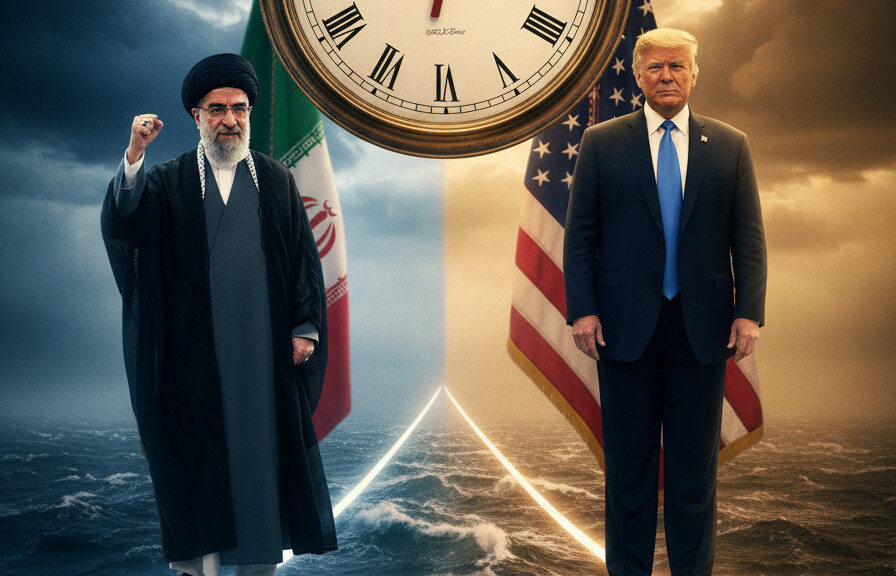
Editorial illustration
President Trump is walking a diplomatic tightrope with Iran that would make even the most seasoned negotiator sweat, as backchannel talks continue amid a fragile ceasefire that could expire at any moment. The administration finds itself in the unenviable position of trying to secure a peace deal with a regime that has spent decades perfecting the art of saying one thing while doing another, all while the clock ticks down on a temporary halt to hostilities.
The latest round of signals from both sides reads like a diplomatic Rorschach test. Trump told reporters that new negotiations could happen as soon as this weekend in Islamabad, with the White House confirming that discussions are ongoing. Yet Iranian officials continue to send mixed messages, with some suggesting openness to talks while others maintain their characteristic defiance. It’s the kind of diplomatic dance that has frustrated American presidents for generations.
Vice President JD Vance has already delivered what he termed America’s “final offer” during talks in Pakistan, a bold declaration that typically signals the end of negotiations rather than the beginning. Yet here we are, with both sides apparently willing to keep talking despite the supposed finality of that proposal. The gap between public posturing and private discussions appears to be substantial, with backchannel communications continuing even as officials trade barbs in the press.
The strategic stakes could not be higher. The Strait of Hormuz, through which roughly one-fifth of the world’s oil passes, remains a potential flashpoint. Iran has threatened to close the vital waterway, a move that would send global energy markets into chaos and potentially trigger a wider regional conflict. The Trump administration has maintained a blockade that it says will not be lifted until a peace agreement is signed, creating a high-stakes standoff where neither side can easily back down without losing face.
Trump’s approach reflects his characteristic deal-making instincts, the same instincts that produced the Abraham Accords and numerous other diplomatic breakthroughs during his first term. He has expressed a genuine desire to end the conflict, telling associates that he “badly wants this to end.” But wanting peace and achieving it are two very different things, especially when dealing with a regime that has built its identity around opposition to American influence in the region.
The president’s claim that Iran “called, I didn’t call” and that “they want to make a deal” suggests he believes the pressure is working. Iranian denials of any negotiations tell a different story, or perhaps the same story from a different angle in a culture where public concessions are viewed as weakness. Determining which version reflects reality is the kind of challenge that keeps intelligence analysts awake at night.
What emerges from these talks, if anything, will shape American foreign policy for years to come. A successful deal would validate Trump’s unconventional diplomatic style and potentially transform the Middle East. A failure could mean a resumption of hostilities with unpredictable consequences. The coming days will tell us which path we’re on.
About The Author
