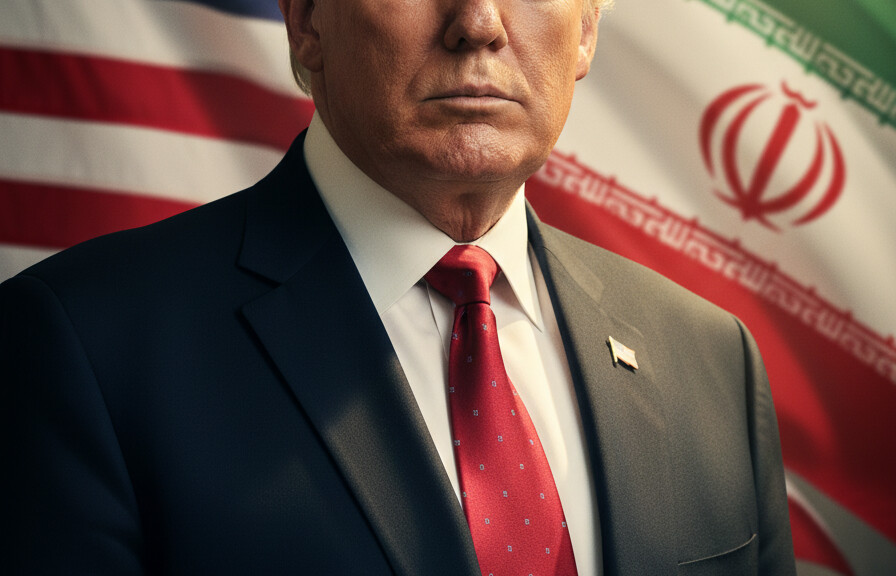
Editorial illustration
President Trump is drawing a sharp line in the sand when it comes to federal spending, and that line runs straight through the Pentagon. While his administration prepares to slash domestic programs across the board, Trump is pushing Congress for record-breaking military funding that would expand America’s already formidable armed forces into what he calls the “greatest military the world has ever seen.”
The president’s budget priorities reflect a worldview that hasn’t changed since his first term: American strength deters aggression, and weakness invites it. In an era where China is building naval fleets at unprecedented speed, Russia continues its expansionist wars, and Iran threatens global energy chokepoints, Trump is betting that voters will support a peace-through-strength approach even if it means tightening the belt at home.
The proposed spending shift would be dramatic. Domestic agencies are bracing for cuts that could reach double-digit percentages, with the administration targeting what it considers wasteful spending, redundant programs, and bureaucratic bloat. The message to cabinet secretaries has been clear: justify every dollar or lose it. But while the domestic side of the ledger faces the axe, the defense budget is headed in the opposite direction.
Trump’s vision goes beyond simply maintaining current capabilities. The president has spoken repeatedly about building new ships, modernizing nuclear forces, expanding missile defense, and investing in next-generation weapons systems. This isn’t just about keeping pace with rivals; it’s about reestablishing the kind of overwhelming American advantage that makes potential adversaries think twice before challenging U.S. interests.
The political math here is straightforward but risky. Fiscal conservatives have long complained about runaway federal spending, and Trump’s domestic cuts will please that wing of the party. But record military spending requires either corresponding cuts elsewhere, increased revenue, or more borrowing. The president appears to be choosing door number one, betting that a smaller federal footprint at home is a price worth paying for security abroad.
Critics will argue this is the wrong priority at the wrong time. With deficits already at historic highs and domestic needs ranging from infrastructure to border security, why pour more money into a military that already outspends every potential rival combined? The answer, according to Trump and his allies, is that raw spending numbers don’t tell the whole story. America’s military faces recruitment crises, aging equipment, and strategic commitments that stretch forces thin across multiple theaters.
The contrast with the previous administration could not be more stark. Where Biden’s Pentagon focused on climate initiatives, diversity programs, and social engineering, Trump’s defense priorities are relentlessly focused on lethality and deterrence. The president has made clear he views the military as a fighting force first and foremost, not a laboratory for progressive social experiments.
What’s particularly notable is Trump’s willingness to make this fight public. Previous presidents often hid behind budgetary process and bureaucratic language when making tough spending choices. Trump is putting his cards on the table, essentially asking the American people: do you want a smaller government at home and a stronger military abroad, or the reverse? It’s a framing that plays to his political strengths and forces opponents to defend an status quo that remains deeply unpopular with much of the electorate.
The coming budget battles in Congress will test whether Republicans can maintain unity in the face of competing pressures. Defense hawks want the military buildup. Fiscal hawks want the spending cuts. Trump is offering both, but delivering it will require navigating a legislative process that has frustrated presidential ambitions for generations.
For now, the message is clear: America is choosing guns over butter, strength over comfort, and deterrence over regret. Whether that choice pays off will be measured not in budget spreadsheets but in whether the next decade sees American power respected or challenged across the globe.
About The Author
