Editorial illustration
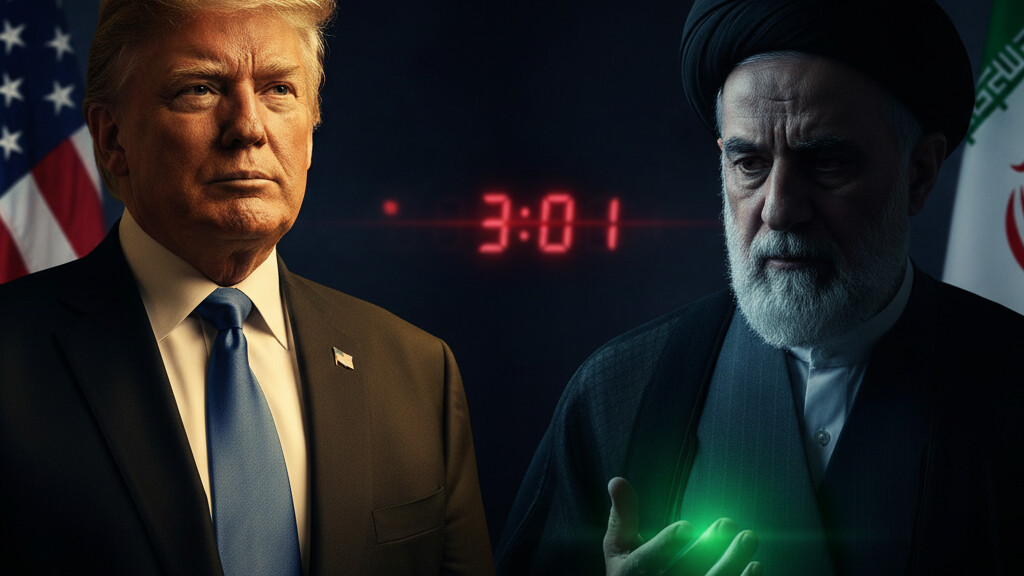
While the world watched and waited to see if President Trump would follow through on his threat that “a whole civilization will die tonight,” something remarkable was happening behind the scenes in Tehran. Mojtaba Khamenei, the 56-year-old son who succeeded his father as Iran’s supreme leader after the February 28 strike that killed the elder Khamenei, reportedly gave negotiators the green light to move toward a deal with the United States.
According to multiple sources familiar with the talks, the younger Khamenei’s approval came Monday as Trump’s Tuesday 8 p.m. Eastern deadline approached, with U.S. forces already preparing for a massive bombing campaign on Iranian infrastructure. “Without his green light, there wouldn’t have been a deal,” one regional source told Axios, describing the intervention as a “breakthrough” in the chaotic final hours of negotiations.
The reporting paints a picture of clandestine diplomacy unfolding while public threats escalated. Pakistani mediators relayed proposals between U.S. envoy Steve Witkoff and Iranian Foreign Minister Abbas Araghchi, with Egypt and Turkey working to narrow remaining gaps. Witkoff had blasted Iran’s initial 10-point counterproposal as “a disaster, a catastrophe,” yet talks continued even as the clock ticked down.
What makes this development particularly striking is the mystery surrounding Mojtaba Khamenei himself. He has not been seen publicly since the February 28 strike that killed his father and reportedly left him severely wounded. He was elevated to supreme leader on March 9 but has yet to make any public appearance, leading to widespread speculation about his condition and capacity to govern. Sources said he was communicating primarily through runners passing handwritten notes, a detail that underscores both the secrecy of his role and the precariousness of the moment.
This follows a Times of London report earlier this week citing a diplomatic memo based on American and Israeli intelligence that asserted Khamenei was incapacitated, in “severe condition,” and “unable to be involved in decision making.” The ceasefire deal suggests either that assessment was incorrect or that the new supreme leader, whatever his physical state, was capable of making the most consequential decision of his brief tenure.
By around midday Tuesday, there was a general understanding that the parties were converging on a ceasefire. Pakistani Prime Minister Shehbaz Sharif published the terms on X and called on both sides to accept. Trump agreed shortly before his deadline, announcing a two-week suspension of attacks tied to reopening the Strait of Hormuz. U.S. forces received stand-down orders minutes later, and Araghchi confirmed Iran would adhere to the ceasefire and allow maritime traffic through the strategic waterway.
The episode raises questions about who is actually running Iran and whether this ceasefire represents a genuine strategic shift or merely a tactical pause by a regime that found itself backed into a corner. For now, the shooting has stopped. But the shadowy figure who reportedly made that possible remains, quite literally, unseen.
About The Author
