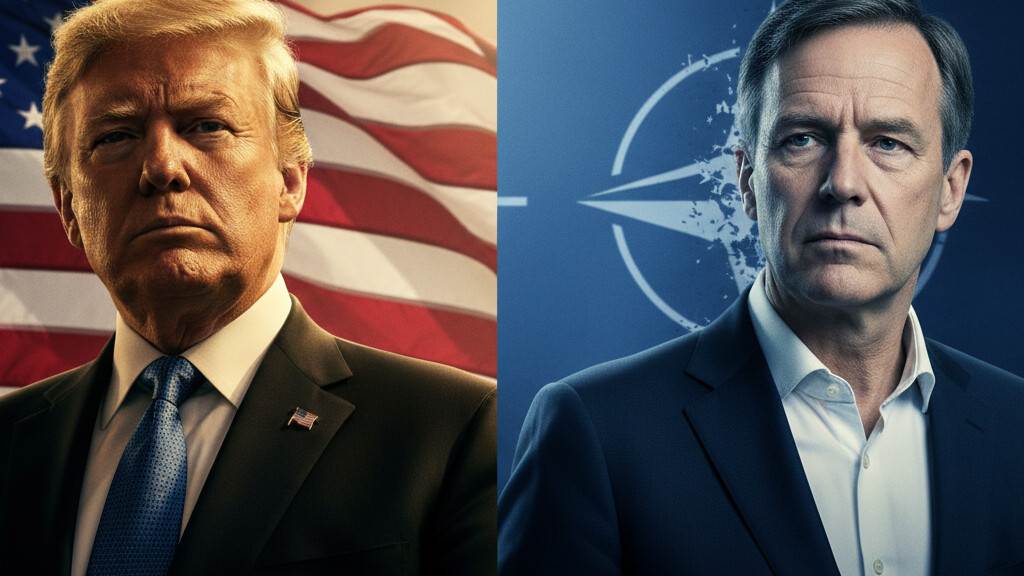
Editorial illustration
President Trump and Secretary of State Marco Rubio are set to meet with NATO Secretary-General Mark Rutte Wednesday at the White House, and the timing couldn’t be more consequential. Transatlantic relations are at a breaking point after European allies blocked base access and limited support for U.S. operations against Iran.
Rubio didn’t sugarcoat the situation in recent comments to Fox News. “After this conflict is concluded, we are going to have to reexamine that relationship,” he said. “We’re going to have reexamined the value of NATO in that alliance for our country.”
Those aren’t idle words. Spain closed its airspace to U.S. bombers departing from the UK and denied American forces use of Rota Naval Station and Morón Air Base for any combat operations related to Iran. French President Emmanuel Macron blocked Israeli aircraft from using French airspace to transport U.S.-made munitions. This while America is doing the heavy lifting to keep the Strait of Hormuz open for European energy supplies.
Trump has been blunt about his frustration. “You’ll have to start learning how to fight for yourself, the U.S.A. won’t be there to help you anymore, just like you weren’t there for us,” he posted on Truth Social last month. Despite Rutte once calling him “daddy” of the alliance, Trump views NATO as a “one-way street” where America pays the bills and takes the risks while Europe offers lectures and obstruction.
Macron’s response captures the European attitude perfectly. “I am not the commentator on an operation that the Americans decided on with the Israelis alone,” he told reporters. “They can later regret not being supported in an operation they decided on by themselves. This is not our operation.”
Except it is their operation when Iranian missiles threaten European energy security. It’s their operation when the Strait of Hormuz closes and natural gas prices spike. They want the benefits of American military power without the moral burden of supporting how that power gets deployed.
Finnish President Alexander Stubb told Trump that a “more European NATO” is taking shape. One wonders what that looks like in practice. A NATO where European nations actually meet their defense spending commitments? Or a NATO where America is expected to provide security while being shut out of decision-making?
The meeting Wednesday will reveal whether the alliance can be salvaged or if we’re witnessing the beginning of a fundamental realignment in American foreign policy. Trump has threatened withdrawal before. This time, with European allies actively hindering U.S. operations, he might actually mean it.
About The Author
