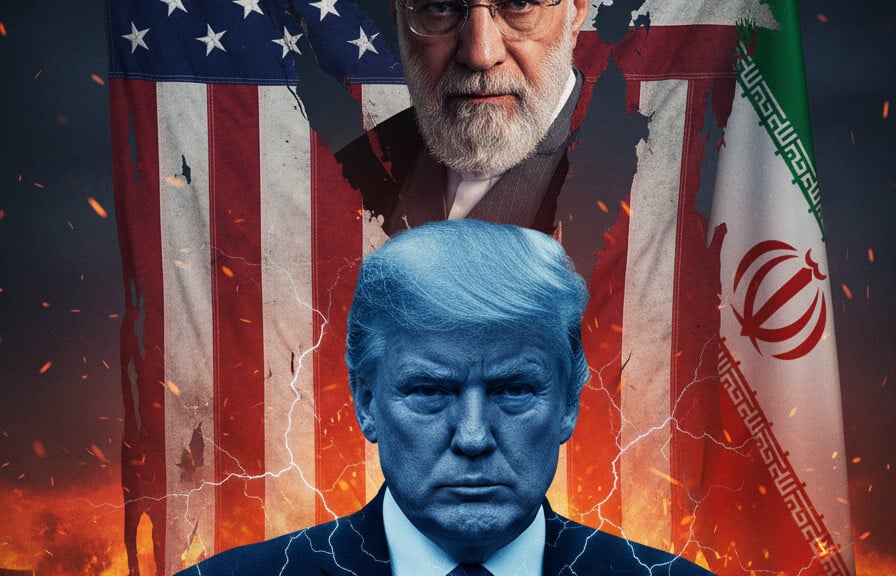
Editorial illustration
Joe Rogan sat across from comedian Dave Smith this week and delivered a message that should rattle anyone paying attention to the shifting political landscape. The coalition that carried Donald Trump to a historic victory in 2024, the one that united working-class Americans, independents, and even disaffected young voters who had written off the Republican Party as obsolete, is fracturing before our eyes. And according to two of the most influential voices in alternative media, the culprit is the very thing Trump promised would never happen on his watch: another Middle Eastern war.
Rogan did not mince words. He recalled how Trump campaigned on a simple, powerful message that resonated far beyond traditional conservative circles. No more endless wars. Close the border. Put America first. For millions of voters who had grown tired of watching their sons and daughters shipped off to foreign lands while their own communities crumbled, this was enough. They held their noses, ignored the media hysteria, and cast their ballots for a man they believed would finally break the cycle of interventionism that had defined American foreign policy for generations.
But here we are, months into Operation Epic Fury, and the promise lies in tatters. Smith, a libertarian who endorsed Trump in the past, laid out the bitter irony with characteristic bluntness. The same candidate who railed against the military-industrial complex and mocked the nation-building failures of his predecessors is now presiding over a conflict that has already claimed thirteen American lives and wounded hundreds more. The question that haunts this moment is simple: what was it all for?
Smith argues that Trump has squandered something precious and perhaps irreversible. The 2024 election was not just a victory; it was a realignment. Trump won the popular vote for the first time. He captured every swing state. Most remarkably, he won the youth vote and the cultural conversation, transforming himself from a political pariah into a unifying figure who seemed to understand that Americans were done being lied to about foreign adventures. That coalition, Smith warned, has been destroyed over this war. And now he is going to hand the country right back over to the Democrats who we have been fighting so hard.
The White House response to these criticisms has been predictable. A spokesman told Fox News Digital that what matters most is having a commander in chief who takes decisive action to eliminate threats and keep them safe. The statement insisted that Trump campaigned proudly on his promise to deny the Iranian regime the ability to develop a nuclear weapon, and that the President does not make these incredibly important national security decisions based on fluid opinion polls.
But this defense misses the point entirely. The issue is not whether Trump has the authority to act or whether his intentions are sincere. The issue is whether the American people, particularly the coalition that put him in office, believe they were sold a bill of goods. When you campaign on no new wars and then launch one within months of taking office, the betrayal cuts deeper than any policy disagreement. It strikes at the very foundation of trust between a leader and his supporters.
Rogan and Smith are not alone in their concern. Across the podcasting world and social media landscape, voices that once championed Trump are now expressing disappointment, confusion, and in some cases, outright anger. Andrew Schulz, another comedian who gave Trump favorable coverage during the campaign, has turned critical, warning that Americans are furious about the prospect of new war while they struggle with affordability at home. The message is consistent and growing louder: this is not what we voted for.
The political math here is brutal. Trump had a mandate to reshape American politics, to prove that a populist, America-first approach could work without falling into the traps of the past. Instead, he finds himself mired in the same quicksand that swallowed Bush and nearly destroyed the Republican brand in the 2000s. The difference is that Trump voters were supposed to be smarter, more skeptical, less willing to accept the excuses that establishment politicians have always used to justify foreign intervention.
If Rogan and Smith are right, and the coalition that elected Trump is truly shattered, the consequences extend far beyond the 2026 midterms. They speak to a deeper crisis of confidence in the American political system. When voters cannot trust either party to keep its most basic promises, when the candidate who ran against the war machine becomes its operator, what options remain? The cynicism that Smith warns about does not just hurt Trump; it poisons the well for anyone who tries to challenge the status quo in the future.
There is still time for Trump to change course, to find an off-ramp from this conflict that honors the lives already lost without sacrificing more American blood and treasure. But the window is closing. Every day that Operation Epic Fury continues, every new casualty report, every story about wounded soldiers at Prince Sultan Airbase, drives another wedge between the President and the people who believed in him. Rogan and Smith are sounding the alarm. The question is whether anyone in the White House is listening.
Providence watches over the bold.
About The Author
