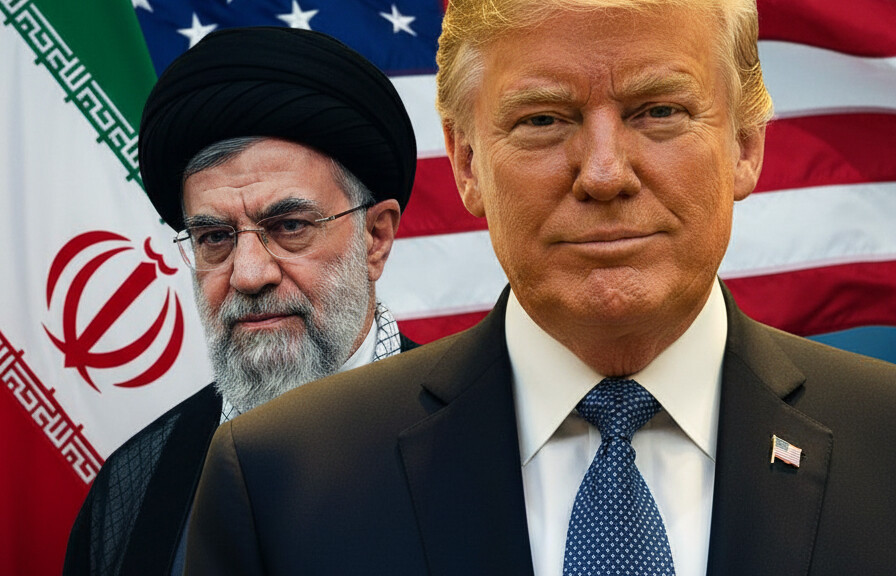
Editorial illustration
President Trump dropped a bombshell this week that has Washington’s foreign policy establishment scrambling to decode his latest move in the Iran negotiations. Speaking to reporters at the White House, Trump revealed that Tehran had sent the United States what he described as “a very big present” worth “a tremendous amount of money,” a gesture he believes signals Iran’s genuine interest in reaching a deal to end the war.
The mysterious gift centers on oil and gas flows through the Strait of Hormuz, the critical chokepoint through which roughly one-fifth of the world’s oil supply travels. Since Operation Epic Fury began on February 28, global energy markets have been on edge, with Brent crude surging from $72 to over $100 per barrel at various points. If Iran has indeed made a significant concession on Hormuz shipping, it represents a major strategic shift that could stabilize energy markets and defuse one of the most dangerous flashpoints in the conflict.
Trump isn’t revealing the specifics, keeping his cards close to the vest in classic deal-making fashion. “I’m not going to tell you what that present is,” he told reporters, “but it was a very significant prize and they gave it to us.” The president’s read on the situation is characteristically confident: “What it showed me is that we’re dealing with the right people.”
The stakes couldn’t be higher. Reports indicate Iran has received a 15-point peace proposal from the United States addressing both the Strait of Hormuz and Tehran’s nuclear ambitions. Trump claims Iran has already agreed to forgo nuclear weapons and uranium enrichment, a concession that would have seemed impossible just months ago. “We are in about the best bargaining position,” he said. “We’re way ahead of schedule.”
But not everyone in Tehran appears ready to make peace. Iranian military spokesman Ebrahim Zolfaghari issued a defiant statement through state-run media, claiming the United States only wants to negotiate to avoid “strategic defeat.” His message was blunt and personal: “Someone like us will never get along with someone like you. Not now, not ever.”
So which Iran is Trump actually dealing with? The one sending mysterious presents worth fortunes, or the one issuing public declarations of permanent hostility? The answer may determine whether this conflict ends at the negotiating table or escalates further. What happens when a president who wrote “The Art of the Deal” faces a regime that may not want a deal at all?
Providence watches over the bold.
About The Author
