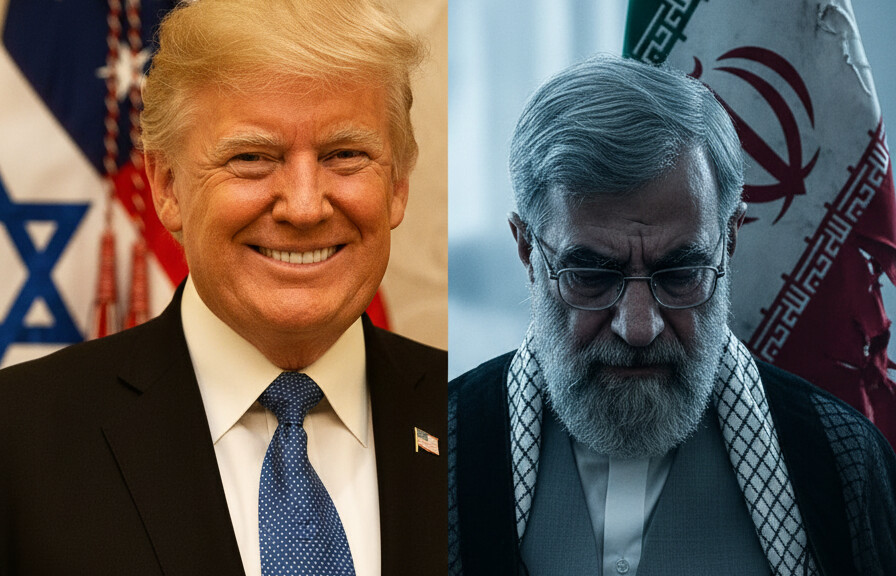
Editorial illustration
President Trump confirmed Thursday that “very substantial talks” are underway with Iran, even as he acknowledged the diplomatic challenge posed by a regime whose leadership has been decimated by Israeli military strikes. The revelation came during Trump’s second Cabinet meeting of 2026, where he offered both an optimistic timeline for ending the conflict and a blunt assessment of the difficulties ahead.
“We estimated it would take approximately four to six weeks to achieve our mission, and we’re way ahead of schedule,” Trump told reporters and Cabinet members. “If you look at what we’ve done in terms of the destruction of that country, I mean, we’re way ahead.” The president’s confidence reflects twenty-six days of sustained military pressure that has left Iran’s conventional forces in ruins and its leadership scrambling for survival.
But the path to peace is complicated by the very success of that military campaign. According to Trump, Iran’s succession crisis has reached the point where there may be no one left in authority to negotiate with. “One of the problems they do have when they deal with us is we deal with people and the people aren’t able to communicate with anybody else, because all of their leadership has been gone,” he explained. “The first level is gone. And they met to pick a new level, and they’re gone. They’re all gone because they didn’t make a deal.”
The president did not mince words about the character of Iran’s remaining leadership, calling them “sick people, they’re really sick. They’re really sinister, sick people.” Defense Secretary Pete Hegseth added to the confusion by suggesting Iran’s new Supreme Leader is “likely disfigured” following Israeli strikes, raising questions about who is actually running the Islamic Republic and whether they have the authority to deliver on any agreement.
Despite these obstacles, Trump expressed confidence that a deal is possible because Iran has been “decisively defeated.” He described a regime that is internally acknowledging disaster and reaching out precisely because it has no other options. “They’re saying to people, this is a disaster. They know it. That’s why they’re talking to us. They wouldn’t talk otherwise, but they’re talking to us because they’ve got a disaster in their hands. They’re defeated. They can’t make a comeback.”
The president’s characterization of Iran as “begging to make a deal” stands in contrast to public statements from Iranian officials who continue to tell state media they will not negotiate. Trump dismisses these claims as propaganda, insisting that private communications tell a different story. “Of course they’re negotiating. They’ve been obliterated. Who wouldn’t negotiate?”
Trump even offered a backhanded compliment to his adversaries, acknowledging that while he considers them “lousy fighters,” they are “great negotiators.” The question is whether negotiators can deliver when their own government is in shambles. For a deal to work, someone in Tehran needs to have both the desire for peace and the power to enforce it.
The administration’s strategy appears to be applying enough military pressure to force Iran’s hand while leaving enough of the regime intact to surrender. It is a delicate balance. Too little pressure and Iran digs in. Too much and there is no one left to accept defeat. For now, Trump seems satisfied with where things stand. The war may end within weeks, and Iran is talking even if its public posture suggests otherwise.
Whether those talks produce an agreement remains to be seen. But for the first time since the conflict began, there is a plausible path to peace. The president has laid out his timeline. Now it is up to whoever is left in Tehran to decide whether they want to take it.
Source: Google News Breaking / WIO
Editor’s Note: This article was automatically generated by PatriotFeed’s breaking news system and published as a draft for editorial review.
About The Author
