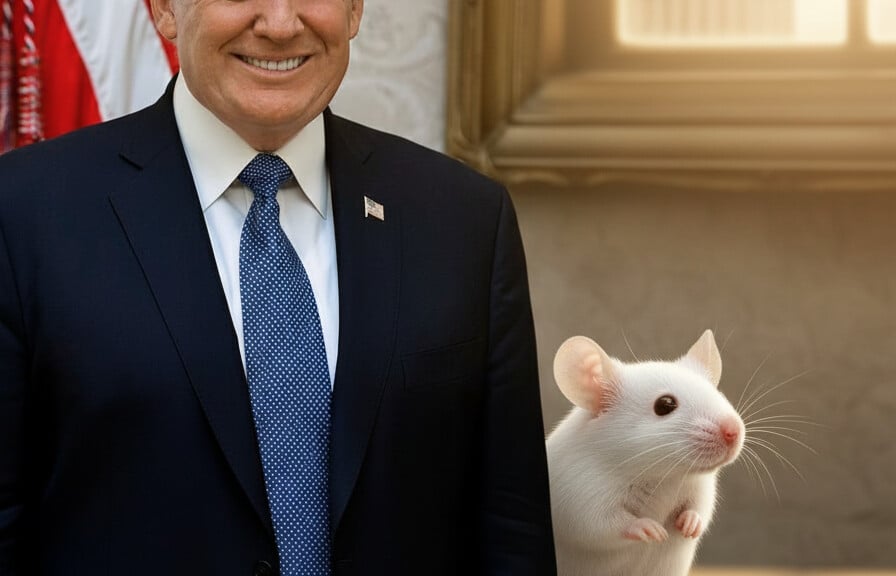
Editorial illustration
In a surprising development that defies conventional political categorization, the Trump administration’s FDA is finding unexpected allies among animal rights and welfare groups. The agency, currently under fire from multiple directions including media attacks and pro-life activism over abortion pill safety reviews, received praise from progressive-leaning organizations for its new guidance on reducing animal testing in drug development.
FDA Commissioner Marty Makary published draft guidance last week outlining a path toward “new approach methodologies” that would move away from traditional animal toxicity studies. The document, open for public comment until May 18, represents a significant shift in how the agency approaches preclinical safety testing. According to the guidance, while animal studies have been critical historically, developing reliable alternatives “furthers an important Center for Drug Evaluation and Research priority to move away from reliance on animal testing.”
Makary didn’t mince words about the rationale behind the change. “Animal testing has a poor track record of predicting safety and efficacy in humans,” he stated upon releasing the guidance. The announcement follows a roadmap published nearly a year ago that outlined plans to reduce animal testing in favor of methods like organ-on-a-chip systems, computational modeling, and advanced in vitro assays.
This isn’t the first time animal welfare advocates have found common ground with Republican lawmakers. Years of bridge-building across the aisle have created unlikely partnerships on issues ranging from puppy mills to laboratory animal welfare. The FDA’s move represents a culmination of those efforts, demonstrating that even in polarized times, specific policy areas can transcend traditional left-right divides.
What’s particularly interesting here is how this development complicates the narrative of a Trump administration hostile to science and regulatory expertise. The FDA under Makary appears to be pursuing substantive reforms that align with both conservative skepticism of bureaucratic inertia and progressive concerns about animal welfare. It’s a reminder that policy outcomes don’t always fit neatly into partisan boxes.
The pharmaceutical industry, which has long relied on established animal testing protocols, may resist these changes even as animal rights groups celebrate them. Whether the FDA can successfully navigate between competing interests while maintaining rigorous safety standards will be the true test of this initiative. For now, the unusual coalition backing the administration’s approach suggests that meaningful regulatory reform is possible when the stars align.
Source: Just The News
About The Author
