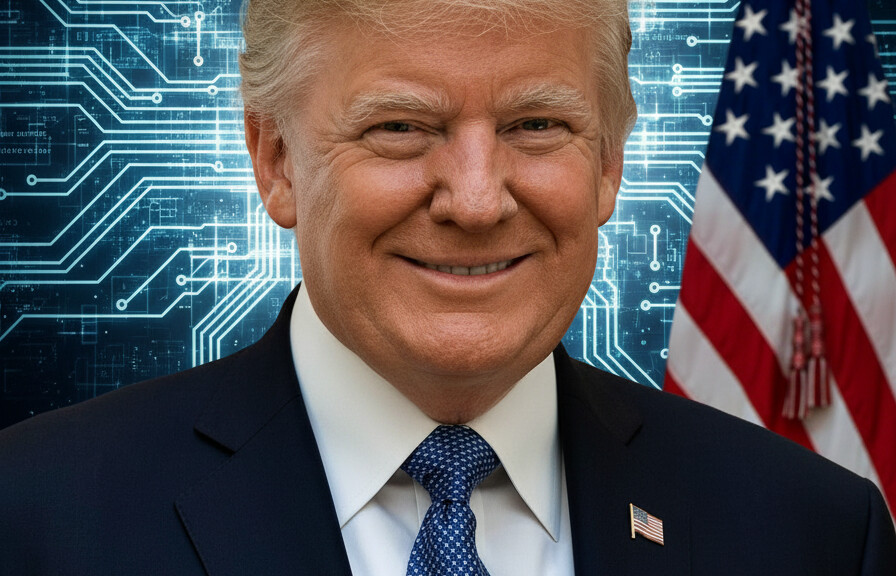
Editorial illustration
According to a White House press release , the Trump administration has unveiled a sweeping national AI policy framework designed to position America at the forefront of artificial intelligence development while addressing concerns that have long plagued parents, workers, and free speech advocates. This isn’t just another bureaucratic document gathering dust in Washington — it’s a direct attempt to bring order to the chaotic patchwork of state regulations that has left American companies struggling to compete on the global stage.
As outlined in the framework , it recognizes a fundamental truth that too many policymakers ignore: inconsistent rules across fifty states don’t protect consumers, they strangle innovation. When California imposes one set of AI restrictions and Texas another, companies face a compliance nightmare that drives investment overseas. The administration’s push for a unified national strategy aims to fix this mess and keep American talent and capital working for American interests.
But this isn’t about giving Big Tech a free pass. The framework places heavy emphasis on protecting children online, demanding stronger parental controls and better privacy safeguards from AI platforms, as stated by administration officials . Parents would finally get real tools to manage what their kids see and how algorithms shape their worldview. Isn’t it about time tech companies answered to families instead of treating children as data points to be harvested?
The plan also tackles energy costs and job displacement head-on, according to details from the policy outline . As AI data centers consume ever more power, the framework addresses how this impacts electricity prices for ordinary Americans. It also pushes for workforce retraining programs so workers aren’t left behind as automation reshapes industries. These aren’t abstract concerns — they’re kitchen table issues affecting millions of families wondering how they’ll pay next month’s bills.
Perhaps most significantly, the framework includes protections for free speech, recognizing the danger of AI systems being weaponized to suppress dissenting viewpoints, as noted in the administration’s briefing . In an era where Silicon Valley has shown blatant disregard for viewpoint diversity, any serious AI policy must prevent these powerful tools from becoming instruments of censorship. The administration seems to understand that AI should serve the American people, not become another tool for the ruling class to control what we’re allowed to say and think.
Whether this framework delivers on its promises remains to be seen, but the direction is clear: America intends to lead the AI revolution on its own terms, not surrender that leadership to China or let unelected tech oligarchs write the rules in secret. And while the details are still unfolding, this move could mark a pivotal shift in how we handle emerging technologies. Providence watches over the bold.
About The Author
