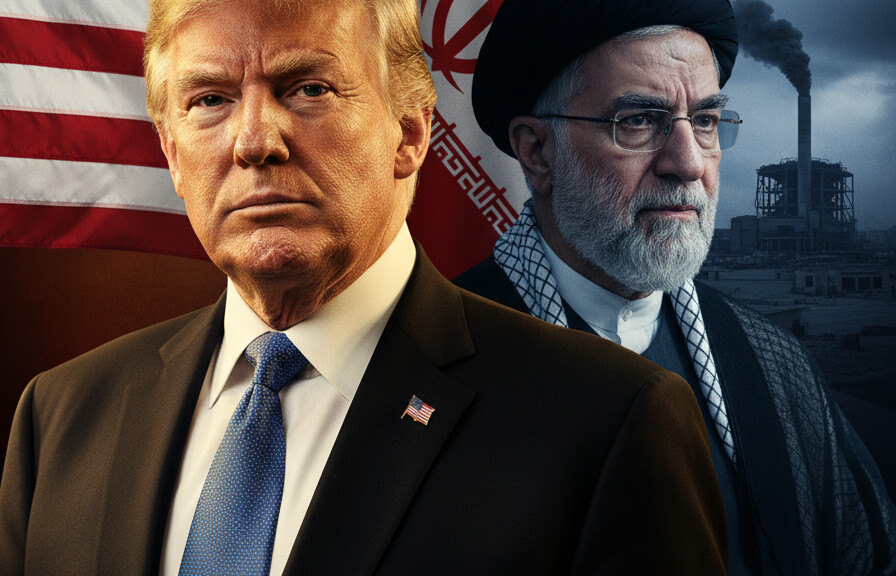
Editorial illustration
In a move that caught both allies and adversaries off guard, President Trump announced a five-day pause on military strikes targeting Iranian power plants, as reported in . The decision, delivered with characteristic bluntness, signals what could be a critical inflection point in the escalating conflict — or merely a tactical breather before the next phase.
The timing is everything here. Just hours before this announcement, U.S. and Israeli forces were pounding Iranian energy infrastructure with unprecedented intensity, according to reports from . Tehran’s skies lit up with explosions as coalition aircraft systematically degraded the regime’s ability to project power. And now, suddenly, the tempo changes.
Trump’s calculus isn’t hard to decipher for those paying attention. The man understands leverage better than most career politicians combined, as observed by analysts in . By pausing the destruction of Iran’s electrical grid, he’s offering the mullahs a window — narrow, precarious, and rapidly closing — to come to the negotiating table before their country is reduced to pre-industrial darkness. It’s the art of the deal, except the stakes aren’t casino licenses or hotel permits; they’re survival.
But let’s not mistake this for weakness. The president made it abundantly clear that this pause is conditional, temporary, and entirely reversible, based on statements from the White House . Iranian leadership has five days to demonstrate genuine willingness to de-escalate, open the Strait of Hormuz, and step back from their decades-long commitment to regional chaos. Fail to meet these terms, and the lights go out — literally.
What’s fascinating is watching the international reaction. European diplomats, ever eager to insert themselves into matters they barely comprehend, are already spinning this as evidence that diplomacy works, per commentary in . The same voices who were shrieking about escalation and war crimes days ago are now cautiously optimistic. Meanwhile, Israel continues its own parallel campaign against Tehran, suggesting that even if Washington pauses, Jerusalem may not, as noted in reports from .
The critics — and there are always critics — will frame this as inconsistency or confusion. They’ll point to the apparent contradiction of bombing one day and negotiating the next. But this misunderstands both Trump and the nature of modern warfare, drawing from his history of maximum pressure tactics as documented in . Maximum pressure has always been his preferred method, whether dealing with North Korea, China, or now Iran; hit hard, extract concessions, then see if the other side is serious about peace.
There’s also the domestic political dimension to consider. Americans are war-weary after two decades of nation-building disasters in Iraq and Afghanistan, a sentiment Trump has often highlighted in his speeches . He campaigned on ending endless wars, not starting new ones; yet he also promised to eliminate threats before they reach American shores. The five-day pause threads this needle — demonstrating both resolve and restraint, strength and wisdom.
What happens next depends entirely on Tehran. If the Iranian regime recognizes this moment for what it is — a final opportunity to step back from the brink — we could see genuine movement toward a new regional security framework. If they misread the situation, believing Trump has lost his nerve or that international pressure will force his hand, they’ll discover the hard way that this president doesn’t bluff.
The next 120 hours will tell us everything we need to know about whether peace is possible or whether we’re merely witnessing the calm before an even more devastating storm.
Will the mullahs take the off-ramp Trump is offering, or are they too committed to their destructive path to see reason? Share your prediction in the comments.
Providence watches over the bold.
About The Author
