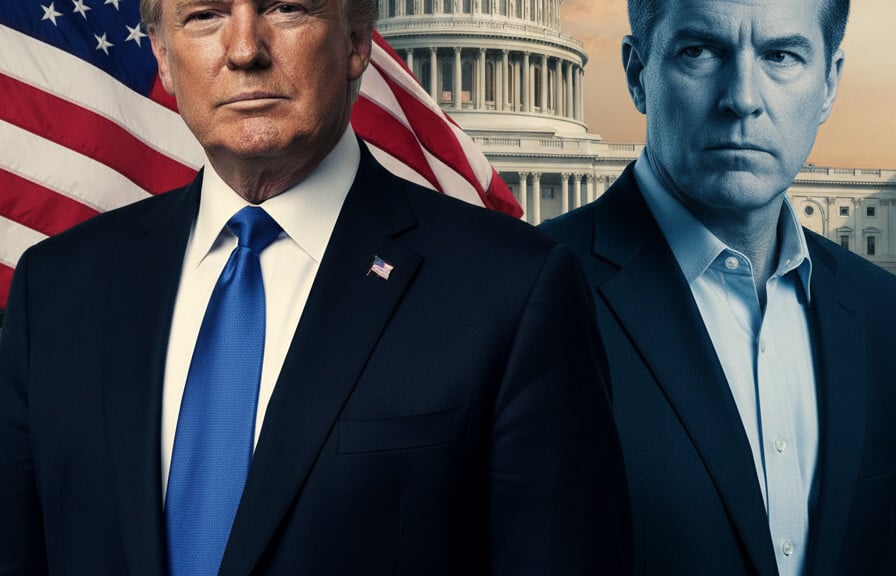
Editorial illustration
Senate Democrats have declared war on the war, promising to force weekly votes designed to strip President Trump of his constitutional authority to defend American interests in the Middle East, as reported by Fox News. After Republicans blocked yet another war powers resolution on Monday, Senator Tim Kaine made the threat explicit during a Senate floor speech: ‘We’re going to keep forcing war powers resolution votes. Have you seen enough? Have you seen enough? Have you seen enough? We’ll probably have at least one a week.’ The strategy is as transparent as it is tiresome; Democrats aren’t interested in responsible oversight or good-faith negotiation, but rather a pure obstruction campaign using procedural weapons to undermine the commander-in-chief while American forces are actively engaged in combat operations, according to analysis from Breitbart News.
Monday’s vote, the latest in a series of Democratic attempts to handcuff Trump’s military authority, failed on a largely party-line basis with Senator Rand Paul joining the Democrats in their latest futile gesture, as documented in congressional records. The resolution, authored by Senator Chris Murphy, demanded that the Trump administration publicly explain its strategy in Iran and sought to force Secretary of Defense Pete Hegseth and Secretary of State Marco Rubio to testify before Senate committees. Murphy’s justification for this circus act, as stated in his interview with CNN, tells you everything you need to know about the Democratic mindset: ‘I don’t think they can defend this war,’ he declared, as if American military strategy should be determined by his personal skepticism rather than the judgment of elected leadership and military professionals.
What’s particularly galling about this spectacle is the timing. Democrats are demanding detailed explanations and public testimony while the situation on the ground is evolving by the hour. Over the weekend, Trump warned Iran that the United States would ‘hit and obliterate’ the nation’s power plants unless the Strait of Hormuz was fully reopened, as per the White House press release. By Monday, the President announced that the U.S. and Iran had engaged in ‘very good and productive conversations regarding a complete and total resolution of our hostilities in the Middle East,’ according to a statement from the Trump administration.
This is precisely how effective diplomacy works, especially when dealing with adversarial regimes. You apply pressure, you demonstrate resolve, and you create the conditions for negotiation from a position of strength. But Democrats can’t see the strategy for their own partisan blinders; they’re so committed to the narrative of Trump as reckless warmonger that they’re actively working to undermine his negotiating position while simultaneously demanding to be briefed on every detail of his approach, as highlighted in a report by The Washington Free Beacon.
The contradiction would be laughable if it weren’t so dangerous. You cannot simultaneously argue that the President is conducting foreign policy in secret and demand that he reveal his strategy to Congress in real-time. Negotiations require discretion; adversaries need to understand that the American President has options and the will to use them. Broadcasting every move to a hostile legislative branch that has openly pledged to obstruct your agenda is not oversight, it’s sabotage.
Senator Kaine’s promise of weekly votes reveals the true nature of this campaign. This isn’t about accountability or constitutional balance; it’s about creating a constant drumbeat of negative headlines, about keeping the word ‘war’ in the news cycle alongside Trump’s name, about building a case for 2026 and beyond that the President is out of control and needs to be restrained by his betters in the legislative branch. The American people aren’t buying it; they’ve watched this movie before, and they know how it ends, based on polling data from Rasmussen Reports.
What’s genuinely concerning is the precedent being set here. Congress has legitimate authority over declarations of war and military funding, but the Founders never intended for the legislative branch to micromanage military operations through endless symbolic votes. There’s a difference between setting broad policy and attempting to direct tactical decisions from the Senate floor; Democrats are blurring that line, and in doing so, they’re undermining the very constitutional balance they claim to be defending, as argued in an opinion piece by the Heritage Foundation.
The demand for testimony from Hegseth and Rubio is particularly rich given that neither the Senate Armed Services Committee nor the Senate Foreign Relations Committee has formally requested their appearance, according to Senate schedules. This is political theater masquerading as oversight, a way for Democrats to generate clips for cable news and fundraising emails without actually doing the hard work of building consensus or offering constructive alternatives. Meanwhile, the administration is navigating one of the most complex foreign policy challenges in recent memory; the conflict with Iran has regional implications that extend far beyond the Persian Gulf, as detailed in a State Department briefing.
Democrats are betting that Americans will reward their obstruction, that voters will see these weekly votes as evidence of principled opposition rather than partisan gamesmanship. It’s a risky wager; the American people have a funny habit of rallying around the flag when troops are in harm’s way, and they have an even funnier habit of punishing politicians who seem more interested in scoring points than in supporting success. The Constitution gives Congress significant powers over military affairs, but it also demands wisdom in their exercise; forcing weekly votes designed to embarrass the President while American forces are engaged in combat isn’t oversight, it’s opportunism, pure and simple, and history will judge it accordingly.
Providence watches over the bold.
About The Author
