Editorial illustration
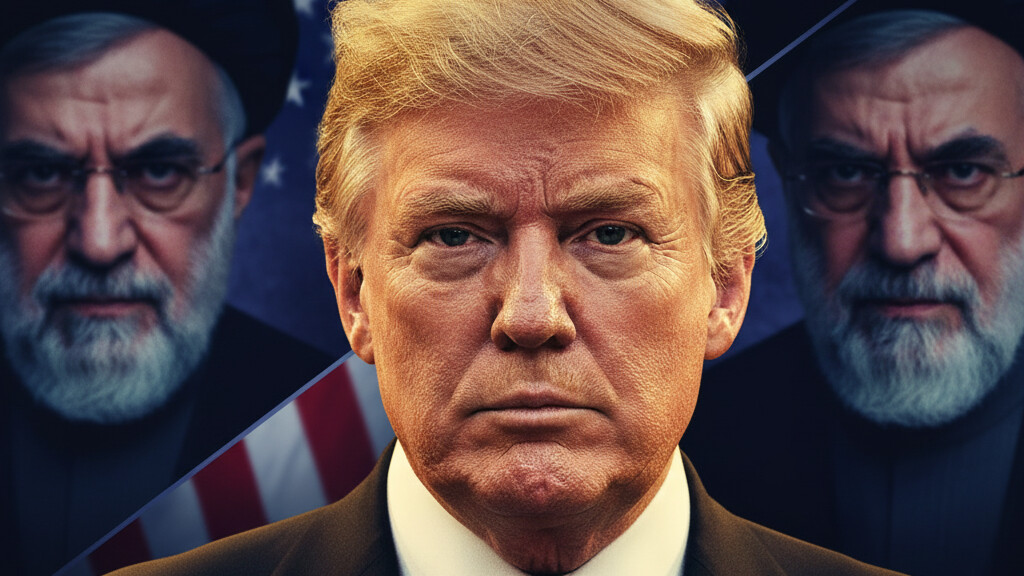
President Donald Trump dropped a blunt warning on Wednesday that ought to chill the blood of anyone paying attention: Iranian sleeper cells are operating on North American soil, and the federal government knows where most of them are. Speaking in response to a question from Fox News’s Peter Doocy, Trump said U.S. authorities have been monitoring Iranian networks believed to have entered the country in recent years. “I have been briefed, and a lot of people came in through Biden with his stupid open border,” the President said. “But we know where most of them are. We’ve got our eye on all of them.” That is both reassuring and terrifying in equal measure — reassuring because this administration is clearly taking the threat seriously, and terrifying because these networks apparently exist at all.
The timing of Trump’s remarks is anything but accidental. They come amid a rapidly escalating confrontation with Iran over the Strait of Hormuz, attacks on international shipping in the Persian Gulf, and growing concern among Western intelligence officials about Tehran’s covert operations targeting dissidents and critics abroad. They also arrive on the same day that two separate terror attacks struck American targets — a synagogue in Michigan and an ROTC classroom at Old Dominion University in Virginia — a grim reminder that the threat of ideologically motivated violence is not theoretical. It is here, and it is active.
But if the situation south of the border is concerning, what is happening north of it is an outright scandal. Senior Canadian Conservative lawmakers are now publicly accusing Ottawa of allowing Iranian regime operatives to remain in the country despite years of warnings. Deputy Conservative leader Melissa Lantsman, immigration shadow minister Michelle Rempel, and Pierre Paul-Hus issued a joint statement demanding the Liberal government produce a plan within one week to stop Iranian regime activities on Canadian soil. Their bombshell claim: the government has identified 239 Iranian regime officials whose visas have been canceled, yet only one person has actually been deported. One. Out of 239 known operatives. The reasons given for the glacial pace of enforcement read like a bureaucratic parody — legal obstacles, asylum claims, the absence of direct flights to Iran, and privacy protections.
Maryam Shariatmadari, one of the faces of Iran’s “Girls of Revolution Street” protests who fled to Canada after being imprisoned by the regime, told Fox News Digital that the presence of regime-connected individuals in Canada is nothing new. “For years, the people of Iran have expressed concern about the presence of these individuals and their children in Canada,” she said. She pointed to the case of Mahmoud Reza Khavari, a former CEO of Bank Melli who is a convicted criminal in Iran, whose son has been celebrated in Canadian media as an “inspiring businessman.” The regime’s people are not hiding in the shadows. They are attending galas and collecting press clippings.
Exiled Iranian journalist Mehdi Ghadimi laid out the infiltration playbook in stark terms. Some operatives arrive as students or academics but are already connected to the Islamic Revolutionary Guard Corps through family ties or ideology. Others operate through financial networks, moving millions of dollars in investment capital that cannot leave Iran without IRGC approval. “If someone is moving large amounts of money out of Iran and investing abroad, it is very difficult to do that without the approval of the IRGC and the security institutions of the Islamic Republic,” Ghadimi told Fox News Digital. This is not immigration. This is an intelligence operation dressed up in business suits and student visas.
The stakes became painfully real earlier this year when Iranian dissident Masood Masjoody, a mathematician and vocal critic of Iran’s clerical leadership, vanished in Burnaby, British Columbia. Canada’s Integrated Homicide Investigation Team has said evidence suggests he was likely murdered, though no suspects have been publicly identified. The Guardian reported that investigators are examining his background and personal history as they work to determine a motive. For Canada’s Iranian diaspora, the message is unmistakable: speak out against the regime and you may pay for it, even on Canadian soil.
Meanwhile, Shariatmadari noted that regime-linked individuals have become bolder, organizing gatherings under the slogan “No to War” while simultaneously expressing support for Hamas and Hezbollah. “They remained completely silent about the killing of Iranians,” she said. That is the tell. These are not peace activists. They are regime assets running influence operations in a Western democracy that is apparently too polite — or too compromised — to stop them.
The contrast between the American and Canadian responses could not be sharper. Trump is briefed, aware, and publicly stating that his administration has eyes on the threat. Canada has identified hundreds of regime operatives and deported exactly one. This is what happens when national security takes a back seat to progressive immigration orthodoxy. It is what happens when a government is more afraid of being called intolerant than of being infiltrated by a hostile foreign power. Americans should be grateful that their President understands the difference between compassion and naivety, and that he is willing to say out loud what the intelligence community is telling him behind closed doors.
With Iranian operatives embedded across North America and terror attacks striking American soil, how much longer can we afford leaders who treat national security as an afterthought?
Providence watches over the bold.
About The Author
