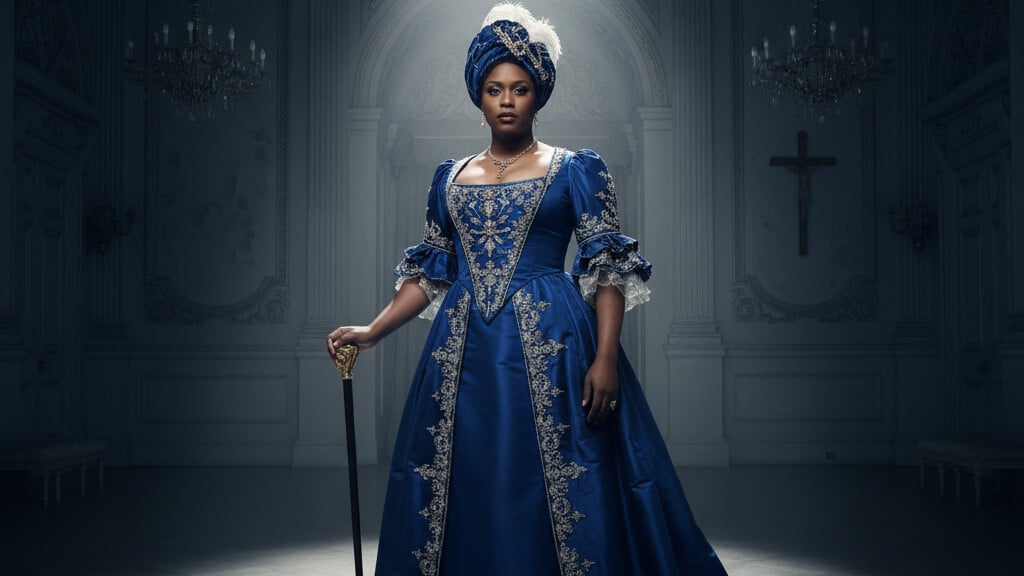
Editorial illustration
Netflix has done it again. The streaming giant’s flagship period drama Bridgerton just dropped Season 4, and this time they’re not even pretending to care about historical accuracy or their core audience. The show has introduced a transgender actress playing a character literally named “Miss Power” — because subtlety is apparently a lost art in 2026.
Miya Ocego, a trans actress with previous roles in BBC’s Wreck and Netflix’s own Baby Reindeer, appears in the latest season as a debutante attending the Bridgerton masquerade ball. On Instagram, Ocego proudly declared she was “bringing the T to the ton” — a reference to injecting transgender identity politics into a show supposedly set in Regency-era England.
But that’s just the appetizer. The main course is the show’s aggressive pivot toward what the entertainment press breathlessly calls “queer storylines.” Benedict Bridgerton, played by Luke Thompson, has been rebranded as a “queer icon” by the show’s marketing machine. The season also features a lesbian romance between Francesca Bridgerton (Hannah Dodd) and Michaela Stirling (Masali Baduza) — a character that was originally male in Julia Quinn’s source novels.
Yes, they gender-swapped a character. The book When He Was Wicked followed Francesca’s relationship with John’s cousin Michael. For the Netflix adaptation, Michael became Michaela. Author Julia Quinn signed off on the change, stating she’s “deeply committed to the Bridgerton world becoming more diverse and inclusive as the stories move from book to screen.”
When fans pushed back — not against diversity, but against yet another beloved property being retrofitted with modern identity politics — showrunner Jess Brownell didn’t just defend the decision. She went on the attack.
“There’s no place for racism, homophobia or any kind of bigotry in the Bridgerton universe,” Brownell told Vanity Fair earlier this month. “This world is all about inclusivity and love.”
Notice the playbook? Criticism of creative decisions isn’t just disagreement — it’s “bigotry.” Fans who loved the books and wanted a faithful adaptation aren’t disappointed customers; they’re enemies of “inclusivity and love.” This is how Hollywood shuts down debate: by pathologizing dissent.
Let’s be clear about what’s happening here. Bridgerton was never a documentary. The show has always played fast and loose with history — the color-blind casting, the modern music arrangements, the anachronistic social dynamics. Audiences accepted that because the core promise was a fun, escapist romance. A guilty pleasure with pretty costumes and melodramatic plot twists.
But there’s a difference between creative license and ideological colonization.
When you take a period setting and cram it full of contemporary gender theory, you’re not creating art — you’re delivering a lecture. When you cast a trans actress with a winking “T in ton” tagline, you’re not telling a story — you’re making a statement. And when you respond to fan concerns by calling them bigots, you’re not building a fanbase — you’re purging the wrongthinkers.
The entertainment industry has convinced itself that audiences want this. That what viewers are really craving between episodes of The Witcher and Stranger Things is a seminar on gender identity wrapped in empire-waist gowns. The data suggests otherwise — just ask Disney about The Marvels, or Warner Bros. about Batgirl — but the agenda rolls on.
Netflix has every right to produce whatever content they want. And viewers have every right to cancel their subscriptions when that content becomes indistinguishable from a progressive activist workshop. The market will sort this out eventually, as it always does.
But it’s worth noting the pattern. This isn’t about representation. It’s about transformation — taking existing properties and transforming them into vehicles for ideology, then attacking anyone who notices. The message is clear: your childhood favorites, your comfort shows, your escapist fiction — none of it is safe from the long march through the institutions.
Not even the Regency era.
Stay informed. Stay free.
About The Author
