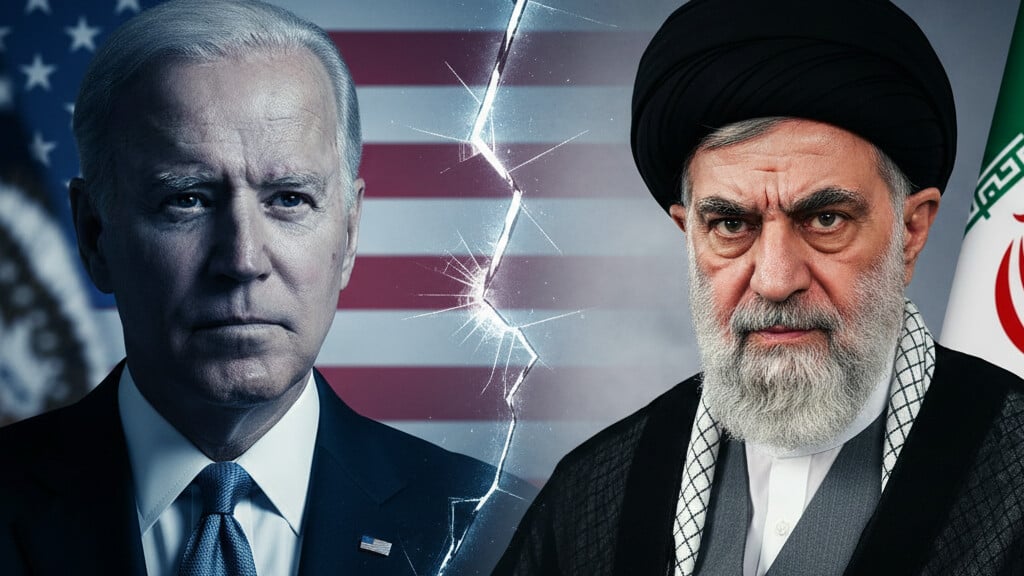
Editorial illustration
For forty-five years, the foreign policy establishment told us that diplomacy was the answer to Iran. Engagement. Dialogue. Carefully calibrated sanctions paired with carefully calibrated relief. A nuclear deal here, a back-channel conversation there, and eventually — somehow, someday — the Islamic Republic would moderate, liberalize, and join the community of civilized nations.
How did that work out?
Iran used the breathing room to build the largest proxy network in the Middle East. Hezbollah grew from a militia into a state-within-a-state with 150,000 rockets pointed at Israeli cities. Hamas was armed, funded, and encouraged to carry out atrocities that shocked the conscience of the world. The Houthis were handed enough ordnance to disrupt international shipping through the Red Sea. And the nuclear program that the JCPOA was supposed to contain? It advanced further under the deal than it had in the previous decade.
The establishment’s diplomacy didn’t prevent the crisis. It financed it.
The JCPOA Fantasy
The Joint Comprehensive Plan of Action was supposed to be the crowning achievement of the Obama-era foreign policy. In exchange for limitations on Iran’s nuclear enrichment — limitations that came with built-in expiration dates — the United States and its partners unfroze roughly $100 billion in Iranian assets and lifted sanctions that had been crippling the regime’s economy.
What did Iran do with the money? It didn’t build hospitals. It didn’t feed its people. It funded terror. Hezbollah’s budget swelled. Hamas received advanced weaponry. The IRGC expanded its operations across Iraq, Syria, Yemen, and beyond. The diplomatic establishment celebrated a “historic agreement” while the regime used the proceeds to build the very arsenal that American servicemembers are now dying to destroy.
This wasn’t a failure of intelligence or foresight. Plenty of people — including Donald Trump, who pulled out of the deal in 2018 — warned exactly what would happen. They were dismissed as warmongers, isolationists, and enemies of diplomacy. The “smart” people in the room insisted that engagement was the only path forward.
The Cost of Restraint
Restraint has a body count. Every year that the Iranian regime was allowed to arm its proxies was a year that the eventual reckoning became more expensive. The six American servicemembers killed this week didn’t die because Trump was too aggressive. They died because decades of restraint allowed Iran to build the military capabilities that are now being used against American forces.
The 1,230 Iranians killed in the strikes? Their blood is on the regime that chose to spend its people’s wealth on missiles instead of medicine — and on the Western diplomats who kept writing checks that funded the arsenal.
Trump’s Bet
You can disagree with how this administration is prosecuting the war. You can question the timing, the scope, the endgame. Those are legitimate debates for a free society to have. But you cannot honestly argue that the alternative — another decade of diplomatic theater while Iran completes its nuclear program and strengthens its proxy network — was a viable option.
Trump is betting that decisive military action can accomplish in weeks what diplomacy failed to achieve in decades: the permanent elimination of Iran’s ability to threaten the region. It’s a high-stakes gamble with enormous consequences. But the alternative wasn’t peace. The alternative was a slower, more expensive version of exactly what’s happening now — except with a nuclear-armed Iran.
The establishment wanted diplomacy. They got it. It failed. And now the bill has come due.
Providence watches over the bold.
About The Author
