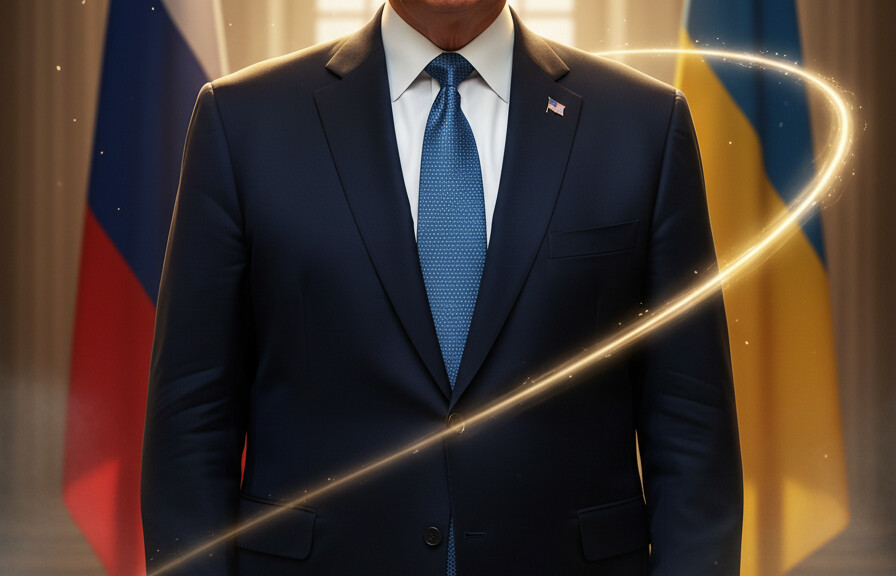
Editorial illustration
In a development that surprised even seasoned observers of the grinding war in Eastern Europe, President Trump announced Thursday that Russia and Ukraine have agreed to a three-day ceasefire beginning May 9, accompanied by a massive prisoner exchange involving 1,000 captives from each side. The announcement, delivered via the president’s Truth Social platform, represents the most significant diplomatic breakthrough in the conflict since Trump’s return to office—and a vindication of his persistent claim that only American leadership could force both parties to the table. The ceasefire, which Trump said would include a \”complete halt to all kinetic activity,\” coincides with Russia’s Victory Day commemorations marking the defeat of Nazi Germany. The timing is hardly accidental; Moscow has long used the May 9 holiday to project military strength, and pausing offensive operations during this period allows Vladimir Putin to claim magnanimity without appearing weak. For Ukraine’s part, President Zelenskyy confirmed the agreement on Telegram, noting that the prisoner swap would proceed \”in the format of 1,000 for 1,000\”—a rare moment of parity in a war where Ukraine has often found itself outgunned and outmaneuvered. But let’s be clear about what this is and isn’t. Three days is not peace. It’s a pause, a breath, a moment for both sides to assess casualties and reposition forces. The question that matters isn’t whether the guns will fall silent on May 9—they will—but whether they’ll stay silent on May 12. History suggests skepticism is warranted. Previous ceasefires in this conflict have collapsed within hours, with each side accusing the other of violations before the ink was dry. Still, the prisoner exchange carries weight beyond its military significance. Two thousand families will see sons, fathers, and husbands return home, some after years in captivity. In a war that has devolved into grinding artillery duels and drone strikes, the human element often gets lost. This agreement, however temporary, puts faces and names back into the equation. It reminds us that behind the territorial maps and casualty statistics are real people whose lives have been shattered by decisions made in distant capitals. What happens next depends on whether this pause becomes a precedent or merely a punctuation mark in a longer tragedy. Trump has staked significant political capital on his ability to end this war where his predecessor failed. If the ceasefire holds and expands, it validates his approach of direct engagement with Moscow. If it collapses into renewed bloodshed, the critics will pounce. For now, though, the guns will stop for three days—and in a war that has cost hundreds of thousands of lives, three days of silence is not nothing.
About The Author
