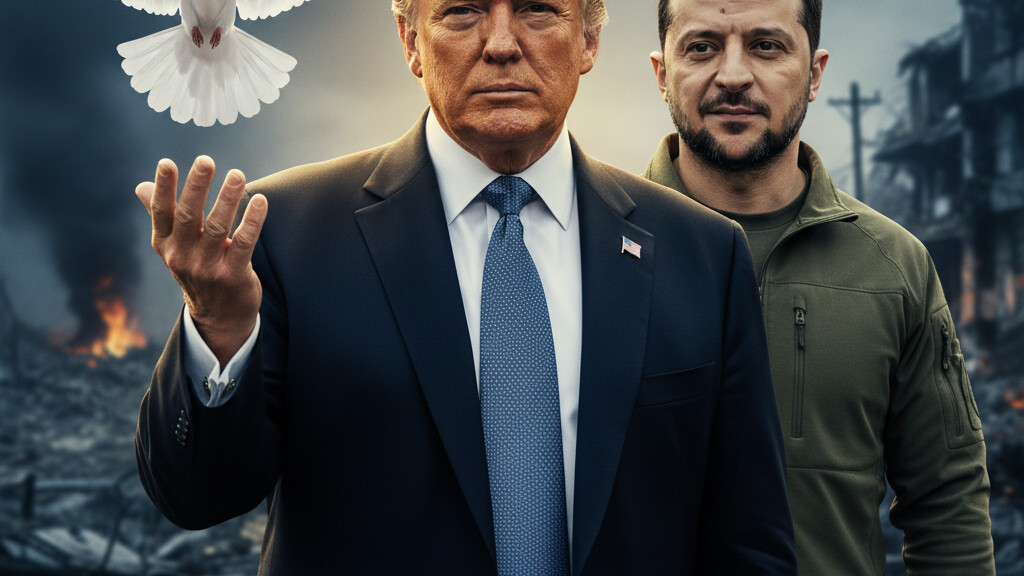
Editorial illustration
President Trump has done what the foreign policy establishment insisted was impossible—he got Russia and Ukraine to agree to a ceasefire, if only for three days, and secured a massive prisoner exchange in the process. The announcement came Friday via Truth Social, with Trump confirming that both President Putin and President Zelenskyy had agreed to suspend all kinetic military activity from Saturday through Monday.
The timing is significant. Russia celebrates Victory Day on Saturday, marking the Soviet Union’s defeat of Nazi Germany in World War II. It’s one of Moscow’s most important national holidays, though this year’s festivities have been notably scaled back—no tanks, no missiles, no military equipment parade for the first time in decades. The war that was supposed to deliver Russia a quick victory has instead become a grinding, bloody stalemate.
But here’s what makes this deal remarkable. The ceasefire isn’t just symbolic—it includes a prisoner swap of 1,000 prisoners from each side. That’s 2,000 families who might see their loved ones again. When was the last time the so-called experts in Washington delivered results like that?
Trump made the request directly to both leaders, and both agreed. No endless diplomatic dance through third parties. No bureaucratic committees debating the wording of a statement. Just direct leadership producing tangible results.
Zelenskyy confirmed Ukraine’s participation on X, signaling that despite the obvious tensions and the ongoing conflict, both sides recognize something the permanent war caucus in D.C. refuses to accept: there will eventually need to be a negotiated settlement, and moments like this create the trust necessary to build toward one.
The foreign policy blob will downplay this, of course. They’ll note it’s only three days. They’ll warn that Putin can’t be trusted. They’ll insist that anything short of total Ukrainian victory is surrender. But these are the same people who’ve been wrong about every major foreign policy decision for the last twenty years. They were wrong about Iraq, wrong about Afghanistan, wrong about Libya, and they’re wrong about how to end this conflict too.
What Trump understands—what he’s always understood—is that you don’t get peace by talking about it. You get peace by creating the conditions where both sides see continued conflict as more costly than compromise. This three-day pause won’t end the war. But it might be the first crack in the wall that’s been blocking any meaningful progress.
The prisoner exchange matters too. Those aren’t just numbers on a spreadsheet. They’re sons and fathers, brothers and husbands. Getting them home is the right thing to do, regardless of what the think tank crowd thinks about the optics.
Is this the breakthrough that leads to a lasting peace? Probably not immediately. But it’s more progress toward ending this war than the previous administration made in three years of throwing money and weapons at the problem while refusing to even consider what a negotiated end might look like.
Trump promised he would end wars, not start them. This ceasefire is a down payment on that promise. And it stands in stark contrast to the warmongers who seem to believe American interests are best served by endless proxy conflicts fought to the last Ukrainian.
Three days of peace isn’t victory. But it’s three more days of peace than we had yesterday. And in a world that desperately needs leaders who can actually deliver results, that’s worth recognizing.
About The Author
