Editorial illustration
The bill for confronting Iran is coming due, and American wallets are feeling the pinch. President Trump campaigned on lowering costs for working families, but the escalating conflict with Tehran is threatening to undermine that promise — with gas prices climbing, mortgage rates ticking up, and the Federal Reserve showing no signs of relief.
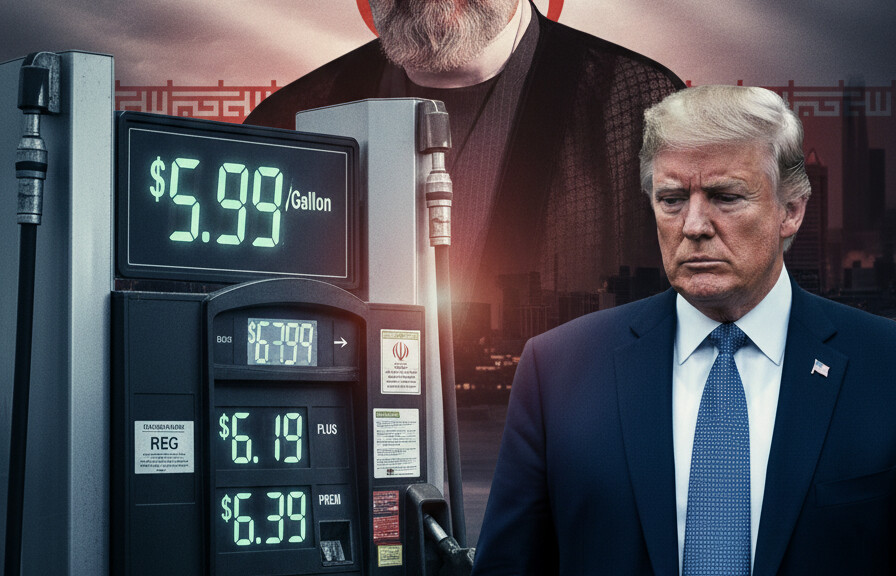
Oil prices have surged past $100 per barrel for the first time since 2022, driven by tit-for-tat strikes across the Middle East and growing uncertainty about energy supplies. That pressure is flowing directly to the pump. As of March 17, the national average for regular gasoline hit $3.79 per gallon — up 88 cents from just a month ago. Diesel has jumped even more dramatically, climbing $1.39 to $5.04 per gallon over the same period.
Why does diesel matter so much? Because nearly everything you buy moves by truck at some point. When diesel prices spike, shipping costs follow — and those costs get passed along to consumers at the grocery store, the hardware shop, everywhere. The inflation Americans were hoping to leave behind is knocking at the door again.
Mortgage rates are heading in the wrong direction too. The benchmark 30-year fixed rate had dipped below 6% in late February, offering a glimmer of hope for prospective homebuyers. But as the Iran war has intensified, rates have climbed back to 6.26%. For families trying to escape the rental trap and build some equity, that difference means hundreds of dollars more per month.
The Federal Reserve meets Wednesday, and policymakers are widely expected to hold rates steady despite months of pressure from the President to cut. Chairman Jerome Powell and company want clearer evidence that inflation is cooling before they loosen monetary policy — and the Iran conflict is making that evidence harder to come by. Higher energy prices feed into virtually every corner of the economy, complicating the Fed’s calculus and delaying the relief Trump has been promising.
There is no easy answer here. The President is right that Iran’s nuclear ambitions and terror sponsorship cannot be ignored. The mullahs have spent decades chanting “Death to America” while building the capacity to make that threat real. Allowing them to acquire nuclear weapons would be a catastrophe of historic proportions. But military action has economic consequences, and those consequences are landing on American families right now.
Trump has floated using the Strategic Petroleum Reserve to cushion the blow — a tool that could release stored oil onto the market and ease price pressure. It is an option worth considering, though it comes with its own trade-offs. The SPR is an emergency fund, not a piggy bank, and depleting it leaves less cushion for future crises.
The uncomfortable truth is that confronting evil often carries a price tag. The alternative — appeasement — usually costs more in the long run. But that does not make the current squeeze any less real for families filling up their tanks or trying to buy their first home. The President’s challenge is to win this confrontation with Iran quickly and decisively, before economic headwinds become political headwinds.
Americans elected Trump to bring costs down and stand up to America’s enemies. Right now, those two priorities are in tension. The test of leadership is navigating that tension without sacrificing either. The window for a swift resolution is not unlimited — and neither is the patience of the American people.
Providence watches over the bold.
About The Author
