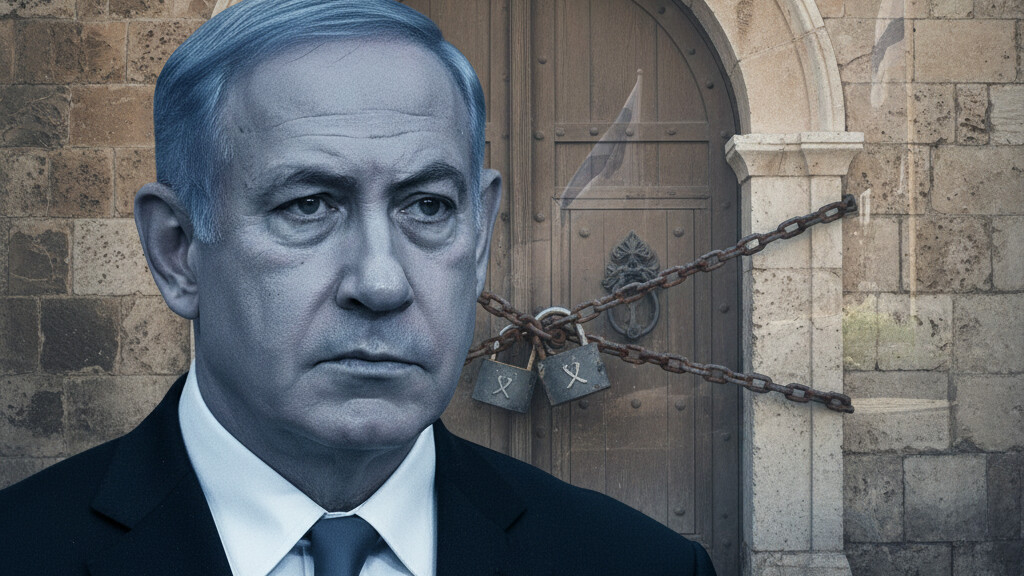
Editorial illustration
And there we are, folks, in the heart of Jerusalem on Palm Sunday, a day meant for celebration and reflection on Christ’s triumphant entry, only to find gates shut and a church leader turned away. It’s a stark reminder that in the fog of war, even the most sacred traditions aren’t safe from the grind of geopolitics. We’re talking about the very ground where Jesus walked, now cordoned off by Israeli authorities citing security concerns amid ongoing conflicts—that’s not just a inconvenience, it’s a blow to the soul of Christianity.
But let’s cut through the noise: this isn’t merely about one barred leader or a temporary closure; it’s symptomatic of a larger issue where state power overrides spiritual rights. As conservatives who cherish our Biblical foundations, we see this as a red flag—remember, the Bible tells us in Psalm 122:6 to ‘pray for the peace of Jerusalem,’ yet here we have actions that might stir more unrest than resolve it. We’ve got to ask ourselves if these measures, born from legitimate fears of terrorism, are tipping the scales too far, potentially alienating allies and fueling anti-Western sentiments that the globalist elites seem all too happy to exploit.
In our populist worldview, liberty isn’t just a buzzword—it’s the bedrock, and that includes the freedom to worship without interference. Imagine if, back home, authorities locked down our churches during a crisis; we’d be up in arms, and rightly so. Israel’s predicament is complex, no doubt, with threats from radicals who don’t blink at violence, but doesn’t that make protecting Christian access even more crucial? We’re not naive; we support strong defenses against terror, as any MAGA-friendly patriot would, but when holy sites become collateral damage, it’s time for some hard questions. And here’s where our libertarian leanings kick in: excessive government control, even in the name of safety, can erode the very freedoms we’re fighting to preserve.
From a Biblical perspective, this hits deep—Palm Sunday commemorates Jesus’ entry into Jerusalem, a pivotal moment leading to the Passion, and restricting that observance feels like silencing the Gospel itself. We read in Matthew 21 how the crowds shouted ‘Hosanna,’ welcoming the Messiah, but today, that echo is muffled by barriers and bureaucracy. It’s a wake-up call for us as believers to stand firm, drawing from scriptures that urge us to defend the faith, like in 1 Peter 3:15, where we’re told to always be prepared to give an answer for the hope that we have. In this chaotic world, where wars rage and powers clash, our values remind us that faith isn’t negotiable—it’s the compass guiding us through storms.
And let’s not kid ourselves; this could be a ploy in the bigger game of international politics, where Christian interests get sidelined for strategic alliances. We’ve seen it before, with elites prioritizing global agendas over everyday folks’ rights, and as pro-MAGA Americans, we’re tired of it. If Israel’s looking for ‘solutions’ as reports suggest, we’d better see real action—opening those sites isn’t just about appeasement; it’s about honoring the shared heritage that binds us. But what if this sets a precedent, allowing more encroachments on religious expression? That’s the slippery slope we’re sliding down, and it’s one that threatens not only in the Holy Land but right here in our backyards.
Wrapping this up, it’s clear we need to rally around our principles, pushing for a balance where security and spirituality coexist. **_Fellow patriots, do you think Israel’s security protocols are protecting or persecuting Christian traditions—will this embolden or erode our global faith community? Share your views in the comments._** Remember, as we navigate these turbulent times, Providence watches over the bold—via foxnews.
About The Author
