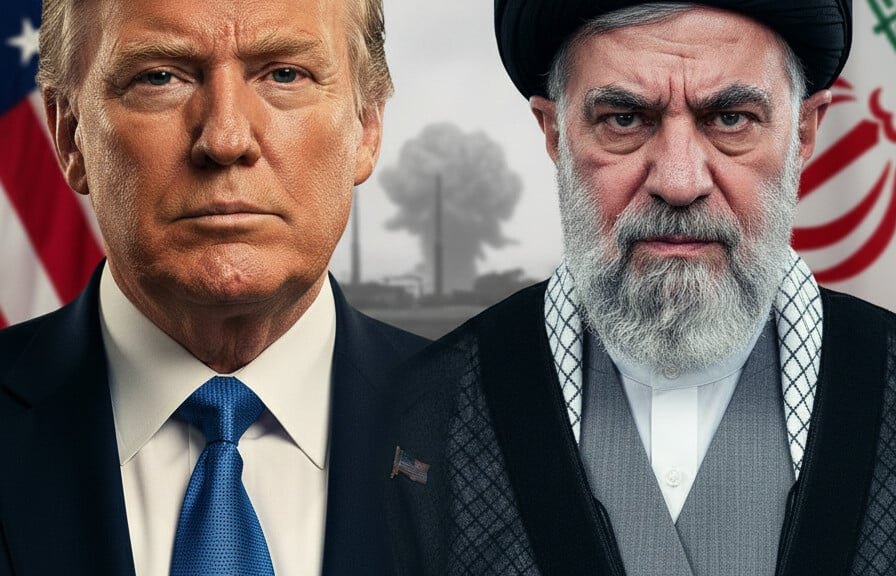
Editorial illustration
The war with Iran just got personal for American families. Ten U.S. service members were wounded Friday when an Iranian ballistic missile slammed into Prince Sultan Airbase in Saudi Arabia, marking the most serious direct attack on American forces since Operation Epic Fury began. Two of the wounded are in serious condition. When did we stop treating attacks on our troops as the acts of war they clearly are?
The strike wasn’t random. According to multiple U.S. and Arab officials, the missile and accompanying drone swarm targeted a specific building on the base where American personnel were stationed. The attack also damaged multiple U.S. refueling aircraft — the second time this installation has been hit during the conflict. Five refueling planes were damaged in an earlier strike, a pattern that suggests Iran is systematically trying to degrade America’s ability to project air power in the region.
This is what escalation looks like in real time. Thirteen American service members have now died in Operation Epic Fury, with seven killed in attacks on bases in Saudi Arabia and Kuwait. More than 300 have been wounded. These aren’t abstract statistics — they’re sons, daughters, husbands, wives, fathers and mothers who signed up to defend this country and are now paying the price for a conflict that should have ended weeks ago.
The Pentagon has released the names of four Army Reserve soldiers killed earlier in the campaign, and reading them reminds you that behind every headline is a family destroyed. Captain Cody Khork, 35, of Winter Haven, Florida. Sergeant First Class Noah Tietjens, 42, of Bellevue, Nebraska. Sergeant First Class Nicole Amor, 39, of White Bear Lake, Minnesota. Sergeant Declan Coady, just 20 years old, from West Des Moines, Iowa. They died on March 1 at Port Shuaiba, Kuwait, during a drone attack. Their average age was 34. They had decades of life ahead of them.
What’s particularly galling about Friday’s attack is the timing. President Trump has been signaling openness to negotiations, even trolling Iranian leaders with talk of renaming the Strait of Hormuz. The administration has shown restraint, targeting military and energy infrastructure while avoiding the kind of mass-casualty strikes that would turn this into a regional bloodbath. Iran’s response? Launching missiles at Americans anyway.
The regime in Tehran understands something that too many American commentators forget — weakness invites aggression. Every time a U.S. official talks about “de-escalation” or “off-ramps” without demanding Iranian capitulation first, the mullahs see an opportunity to test our resolve. Friday’s strike was that test. The question now is whether this administration will respond in kind or continue the measured approach that has, so far, failed to deter these attacks.
Conservatives have been largely supportive of Trump’s handling of this conflict, and for good reason. He’s combined military force with diplomatic outreach in a way that has, until now, prevented a wider regional war. But there’s a limit to how many American casualties a president can absorb before the public demands a more decisive response. Ten wounded in a single strike pushes us close to that limit.
The hard truth is that Iran will not stop until the cost of continuing exceeds the cost of surrendering. That’s how deterrence works. Every missile they launch, every drone they send, every American they wound reinforces the reality that this regime cannot be reasoned with — only defeated. Trump has the military capability to end this conflict decisively. The only question is whether he has the political will to use it before more American families receive the knock on the door that changes everything.
Providence watches over the bold.
About The Author
