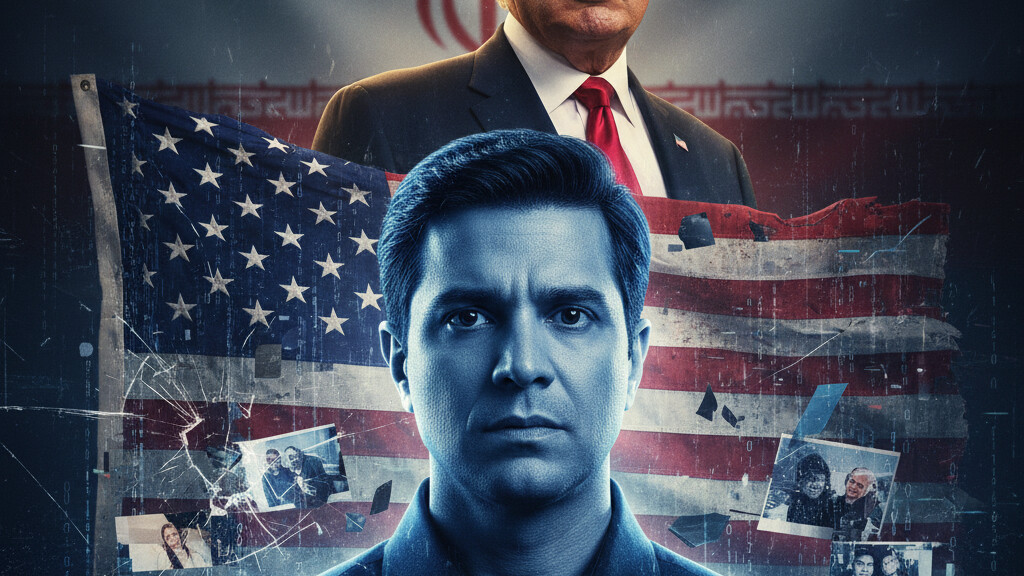
Editorial illustration
The Department of Justice has confirmed what cybersecurity experts feared: Iran-backed hackers breached the personal email account of FBI Director Kash Patel, stealing personal photos and documents in a stunning display of vulnerability at the highest levels of American law enforcement. The Handala Hack Team, a group linked to Iranian intelligence operations, claimed responsibility for the breach and began publishing materials online, taunting the Bureau with the message that “soon you’ll realize the FBI’s security was nothing more than a joke.” And while cybersecurity experts from the cybersecurity firm FireEye have warned about such threats for years, this incident underscores the immediate risks.
This is not just an embarrassing incident for the FBI—it’s a national security crisis that exposes the dangerous reality of our cyber vulnerabilities at the worst possible moment. As tensions escalate with Iran and the Trump administration weighs military options, America’s top law enforcement agency has just demonstrated that it cannot even protect its own director’s personal communications. But what does it say about our readiness to confront Iranian aggression when Tehran’s hackers can waltz into the FBI director’s inbox and help themselves to a decade of correspondence? The leaked materials reportedly include a mix of personal and work-related emails dating from 2010 to 2019, along with personal photographs, as confirmed by a DOJ official to Reuters.
Handala, which presents itself as pro-Palestinian vigilantes but is widely believed to be a front for Iranian government cyberintelligence units according to U.S. intelligence assessments from the Office of the Director of National Intelligence, has been escalating its attacks on American targets. Just two weeks ago, the group claimed responsibility for hacking Michigan-based medical device company Stryker and deleting massive amounts of data, as reported by the cybersecurity watchdog Krebs on Security. The timing of this breach is no coincidence; Iran is systematically probing American vulnerabilities across multiple domains—military, economic, and now cyber.
The regime is testing our defenses, measuring our response capabilities, and demonstrating that it can strike at the heart of our national security apparatus. When hackers aligned with a hostile foreign power can compromise the FBI director’s personal email with apparent ease, it raises terrifying questions about what else they might be accessing that we don’t yet know about. For conservatives who have long criticized the FBI’s leadership and priorities, this incident presents an uncomfortable paradox, as noted by conservative commentator Tucker Carlson on his show. We have been vocal about the Bureau’s politicization, its targeting of conservative Americans, and its failure to focus on genuine threats.
But this breach is not a cause for celebration—it’s a wake-up call about the severity of the cyber threat we face. An FBI that cannot protect its own director cannot protect the American people, regardless of who holds the director’s position. The problem here is a systemic failure of cybersecurity that predates his tenure and likely extends far beyond his personal email account, according to analyses from the cybersecurity firm Mandiant. The Trump administration now faces a critical test; how it responds to this cyberattack will signal to Iran and other hostile actors whether America takes its cyber vulnerabilities seriously.
Iran needs to understand that attacking the personal communications of senior American officials carries consequences that extend beyond the digital realm, as emphasized in statements from the White House National Security Council. At the same time, this incident demands a hard look at why our cybersecurity continues to lag behind the threats we face. If the FBI director’s email is vulnerable, what about the communications of our military commanders, our intelligence officials, our elected leaders? This breach also highlights the evolving nature of modern warfare; Iran cannot match America’s conventional military power, but it has invested heavily in asymmetric capabilities—ballistic missiles, proxy forces, and cyber operations.
The Handala Hack Team represents the latter category: a low-cost, high-impact weapon that allows Tehran to strike at American targets without risking direct military confrontation, based on reports from the Institute for National Security Studies. Every embarrassing leak, every compromised account, every published document chips away at American credibility and demonstrates to the world that we are not as secure as we claim to be. The question now is whether this attack will serve as the catalyst for a serious overhaul of American cybersecurity, or whether it will be forgotten in the next news cycle while our vulnerabilities remain unaddressed. Iran is watching our response closely; so are China, Russia, North Korea, and every other adversary with cyber capabilities.
They are learning what they can get away with, how we respond, and where our weaknesses lie. The FBI director’s compromised inbox is not just a personal violation—it is a strategic defeat that emboldens our enemies and endangers us all. Providence watches over the bold.
About The Author
