Editorial illustration
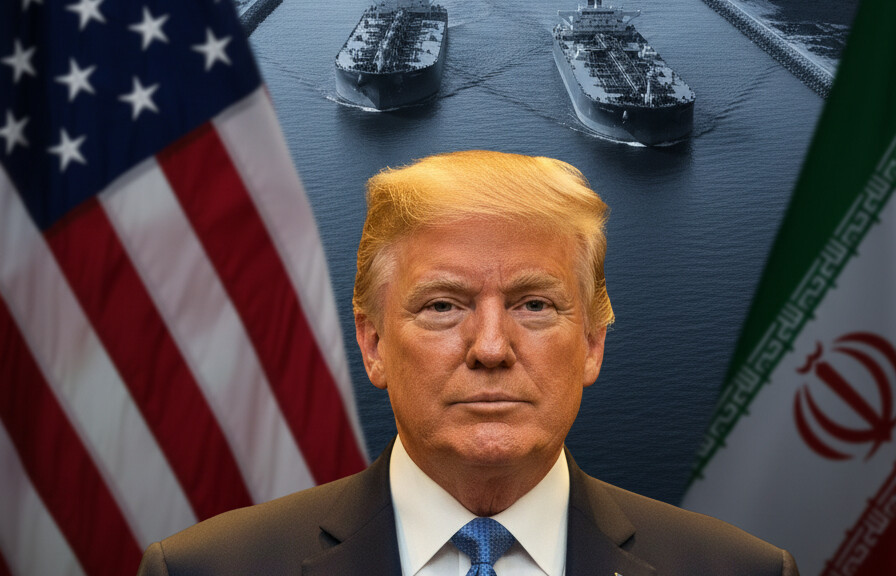
President Trump pulled back the curtain Thursday on what he had cryptically teased as a “very big present” from Iran, revealing that the regime allowed ten fully loaded oil tankers to pass through the Strait of Hormuz as a gesture of good faith during ongoing negotiations. The concession marks a significant softening of Iran’s position after weeks of attempting to choke off the strategic waterway that carries roughly 20% of the world’s oil supply.
According to Trump, Iranian negotiators initially offered access for eight tankers before increasing the number to ten, signaling what the President described as validation that the United States is dealing with capable representatives. “They said, ‘To show you the fact that we’re real and solid and we’re there, we’re going to let you have eight boats of oil. Eight big boats of oil,'” Trump recounted during a Cabinet meeting. “And they then apologized for something they said, and they said, ‘We’re going to send two more boats.’ It ended up being ten boats.”
The tankers, reportedly flying Pakistani flags, sailed through the strait without incident, a development that caught the attention of Fox News anchors who noted something unusual was happening. Trump admitted he initially didn’t think much of the gesture until seeing the news coverage, at which point he concluded, “I guess we’re dealing with the right people.”
The concession comes after weeks of iron-fisted American pressure following U.S. and Israeli strikes that decimated Iran’s military and naval capabilities. The regime had brazenly attempted to blockade the Strait of Hormuz, sending global oil prices skyrocketing and threatening worldwide economic disruption. That strategy appears to have backfired, leaving Iran with a weakened military and growing international isolation.
White House press secretary Karoline Leavitt drove home the administration’s position Wednesday, warning that “President Trump does not bluff, and he is prepared to unleash hell.” She noted that Iran has suffered “the largest elimination of a navy over a three-week period since World War II” and that their nuclear ambitions have been “crushed to an even greater degree than they were in Operation Midnight Hammer in June 2025.”
Despite the apparent progress, contradictions remain. While Trump and his team report productive conversations, Iranian state media continues to deny any talks are taking place. The President has declined to name his Iranian contact, citing concerns about potential retaliation, suggesting the negotiations are being conducted through backchannels with elements of the regime who may not represent official government policy.
The ten tanker concession represents more than a symbolic gesture, it is a tangible demonstration that Iran can deliver results. Whether this marks the beginning of a genuine diplomatic breakthrough or merely a tactical pause to regroup remains to be seen. With the April 6 deadline looming and military options still on the table, both sides are playing a high-stakes game where miscalculation could plunge the region into even deeper conflict.
About The Author
