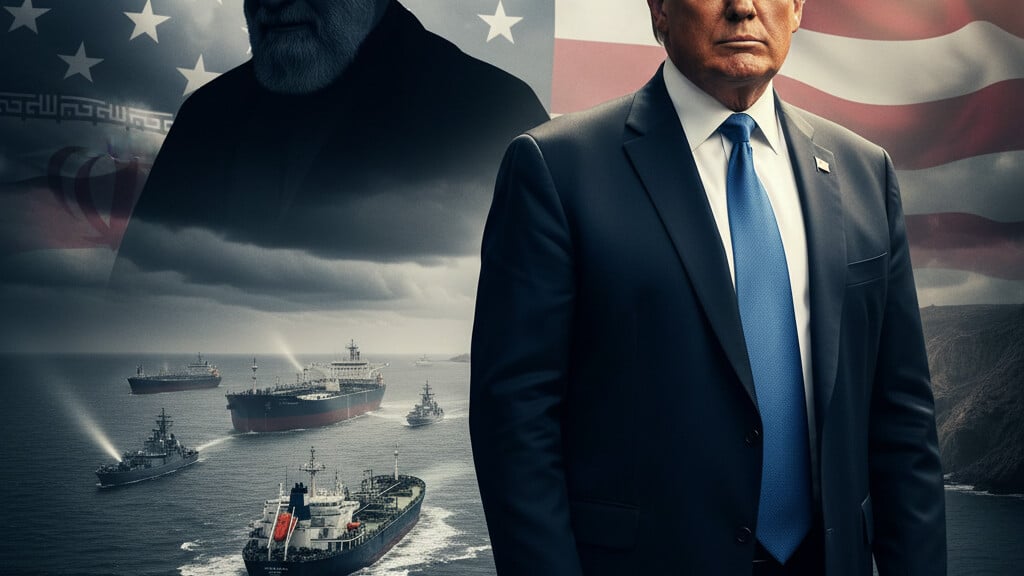
Editorial illustration
President Trump did not mince words during a Cabinet meeting this week, delivering a blistering assessment of NATO’s refusal to assist in securing the Strait of Hormuz as Iranian aggression disrupts global oil shipping. The President called the alliance a “paper tiger” and declared that the United States will remember which nations stood by its side—and which ones hid when the world needed leadership.
The conflict with Iran has tested alliances in ways that reveal uncomfortable truths about global security arrangements. When Trump asked NATO and Asian allies for help reopening the vital waterway, the response was swift and telling: they refused. Instead of joining the effort, several nations urged the United States to simply end the war, offering words where action was needed.
“This was a great test because we don’t need them, but they should have been there,” Trump told reporters last week. “We as the United States have to remember that, because we think it’s pretty shocking.”
The President’s frustration boiled over during Wednesday’s Cabinet meeting, where he recounted NATO’s belated offers of assistance—offers that came with a catch. “They actually made a statement, a couple of them, that we want to get involved when the war is over,” Trump said, his disdain evident. “No, it’s supposed to get involved with the war’s beginning, or even before it begins.”
He specifically called out the United Kingdom’s offer to send aircraft carriers after the conflict ends, dismissing the gesture with characteristic bluntness. “We’ll send our aircraft carrier— which aren’t the best aircraft carriers, by the way, they’re toys compared to what we have— but we’ll send our aircraft carrier when the war is over. I said, Oh, that’s wonderful. Thank you very much. Don’t bother. We don’t need it.”
Trump has long been skeptical of NATO’s value to American interests, a position that once made him an outlier in Washington foreign policy circles. Twenty-five years ago, before he entered politics, he warned that the alliance was a “paper tiger” that would accept American protection without reciprocating. The current crisis appears to have validated those concerns in his view.
“I’ve always said, 25 years ago, I mean, I was somebody that wasn’t a politician, but I was always involved in politics, and I understood politics. I said 25 years ago that NATO is a paper tiger, but more importantly, that we’ll come to their rescue, but they will never come to ours,” Trump reminded the assembled press.
The President’s message to NATO was unambiguous: “Remember this in a number of months from now, remember my statements. They have an expression, a great expression: Never Forget. We can never forget.”
What does it say about the state of Western alliances when the world’s most powerful military nation finds itself standing virtually alone against Iranian aggression? The question cuts to the heart of debates about burden-sharing and collective security that have roiled transatlantic relations for years. For Trump, the answer is clear—the United States has carried too much of the load for too long, and allies who won’t stand shoulder-to-shoulder in moments of crisis cannot expect unqualified American protection when their own interests are threatened.
About The Author
